![[Wazao Expedition 01-B] The Egi of the Ishigaki Locals](https://pub-197a2129a35c40e8ab8fb64a949e43e6.r2.dev/articles/editorials/wazao-expedition-01b-ishigaki-egi/DSC_7862_(2)-1200.jpg)
"Egi for sale"
The egi — Japan's indigenous lure — was once used in a method of squid fishing called ika-biki (squid pulling). It is said to have originated in Satsuma, and is passed down to the present. But in the Yaeyama Islands too, a culture of egi has been woven on its own line. Did it travel down from Kyushu, or did something similar arise on its own, by some natural coincidence?
In any case, we had heard for a while that on Ishigaki, an egi particular to this place still remains. An oji (an old man) over ninety years old is said to keep making them, by hand. We had finally come. Holding down the quickening of our pulse at the sign reading "Egi for sale," we step into a low-eaved old house in the Okinawa style.
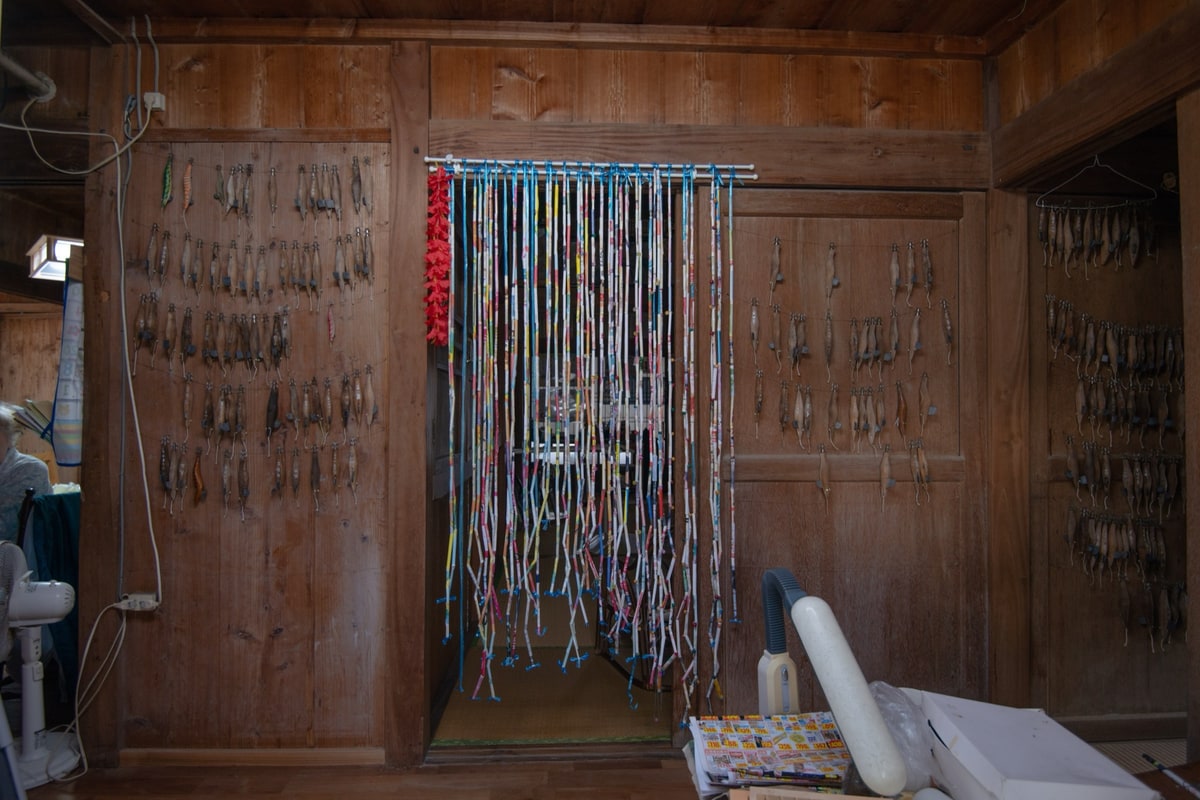
The oji is not here
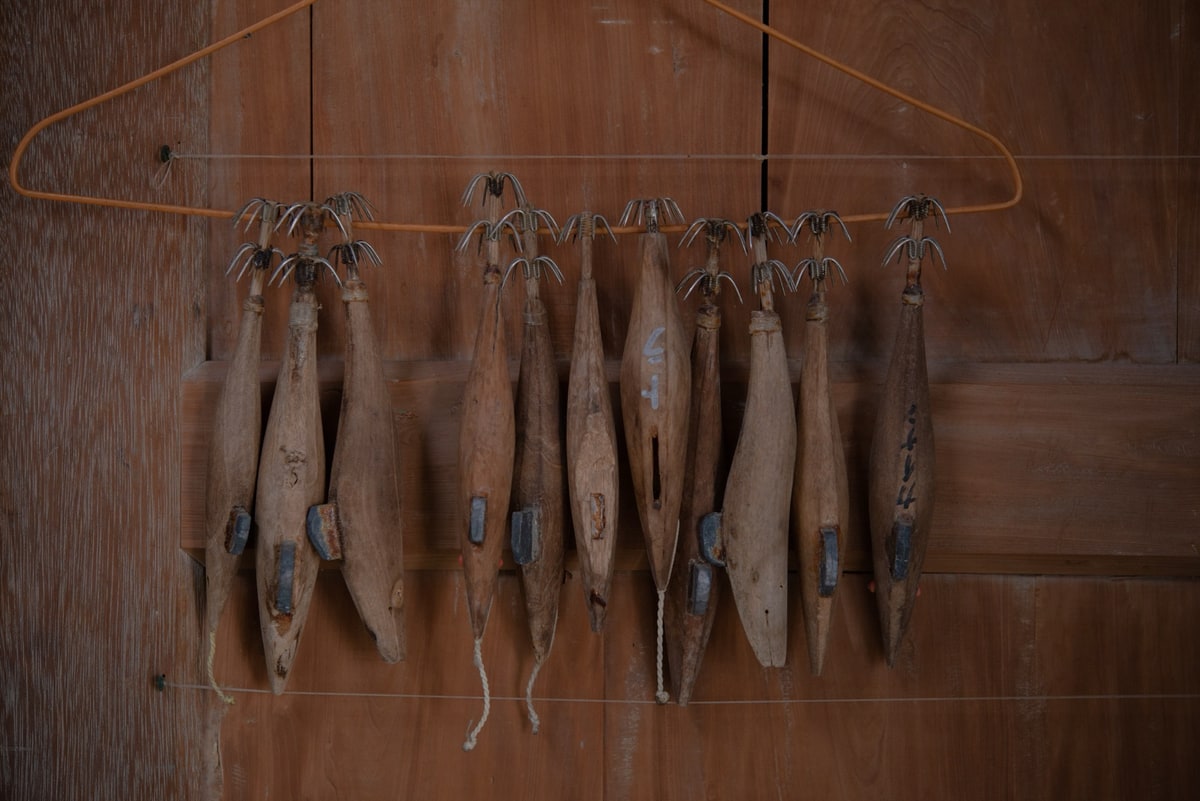
The oji, however, is not here. There is no one. We call out, "Excuse me," and an oba (an older woman) comes out from the back. Listening to her, we learn that the oji went into the hospital just a few months ago. He won't be making egi any more. Our travels often have, as their object, conversations with the elderly, and we meet cases like this. We had hoped to actually meet him, to hear all kinds of stories — but. Brushing the regret aside, we look up: the wall before us is covered, end to end, with Ishigaki egi.
-1200.jpg)
The unadorned egi of Ishigaki
Compared to Satsuma egi, the Ishigaki egi are not wrapped in cloth; they are left rough — unfinished — with their unadorned quality kept. Their shapes vary; no two are the same. What they all share is a kind of cipher written on the belly of the lure: a notation only the maker understands, marking what kind of wood the lure is made from, and the place where the wood was gathered. Their pricing, too, is unusual: the ones with a record of fish — the oji's used pieces — are priced higher; the new ones, lower. We left the shop with several in hand, as important clues for further travel into the culture of egi.
Whereas the Satsuma egi shows traces of refinement through a kind of folk-craft development, the egi here looked, to us, extremely primitive.