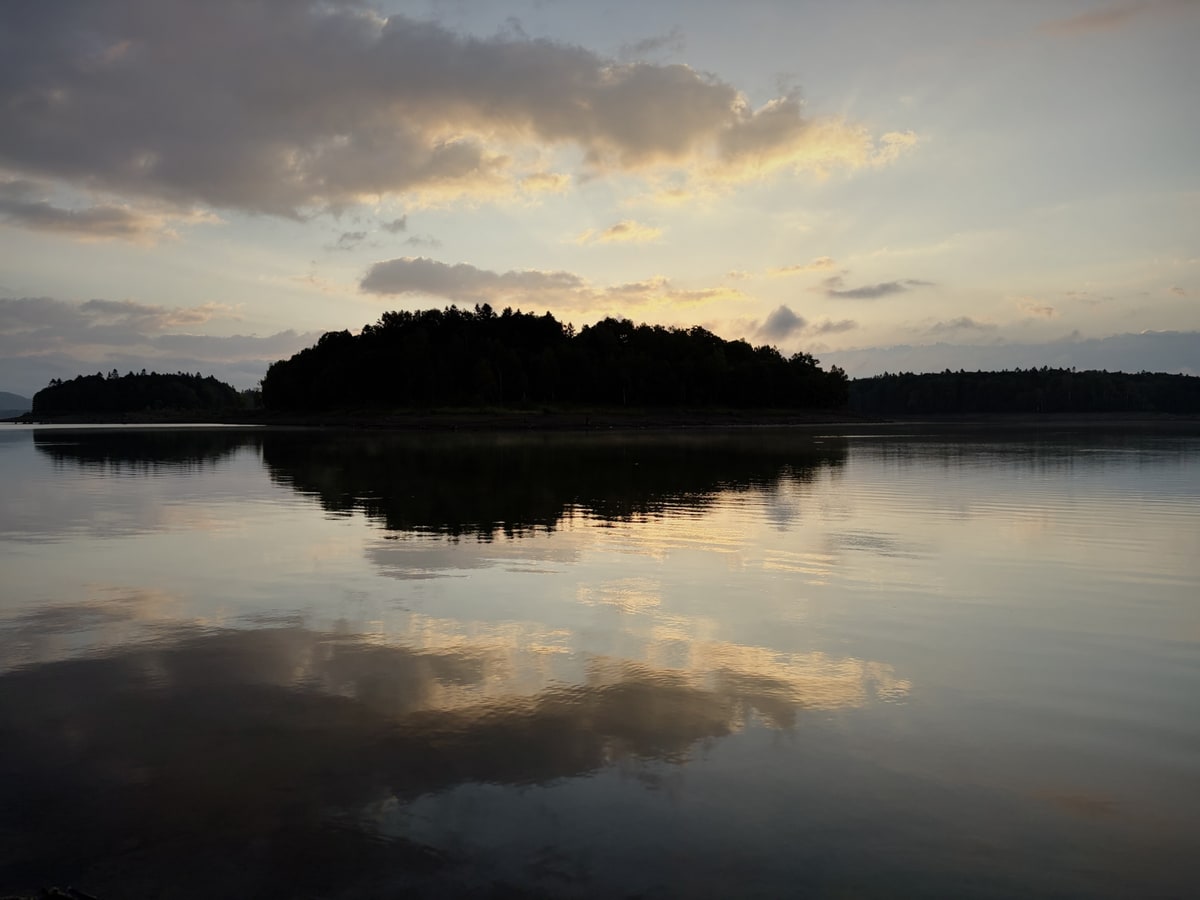
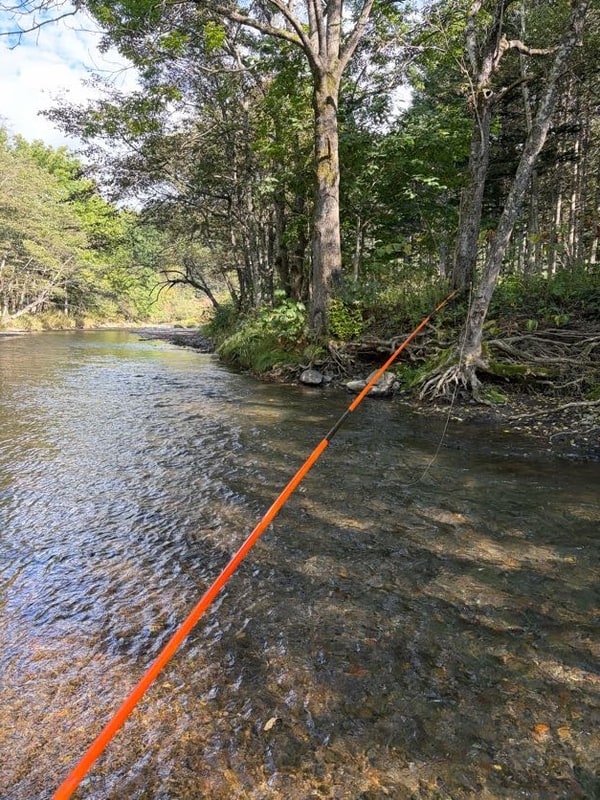
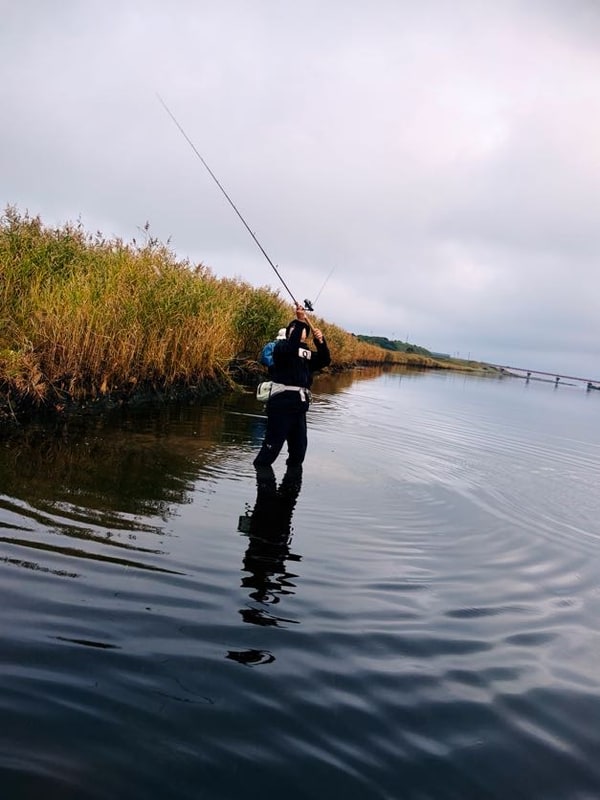
If one does not go before the cherry blossom falls, one will not be in time: I have a memory of writing that somewhere in this series. Having written it, I must go. Whether an obligation of that sort really arises between a man and his own sentences I do not know, but it is certain that from the start of April I grew restless, and this time I asked a few people along and went out to the waterways of Kasumigaura. Going alone, one takes the rod one likes and fails in whatever manner one likes; taking people along, one has to think about the tackle first.
The Rod Called a Funa-zao
The spawning crucian is a fish carrying roe, nearly twice its usual weight in the belly, and it runs with unexpected force when hooked. The tip draws in the bite; the section below the tip, and the one below that, take the run. The funa rod is a rod that holds those contradictory tasks in one piece of bamboo, and in the hand it has a springiness of its own. I told them so about two weeks beforehand, but the feel of a tool is not a thing one understands without holding it, and few people now own a funa rod at all, so there was nothing for it but to add that if they could find something of similar action they should bring that.
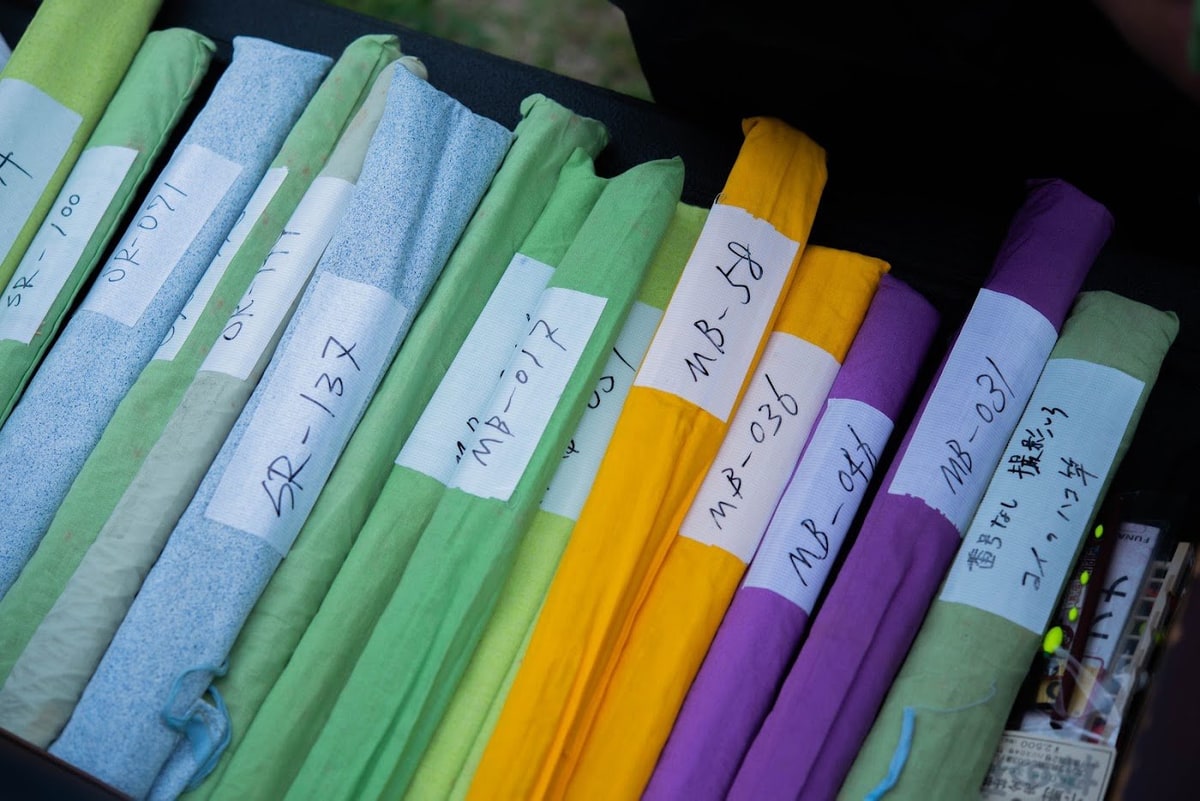
A telephone call came the night before: a mountain-stream rod would do, he said. The mountain-stream rod is for the small fish of the valleys, and from the way its tip bends it is another thing altogether from a funa rod. The stiffness below the tip is different, and so is the backbone below that. It will break, I answered, but there was no sign of its getting through. Put the two side by side and anyone would see it at a glance; over the telephone nothing could be done.
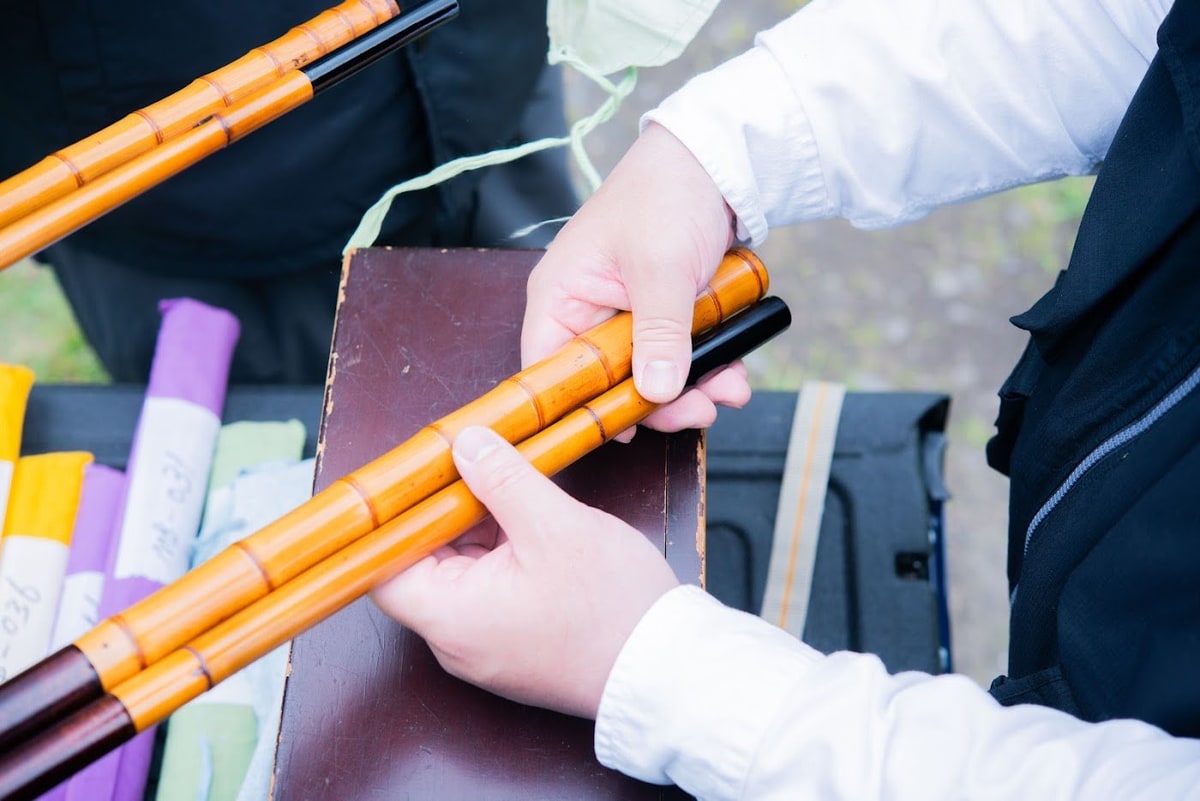
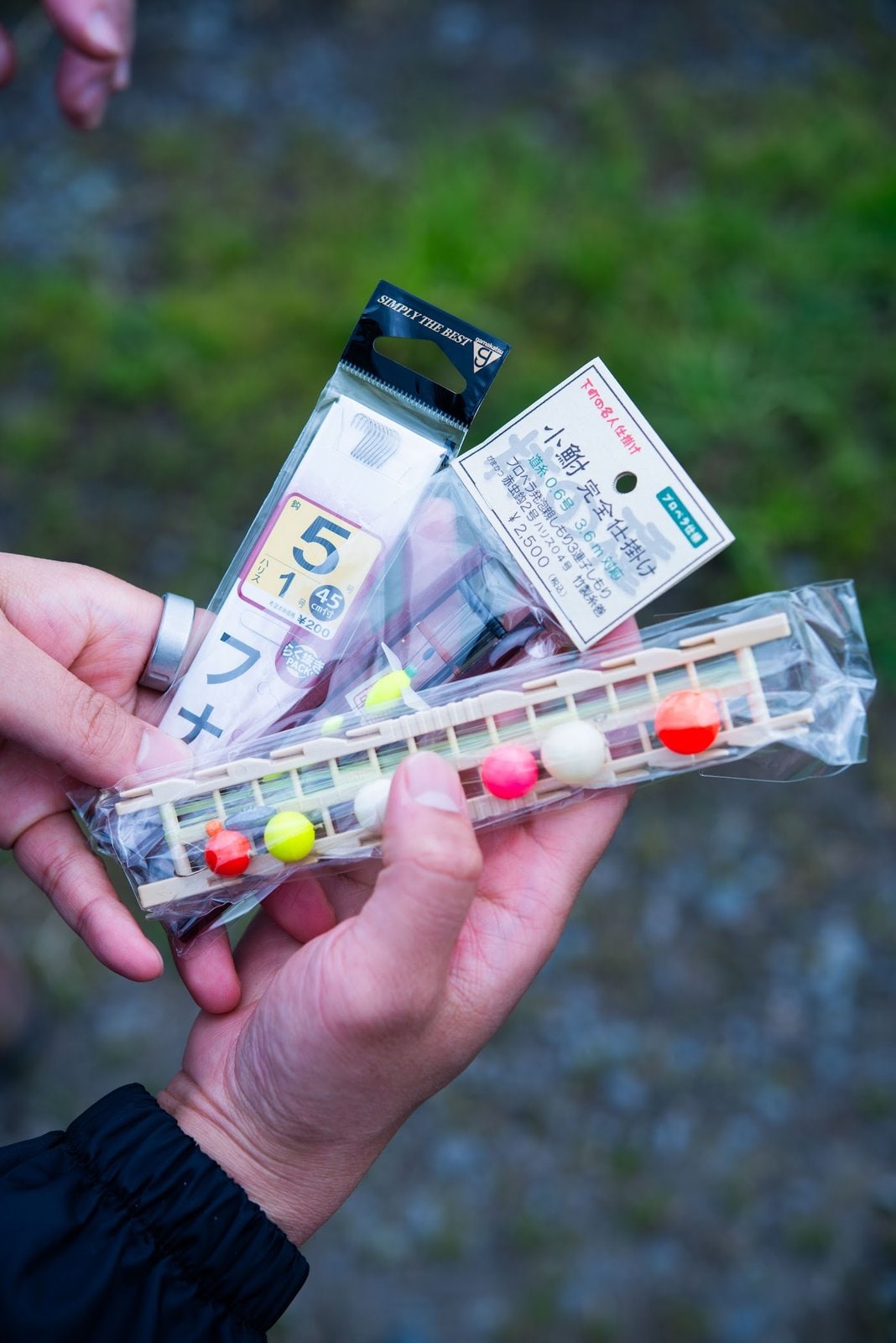
Having put down the telephone I thought about it a little. For my own part I am set hard in the rod makers' manner: a funa rod for crucian, a goby rod for goby. In the world of bamboo rods that is a matter of course, but a matter of course seen from outside may be only a bias. What happens if one fishes the spawning run with a mountain-stream rod? It may break; it may hold up surprisingly well. Either way it is worth seeing through. I left the rods to each man and prepared only the rigs myself. Main line of one, a running olive weight, a ring set in so that two hooks could be run off it, and about six celluloid floats threaded on. Crucian hooks of six for the standard with eights in reserve. For bait, earthworms graded from medium to extra large. When the rig settles on the bottom one reads the rise and fall of the celluloid to pick up the bite, and that reading alone cannot be taught by mouth. There is nothing for it but to stand at the water and learn it oneself.
Out to the Waterways
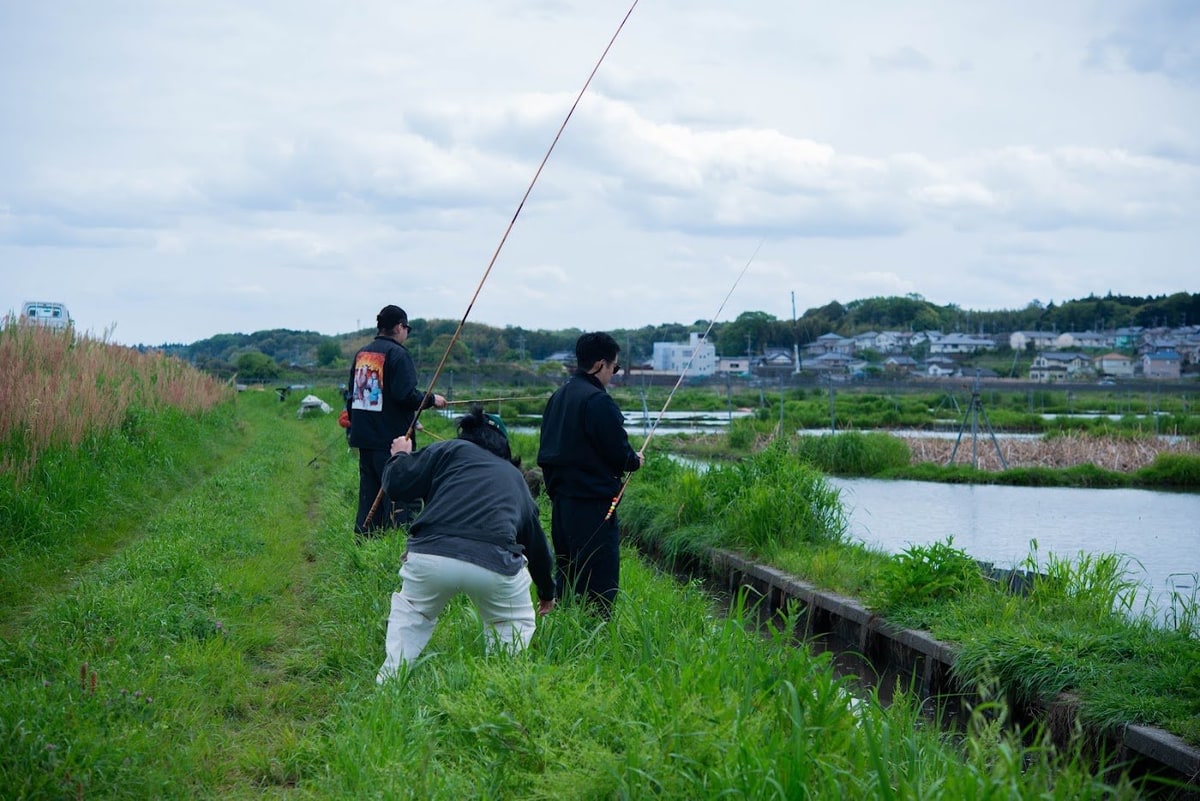
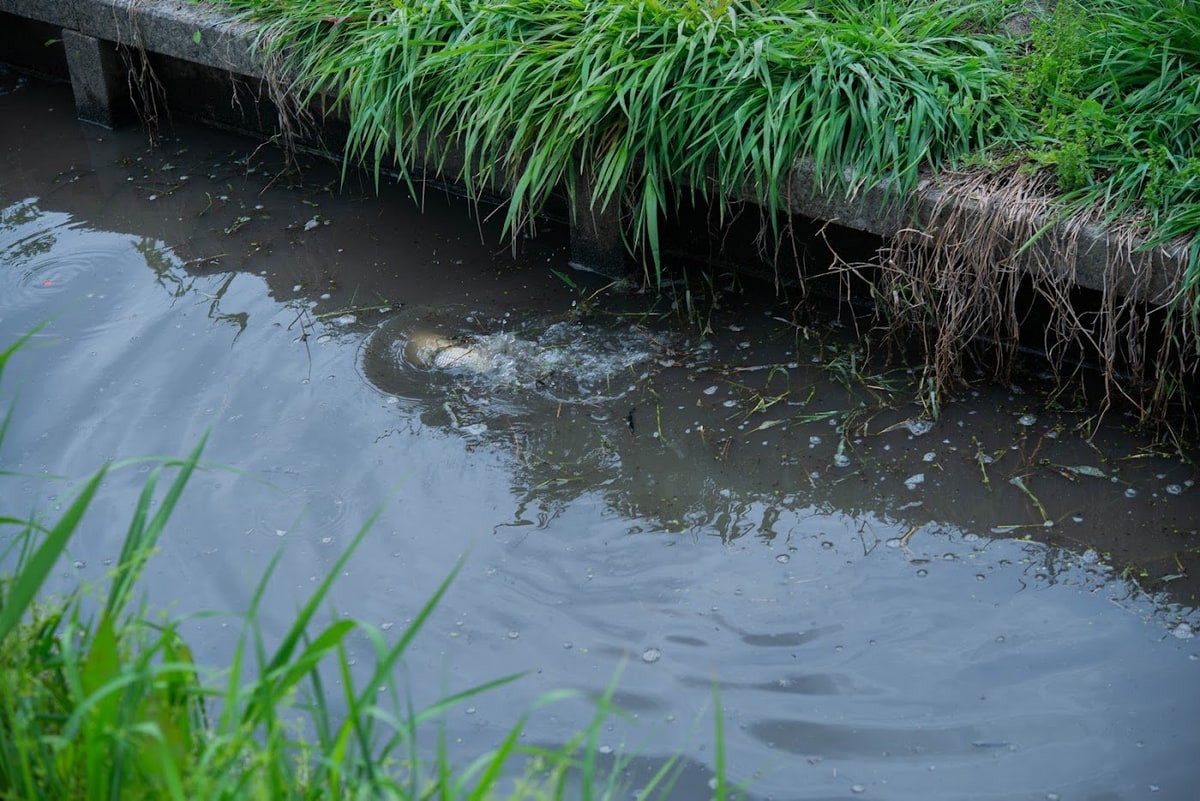
On the day, the first place we made for was one of the known spots on Kasumigaura, where in the spawning season it would be no surprise to find several rods already lined up; but on arriving there was nobody. Water was beginning to come into the surrounding paddies. When the water for planting flows in, the current of the channels changes and the fish shift their lie, so the season here had probably passed. Without putting out a rod we went back to the car and drove to the next place, and there the scene was wholly different. Inside the channel, crucian close to a foot long were beating the surface and thrashing about. They moved as though rubbing their roe-heavy bellies against the weed, and with that force the surface swelled and rolled. The height of the spawning run was there in front of us.
The water, however, was dreadful. Ochre, one might call it, muddied to a dark brown in which one could not tell where the field soil ended and the channel water began, and the bottom not visible at all. With that many fish making an uproar in front of one, it is impossible not to put in a rig, but every time a fish passed alongside the float shook, and there was no telling a bite from the movement of the water. Striking reflexively without knowing, one of course hooked nothing, and the hook came up thick with crucian roe tangled in filamentous weed. What came instead of crucian was invariably catfish, and even when there was something like the feel of a crucian the take was shallow and it came off at once. More than once a fish went deep into the weed and cut the line. The sense of life was overflowing right in front of us, and our rigs were being ignored completely. That a fish being there and a fish being caught are two different matters I thought I had known, but pressed on one like this at the water, it is hard to take.
Moving On
It was past two in the afternoon. Only then did I notice that I had eaten nothing since morning. Not only had I not eaten, I had forgotten the very fact of eating, so there was no plan and no arrangement to speak of. We drove about an hour to the last place.
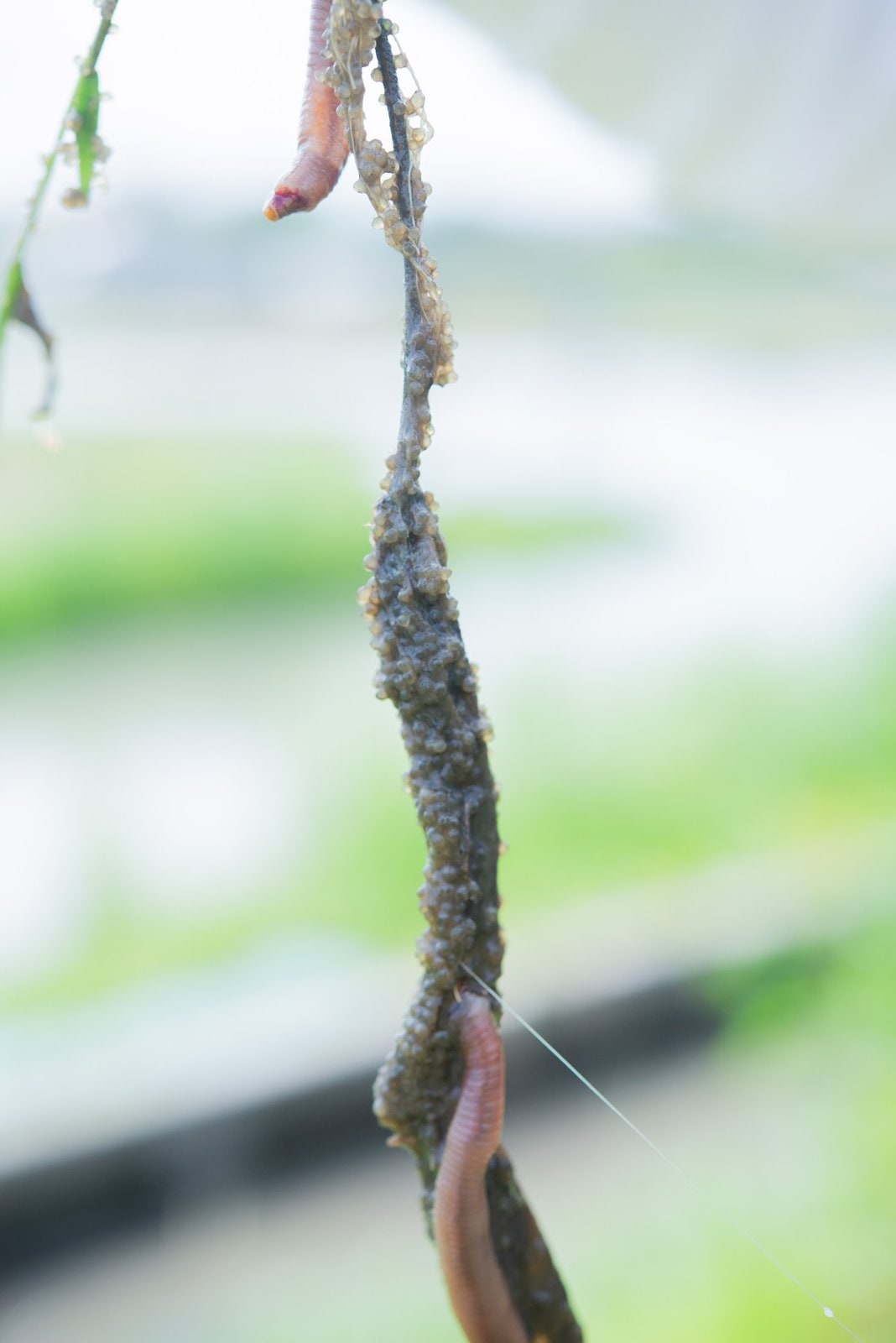
On arriving there was no sign on the surface and no anglers either. Some had the face of a man about to give up, but having come this far one cannot go home without putting out a rod. At any rate we put the rigs in. It was past three in the afternoon, I think. Where the channels joined, several crucian could be seen gathering and stirring. The water was not as muddy as at the last place, and when the rig went down the float sank at once. It was quite unlike the wavering of a moment before, when the float only swayed as fish passed: a clear, definite draw.
They Begin to Come
From here on everyone caught. The man with the mountain-stream rod caught too, but in the middle of the fight the rod bent into a bow, and watching it I was on edge lest it break. Setting it beside mine in an interval, the thickness from the tip through the section below it and the one below that differed enough to see at a glance. He had the face of a man who understood, and yet he went on casting with the mountain-stream rod after all, which may mean nothing more than that changing rods in the middle of the fishing is a nuisance. It was after several more had been landed that somebody said, a funa rod really is better. The business of the telephone two weeks before seemed at last to have borne a little fruit here.
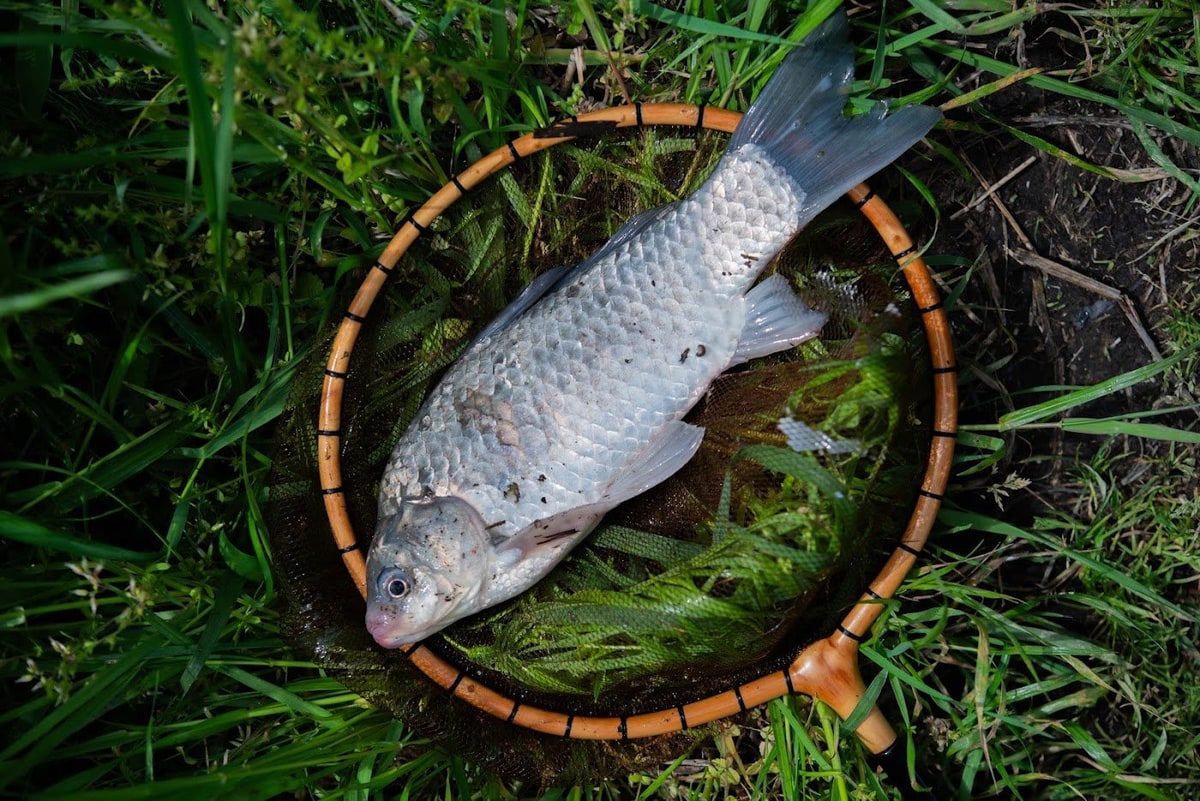
Watching the fight with a telescopic rod from beside, one always raises the rod too high. It comes of trying to take the fish's force on the middle of the rod, but then the load gathers in one place, which is bad for the rod and bad for the fish. Extend the arm so that it makes one line with the rod, hold it a little above the horizontal, and use the spring of the whole rod. Turn the fish away from the direction it pulls so that you decide its way out, and bring it up to breathe air, at which it weakens; then, weakened, scoop it into the net with your own hand. Said aloud that is all there is to it, but before it enters the arm one must hook several and lose several and hook again. Watching from beside, one could see the hand holding the rod grow gradually softer. The way of learning to fish may be the same as the feel of a rod: the hand learns before the words.
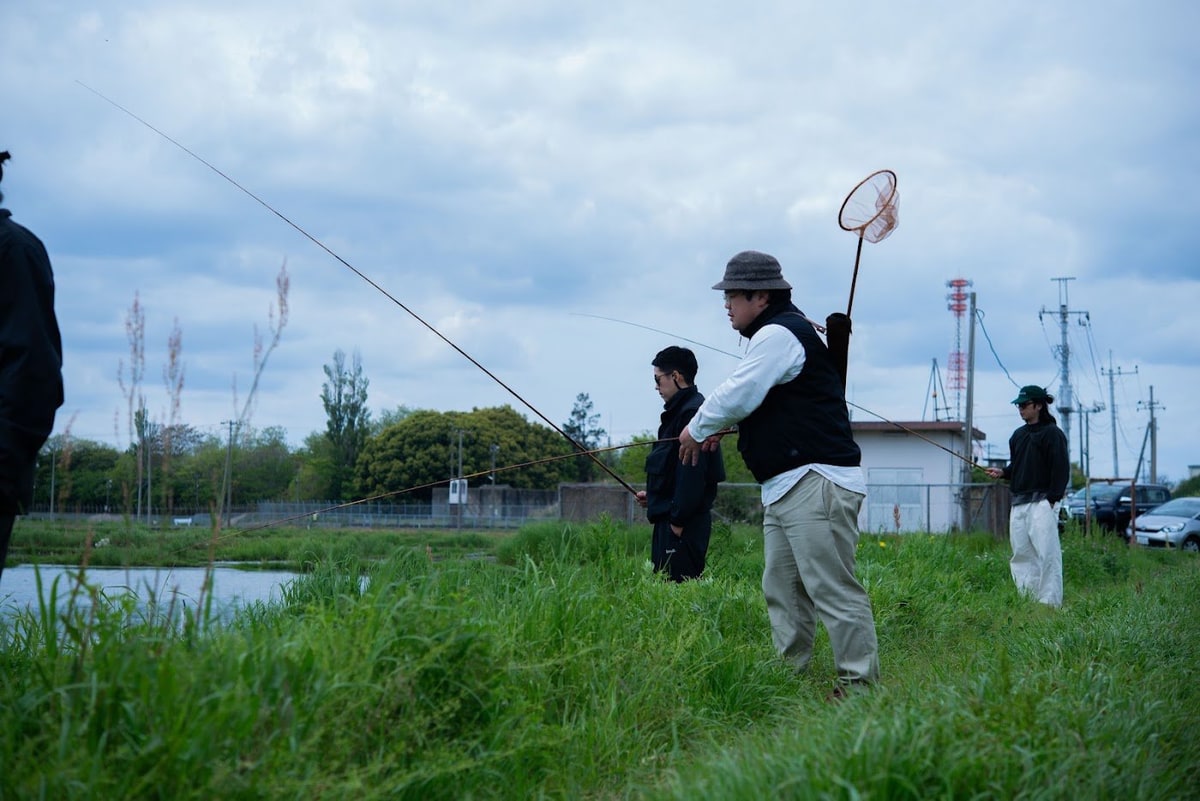
The Light Goes
Before we noticed it, the day was going. As one could no longer see one's hands we turned on the car's headlights, and in that light somebody was still swinging a rod. I was still swinging one too. We never did reach the eating house we had in mind, and a day was passing with nothing taken at morning or midday. The private plan for the arrangements did not become the real one this time either. It did not, and I did not think it a pity in the least.
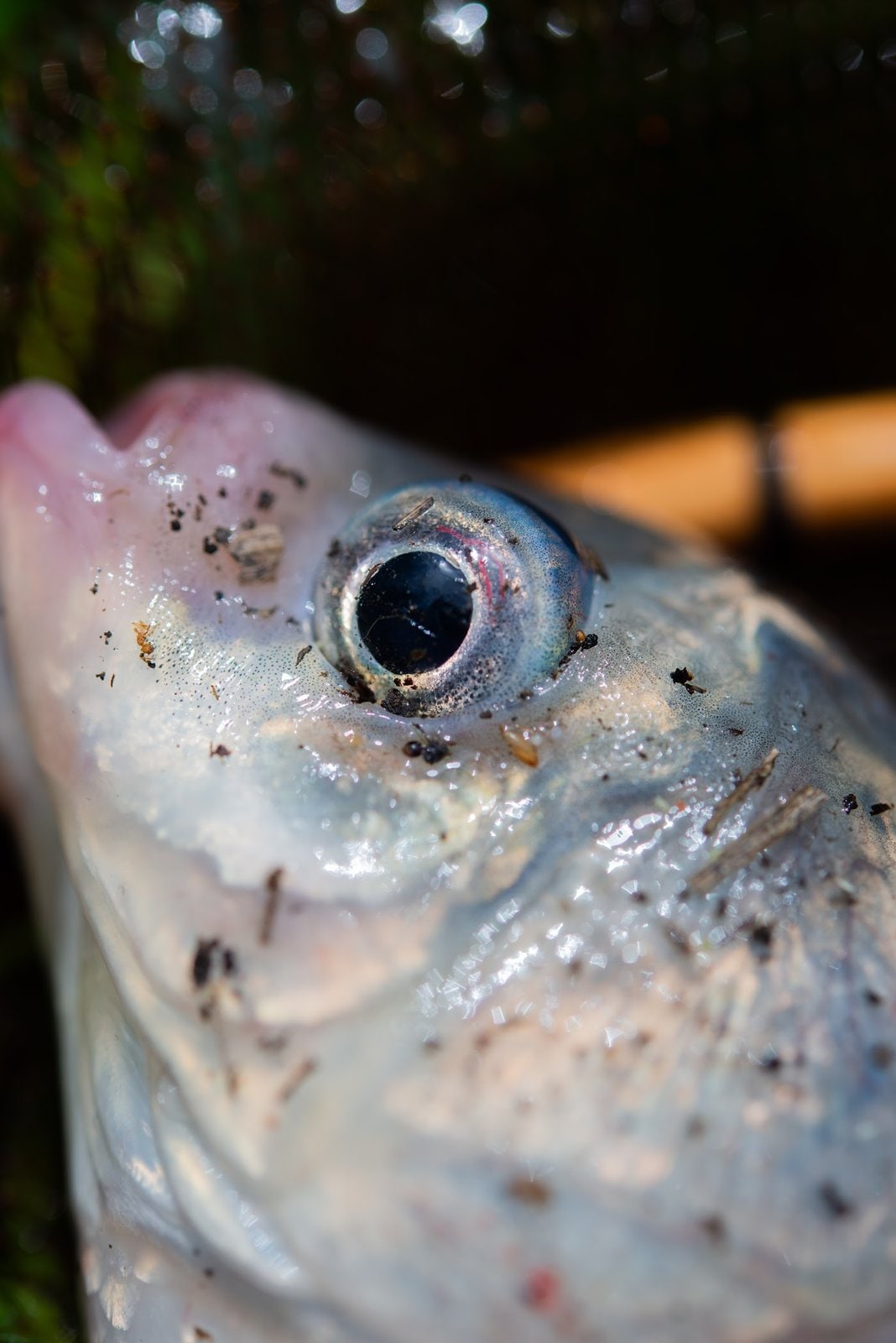
To have kept hold of a rod until one could no longer see one's hands is as much as one can ask of a day's fishing. People and fish alike had run up into a narrow channel and stayed absorbed until dark. The spawning run, it seems, is not only a matter of fish.