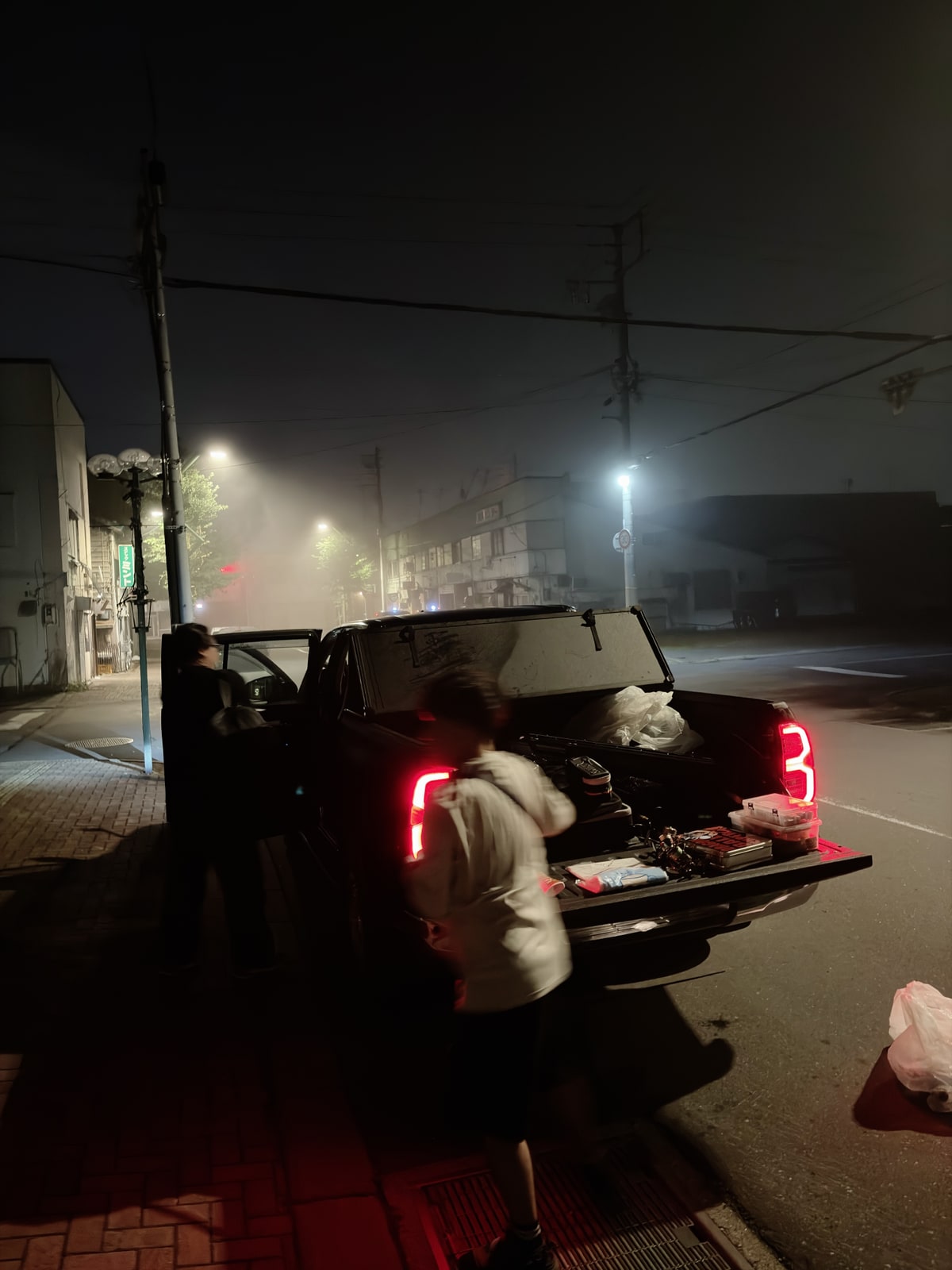
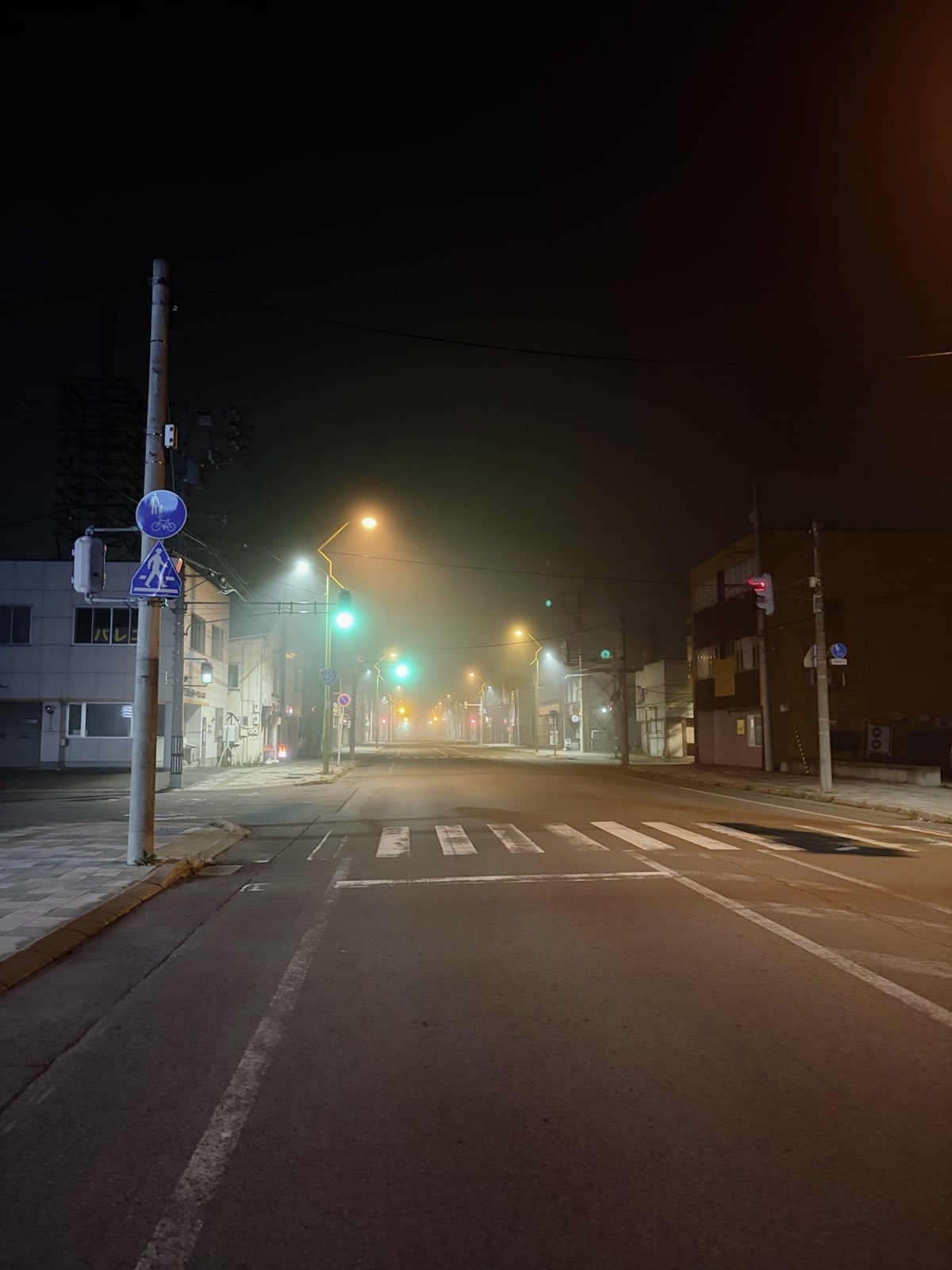
We left the lodging in Nayoro at ten to three. The car was pulled up under a streetlight, the lid of the bed opened, and what was wanted was being sorted from what was not. The tail lights stayed red, and the red ran out in one line across the wet tarmac. We had slept about three hours, and whether I had slept or only kept my eyes shut I could not have said myself. Out on the street a signal at an empty crossing went from green to amber and back to green. It changes as it is set to whether or not anyone is watching. That is the kind of quiet the middle of the night has in a northern town.
There used to be a railway from Nayoro to Shumarinai. The Shinmei line: from Fukagawa out through Horokanai, through Shumarinai, up to Nayoro, a hundred and twenty one point eight kilometres. Its operating ratio was always inside the worst ten in the country, and every time the talk turned to cutting loss-making lines it came up as a candidate. It survived anyway. When it was nearly cut in 1980 as a designated local line, it was passed over on the grounds that the road meant to replace it had not been built. A line that survived because there was no road. The road came afterwards, and on the fourth of September 1995 the line was closed. Which makes it a line that went because a road went through. What we were driving at ten to three was that road. What comes up in the headlights is the same width of tarmac and reflectors at the same spacing, and if you were told a railway had run here, you would not think it until you were told.
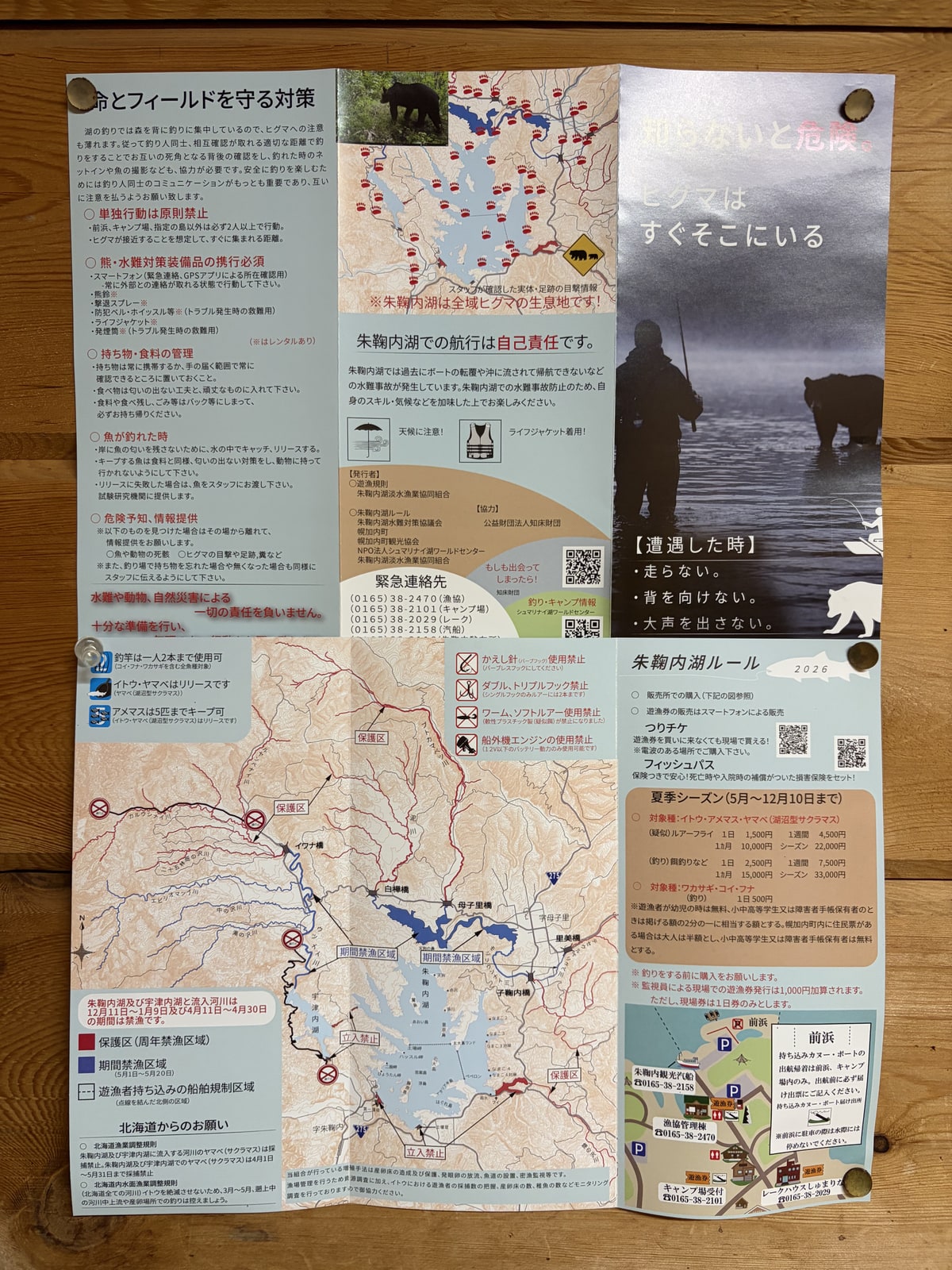
We reached the lake while it was still dark. A sheet of paper was being spread out in the car, a map with the rules printed on it. The hours you may fish are set, and so are the hooks you may use. From an hour before sunrise to an hour after sunset. Single barbless hooks only. You buy a ticket to go in. Against Sarufutsu on the third day, a voluntary restraint with no penalty, and Takinoue on the fourth, an ordinance with no penalty, this is a regulation. Not a form of asking but a form of buying and keeping. Over three days we have worked through the ways a rule can stand, from asking to regulating, in order. It is less that things get stricter as you go north than that the more a thing has survived, the tighter the fence around it.
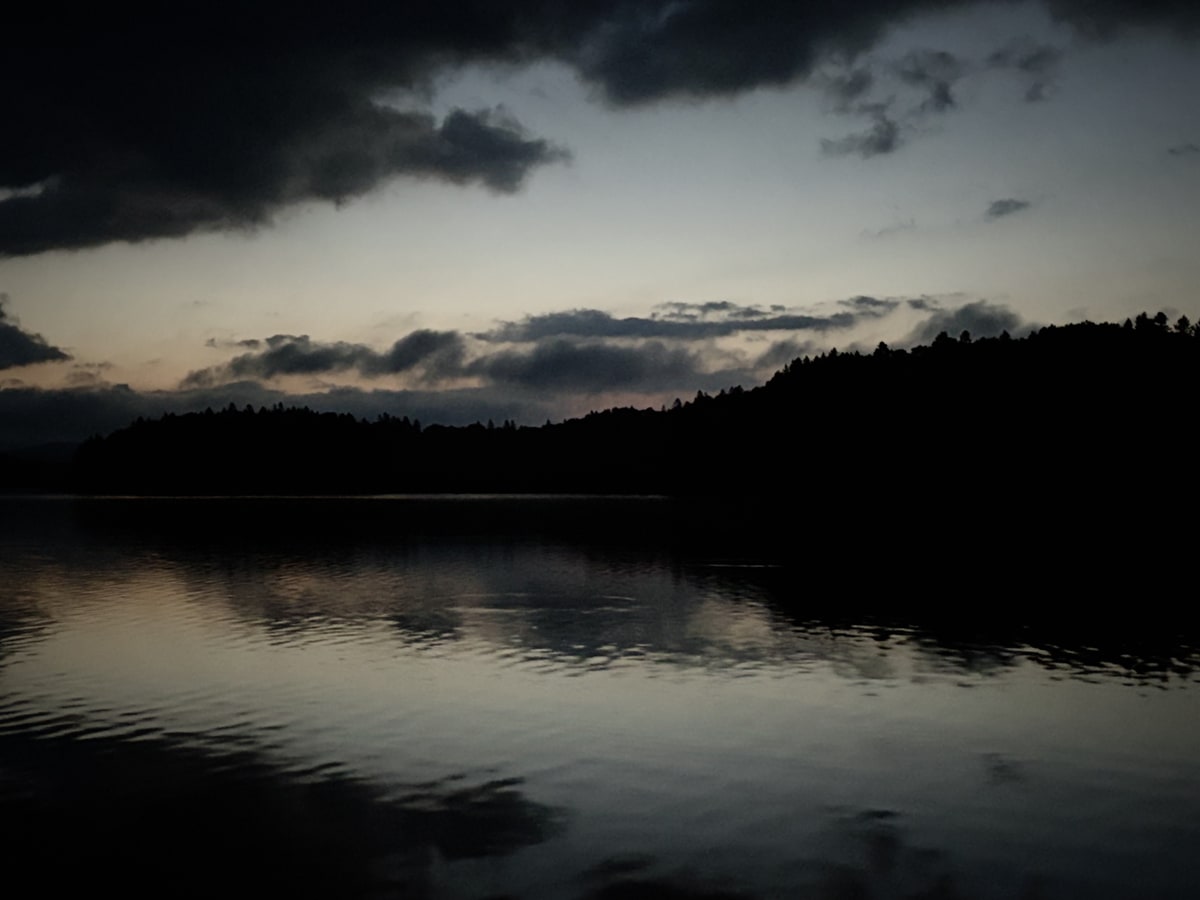
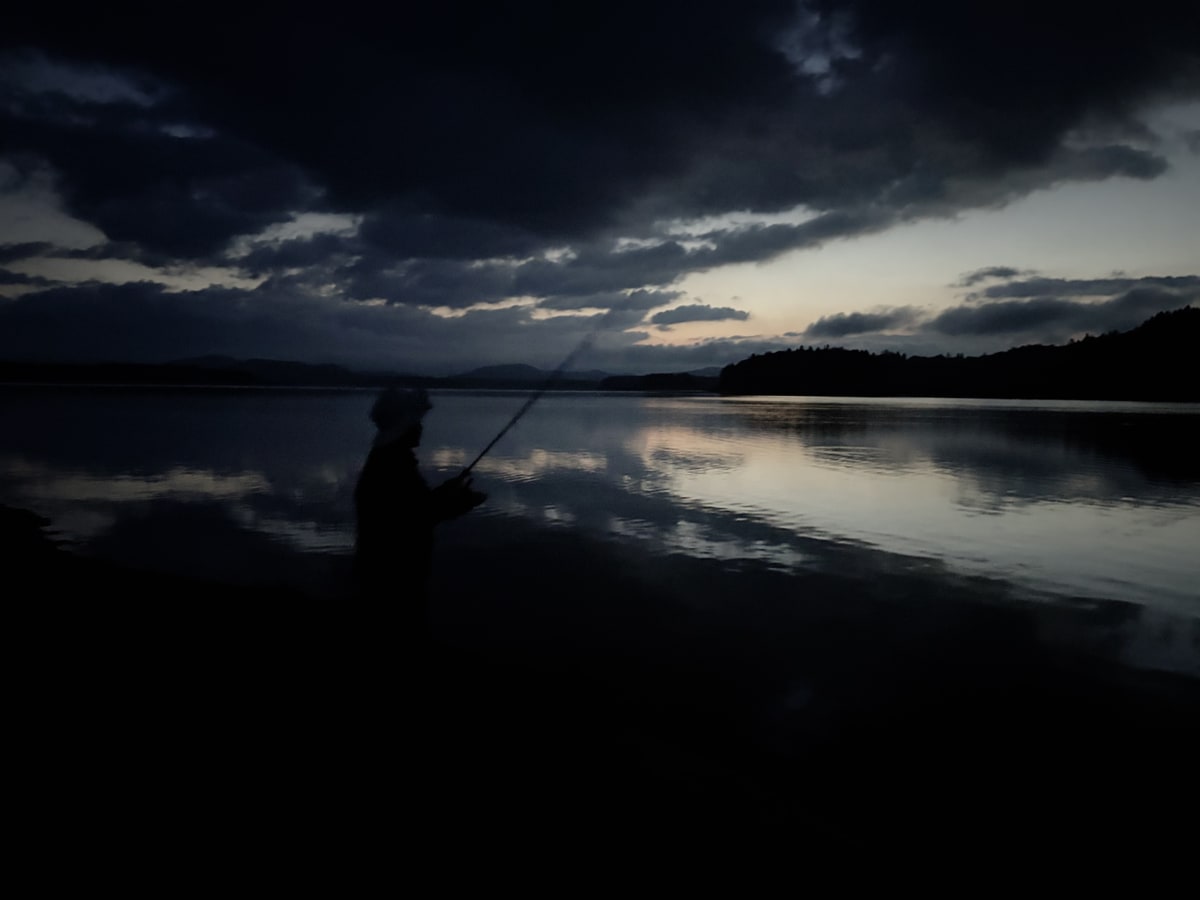
The lake was still black. Cloud ran long across it and only the lower edge of the cloud held a dull light. The shadow of an island lay on the water, and the shadow was blacker than the island. No wind, and the water not moving. Water that does not move makes no sound, so what you hear is your own waders rubbing and somebody's boot on stone. My hands were cold, though not cold enough to dig out gloves. Not cold enough to dig them out is a thing that tells later.
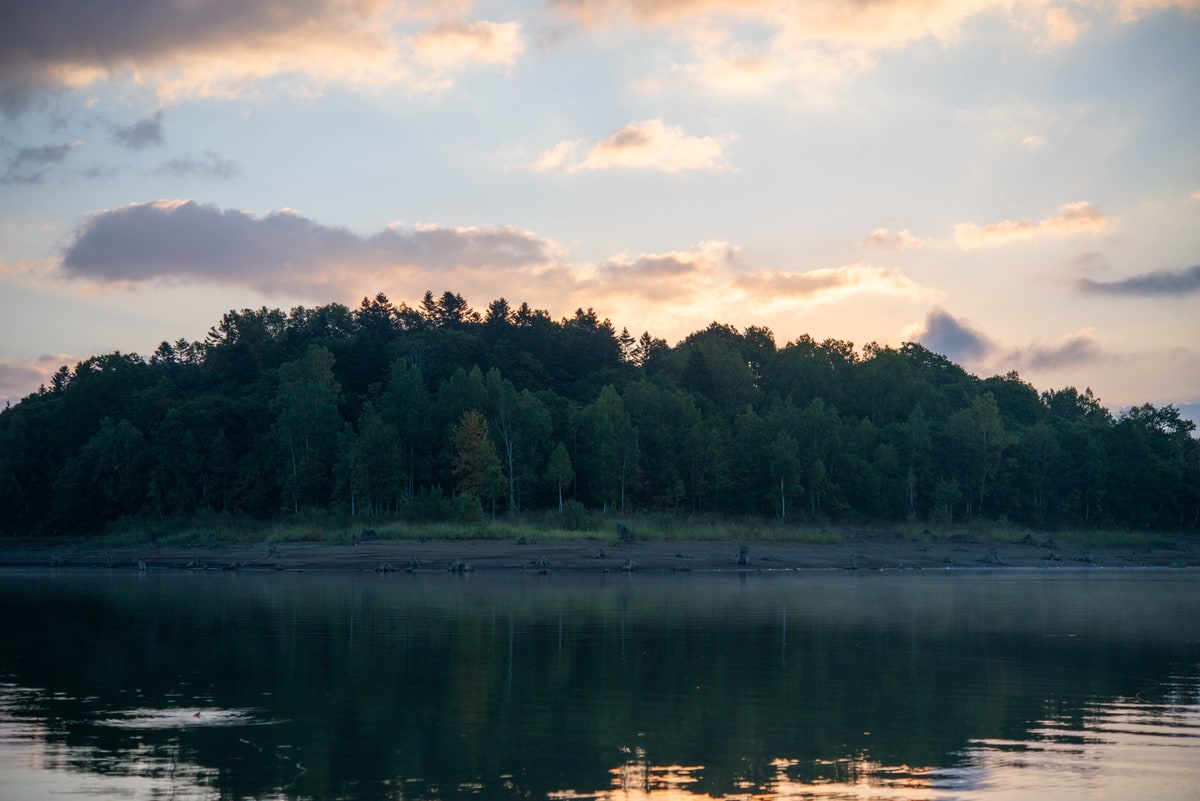
After a while the outline of the island came up. The surface took a pink and carried the colour as far as the bank. Two figures on the gravel spit, one walking, one crouched. Both facing the same way, both casting the same way. Dawn, I think, is less the light coming up than being able to see what everyone is looking at.
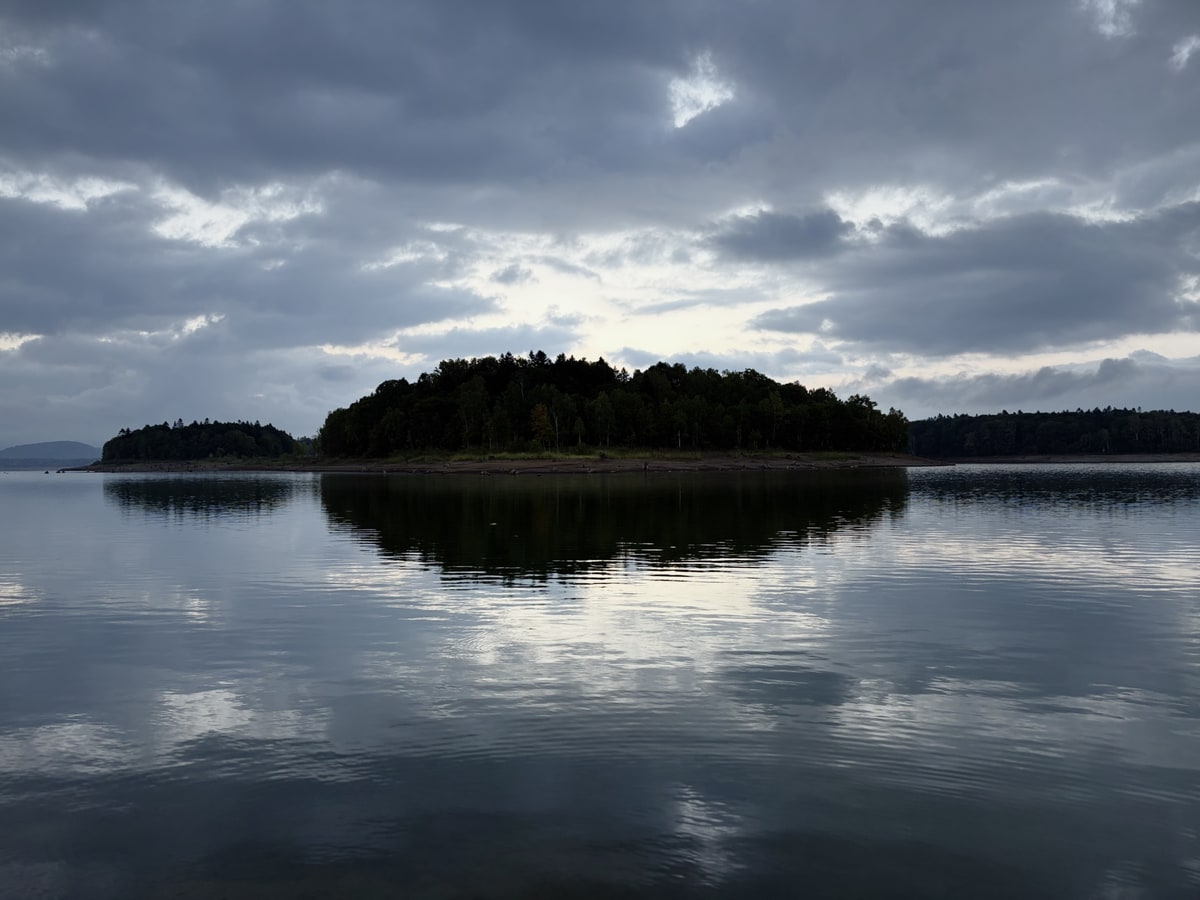
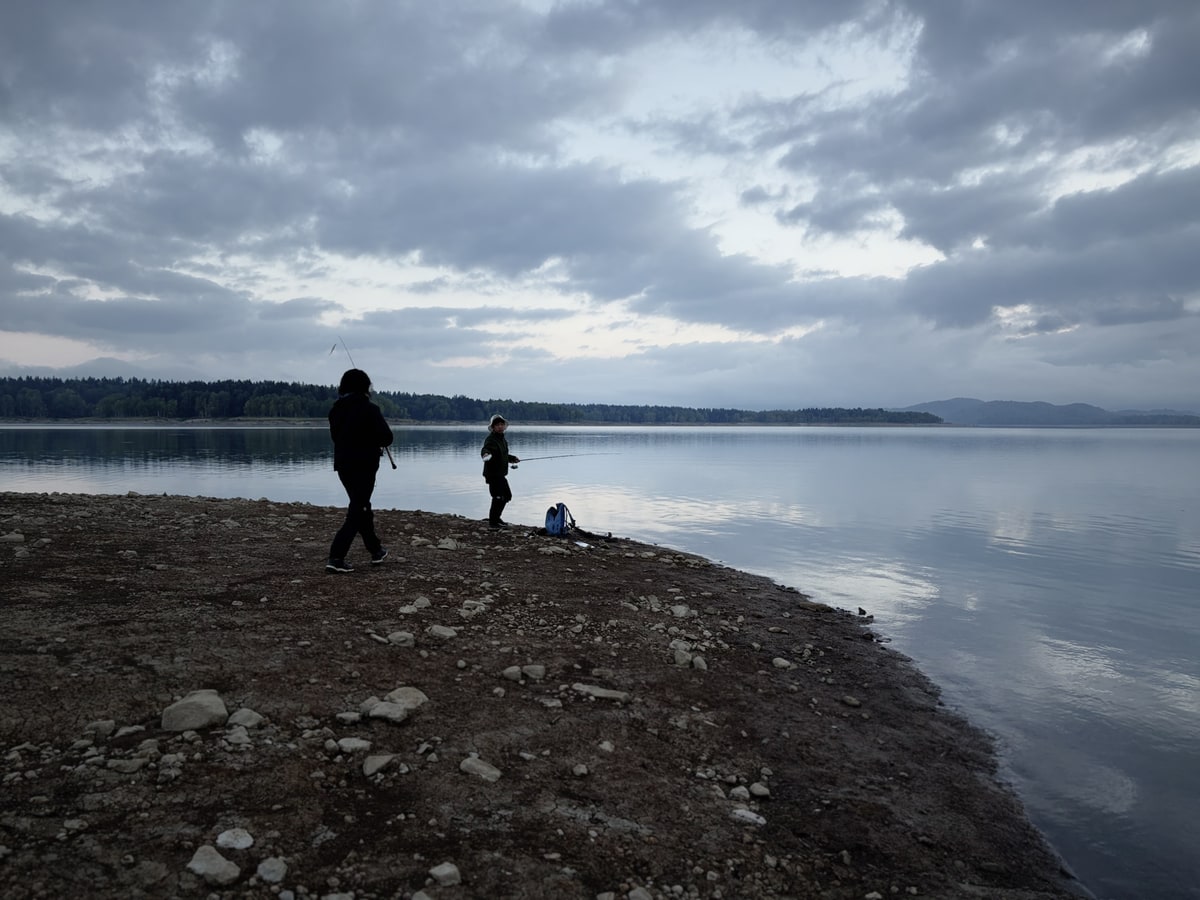
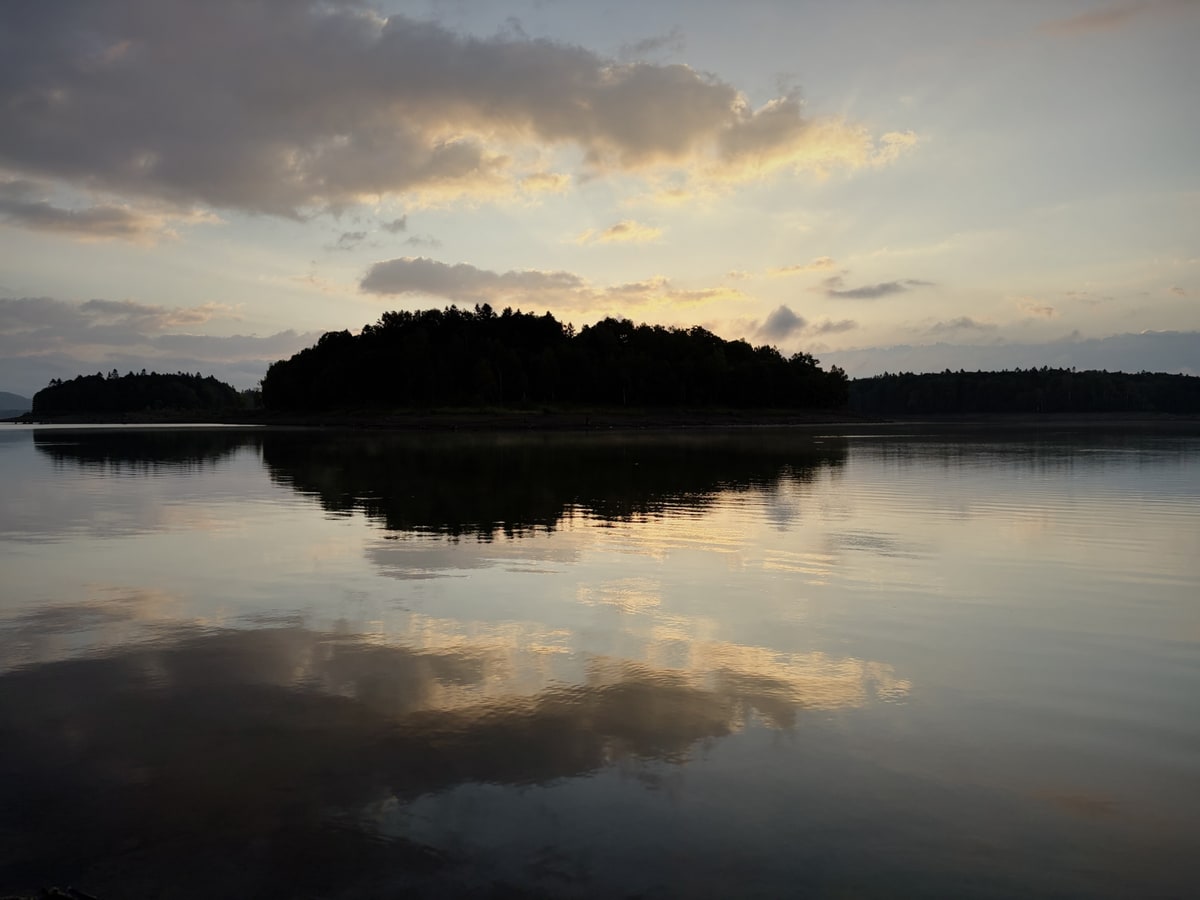
The bank is wide. From the waterline back there are ten paces and more of stone and mud. The lake has been drawn down and what was the bed of it is out in the air. A natural lake does not do this. This one is man-made and the level is decided by people. Dried mud takes the boot shallowly, and a little further out lies the bleached root of a drifted tree. Last year's level was still there, one horizontal line along the slope of the bank.
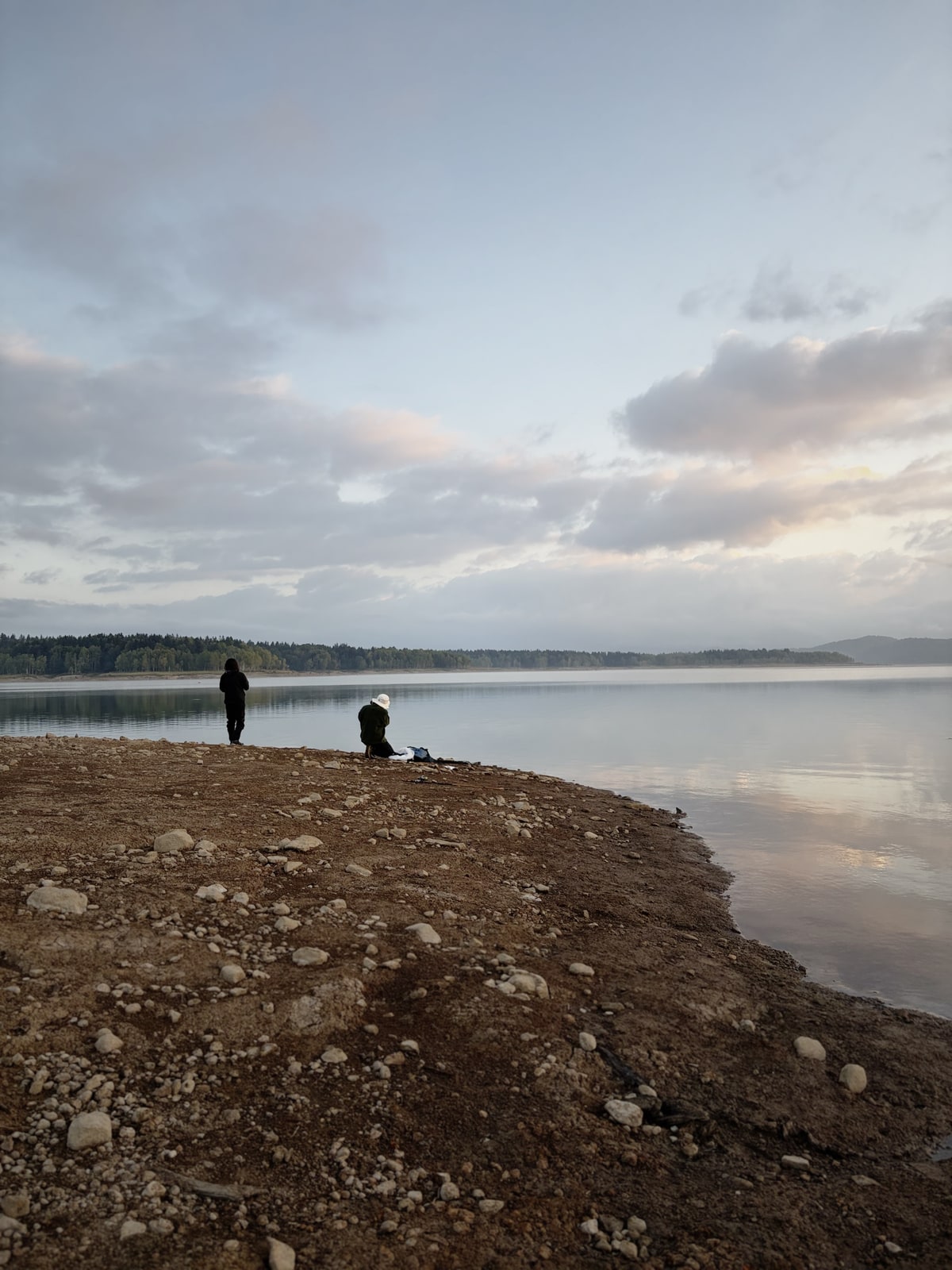
The lake is called Shumarinai. The Uryu number one dam was completed in 1943 and the valley went under water to make it. The impounded area is twenty three point seven three square kilometres, the widest man-made lake in Japan. The work began in 1938. It was wartime, materials were short, and the place goes to forty below in winter. Japanese and Korean labour was mobilised for that work and many died on a brutal site. In 1976 some seventy memorial tablets for the dead of the construction were found in the main hall of a temple nearby, and in 1980 bones came out of the bamboo grass beside the graveyard. It was not the authorities who dug them up but volunteers. In the autumn of 2024 a museum opened to hold the record of it. The bank we were casting from is the edge of that water. I think I would rather be careful about calling the surface here wide. What is wide is also the area that was sunk. While I am at it: at Moshiri in this town, on the seventeenth of February 1978, minus forty one point two was recorded. The site was outside the meteorological agency's network, so it does not stand as an official record, and the official one remains Asahikawa's minus forty one point zero in 1902, the thirty fifth year of Meiji. The unofficial figure is two tenths of a degree lower. The lower one not becoming the record is also a story that carries on in this place.
This is a lake with a name for ito. We went for them at Sarufutsu on the third day and they did not come. The fourth day at Takinoue was on the fly, and nothing there either. Four days of driving, and on the fifth we were after a fish we had not once hooked, on the water it is best known for. Put in that order, a person naturally thinks today is the day. There are no grounds for it. You know yourself there are none, and you think it anyway.
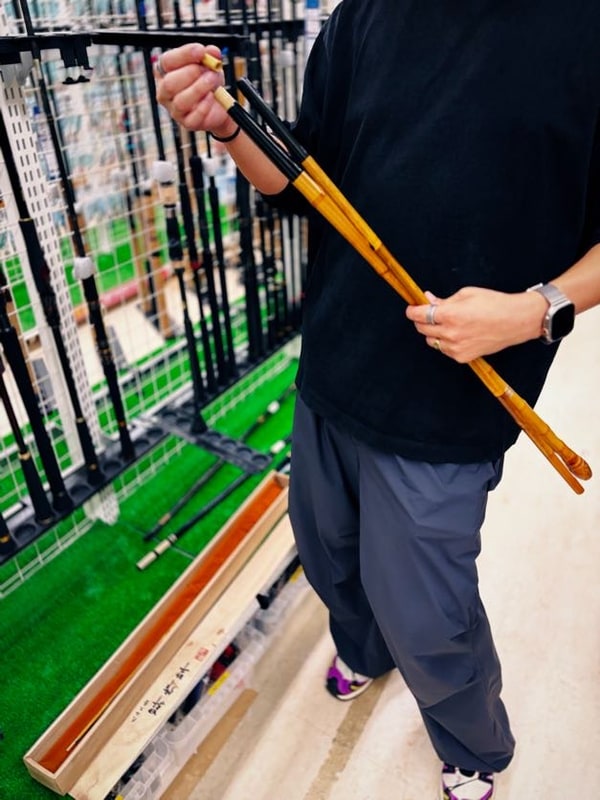
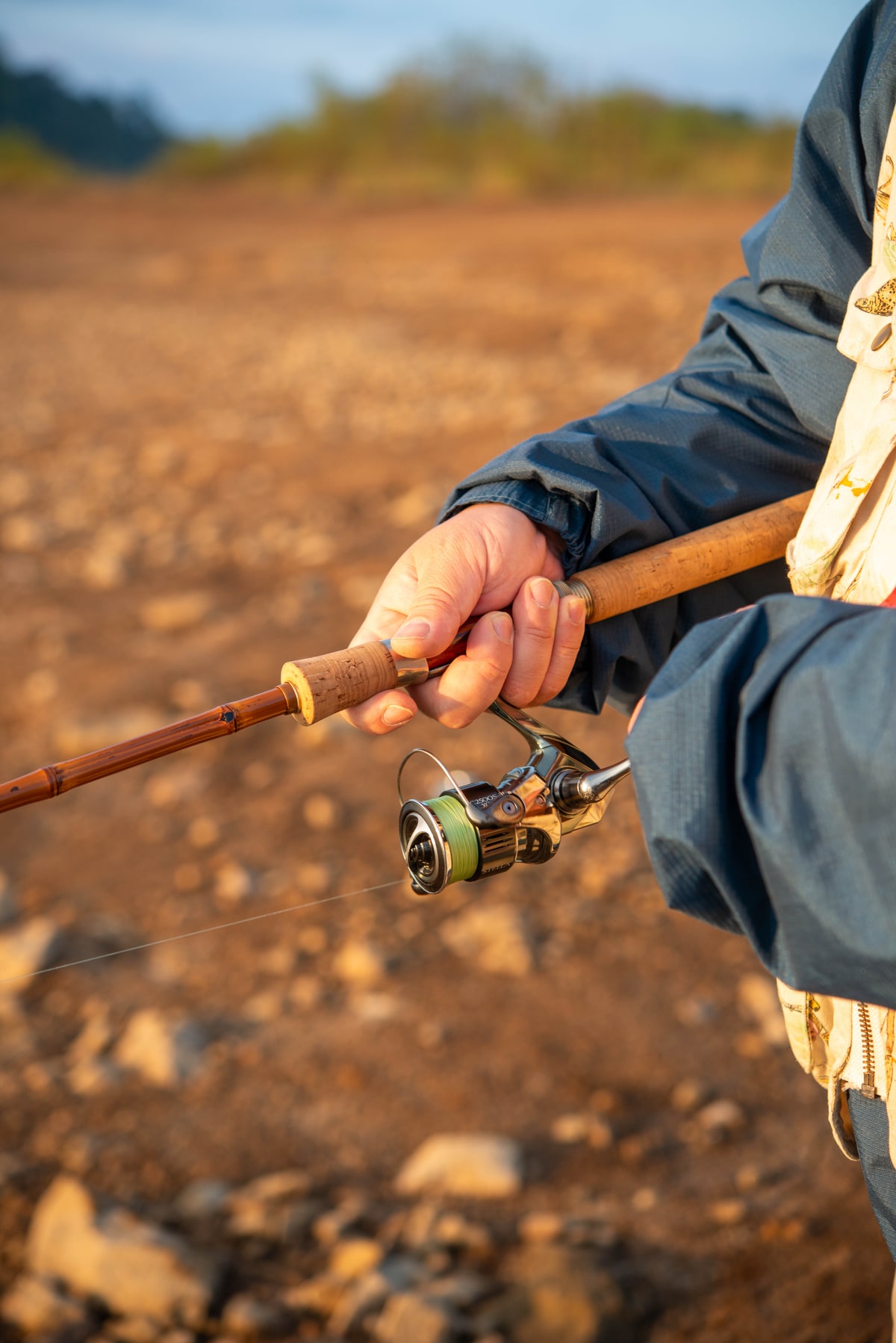
The rods are bamboo as ever. The amber ones that went up onto the roof at the edge of a residential block in Omiya, with guides and a small reel fitted to them. Five days in, nothing about these rods has changed.
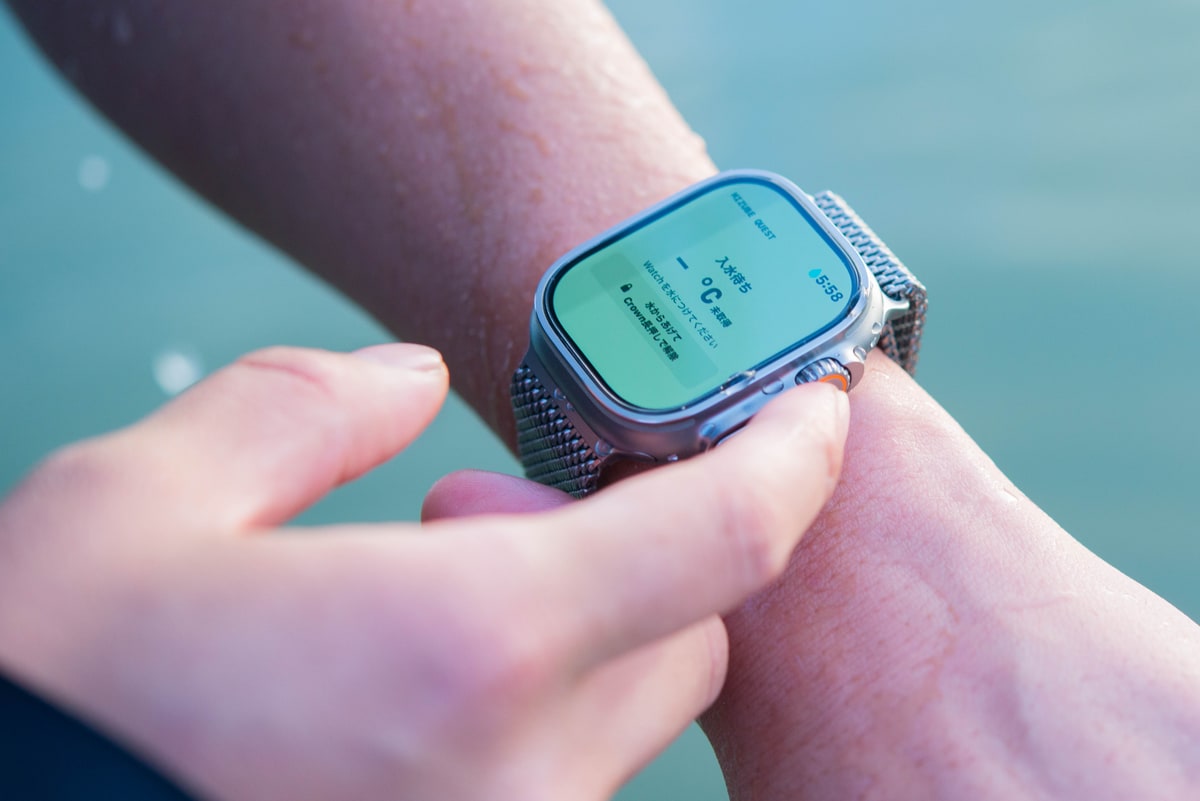
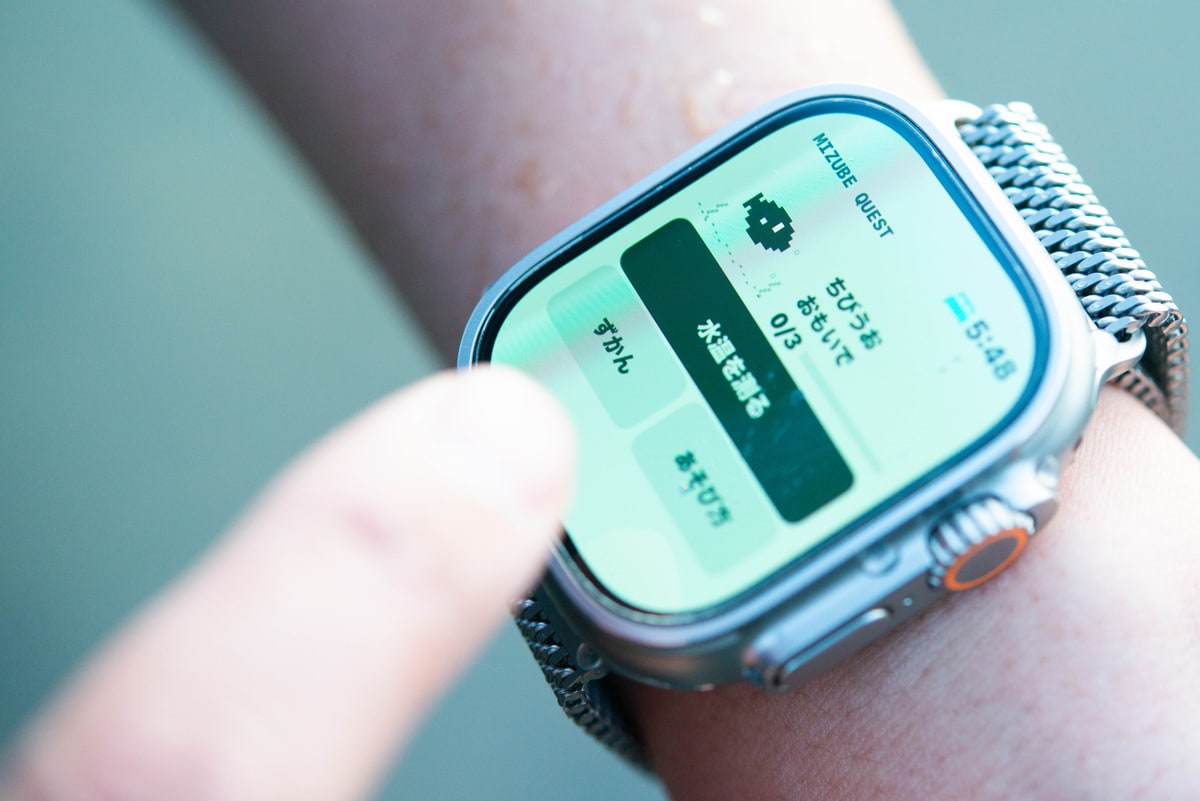
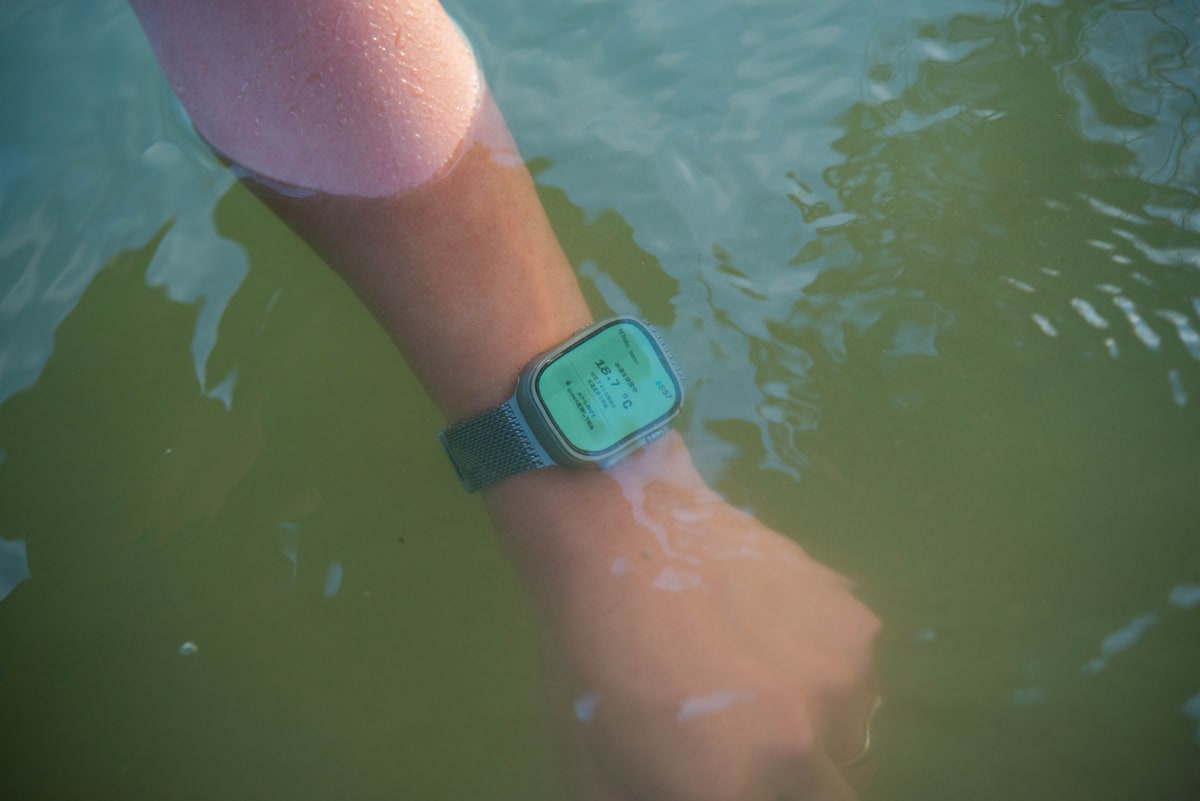
As it was getting light, one of them raised an arm and looked at a wristwatch. There was a pixel fish on the screen with a word beside it meaning small fry, and under that, memories, nought out of three. Take the temperature of the water, apparently, and the small fish that live in it are added to a picture book. It is still being built and is not out in the world. I will leave the name of it off this page. For the next ten minutes or so that person stood in the water in waders, bent at the waist, with a forearm under the surface. There is a photograph of it: under greenish water, only the screen of the watch glowing green. Somebody who came to catch fish, not catching fish, collecting pictures of fish instead. I watched with a fairly straight face.
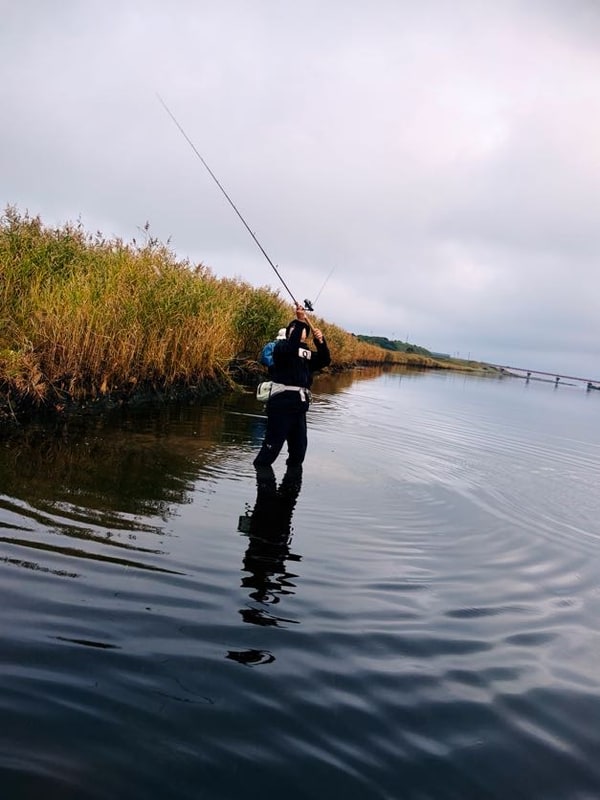
We cast for five hours. From before first light until past ten. Cast, retrieve, move two paces, cast again. Those two paces, repeated for five hours. After half an hour everything out in front of the cast looks the same, and after an hour you cannot tell whether you have already put one in here. There is a way of saying that it begins when you can no longer tell. There is also four hours going by while you still cannot tell.
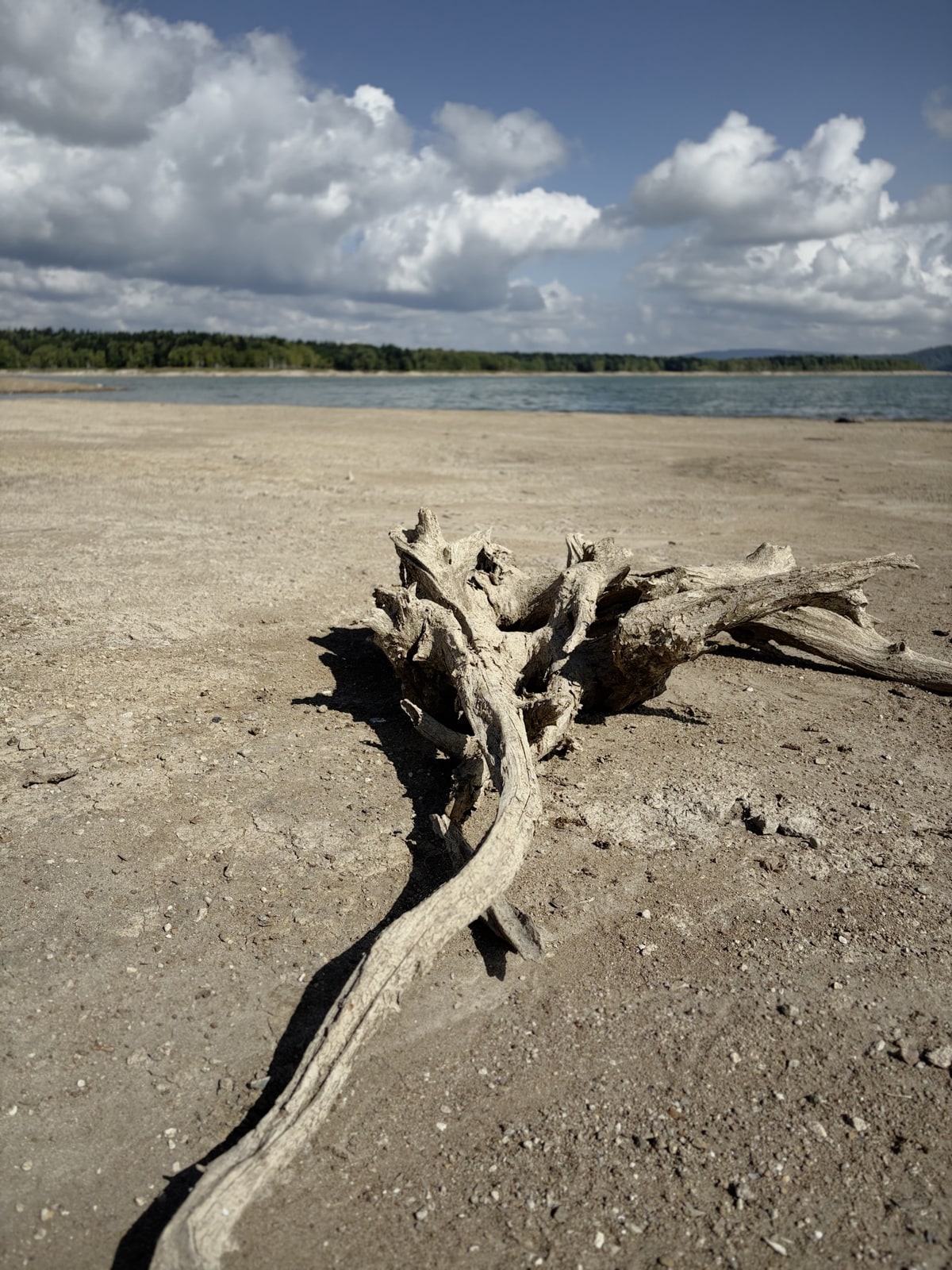
Somewhere in there the sun got high. The bank went brown, the water moved from grey towards blue, and individual trees came out of the forest on the far shore. What had been a black mass at dawn separated into larch and white birch. My hands stayed cold and did not come back. In all that time nothing came. Not a take. Not once the sense of anything touching at the end of the line. Five hours is two words written down and five hours standing up.
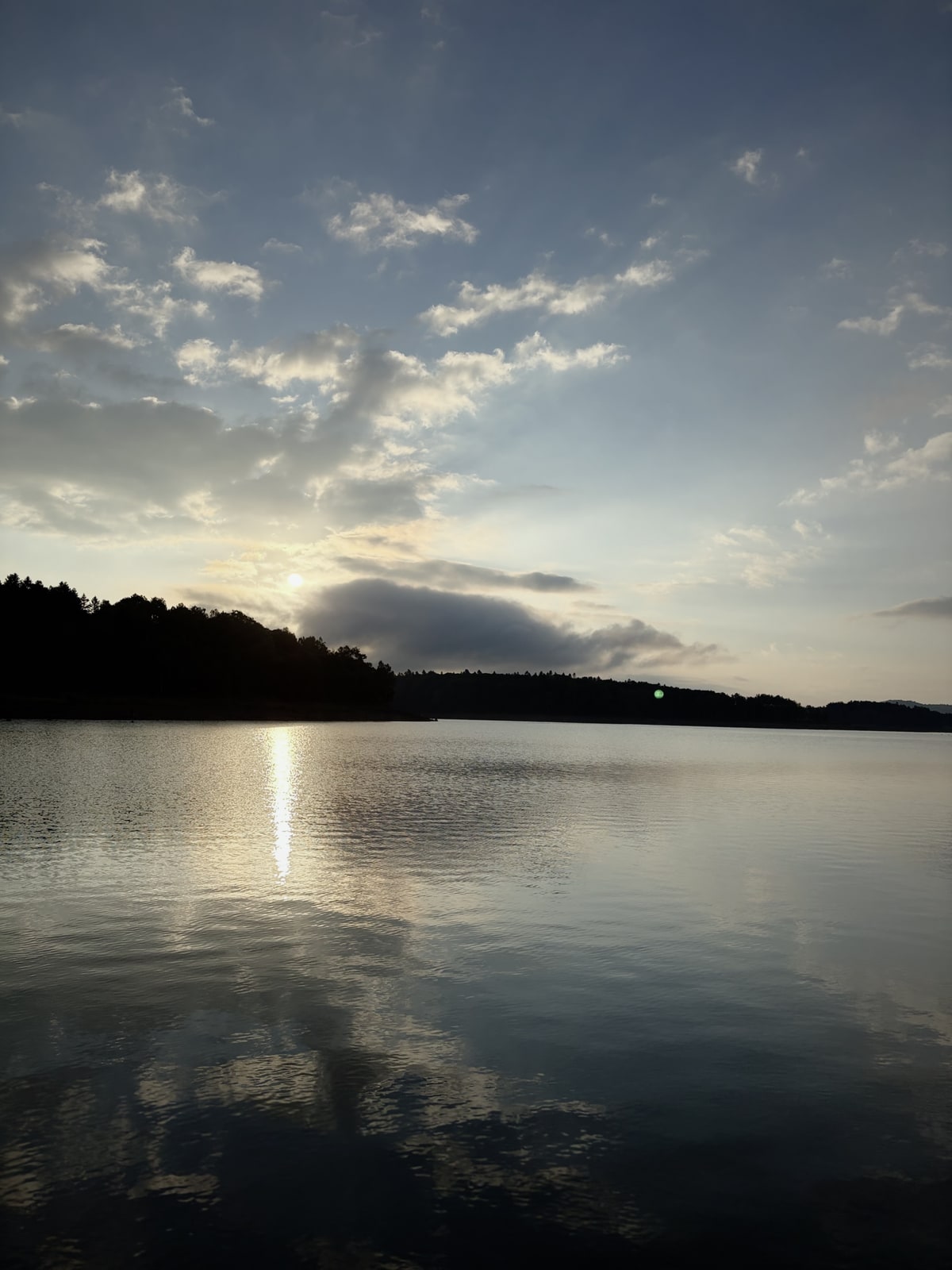
Then somebody started folding a rod. They were laid out on the tarmac and put into their bags in order. When it is time to fold, nobody says how long they are staying. One person starts and the rest follow. It was a beautiful place, somebody said, and somebody else said yes it was. That was all. What gets said on a bank at the end of a fishless day is usually about the scenery. It is what is left to say, and the scenery really was beautiful.
We decided to go and eat soba. This town has the largest planted area of buckwheat in the country, and the harvest runs from the start of September to the start of October, so we had walked in on the middle of it. What suits buckwheat, they say, is a cool climate, a wide swing between day and night temperatures, and morning fog that holds the daytime heat down. Which is to say that what makes this town grow buckwheat is the same thing that produced minus forty one point two. The cold makes the local crop, the same cold makes the record, and while it was at it, it made a construction site badly suited to sinking a valley.
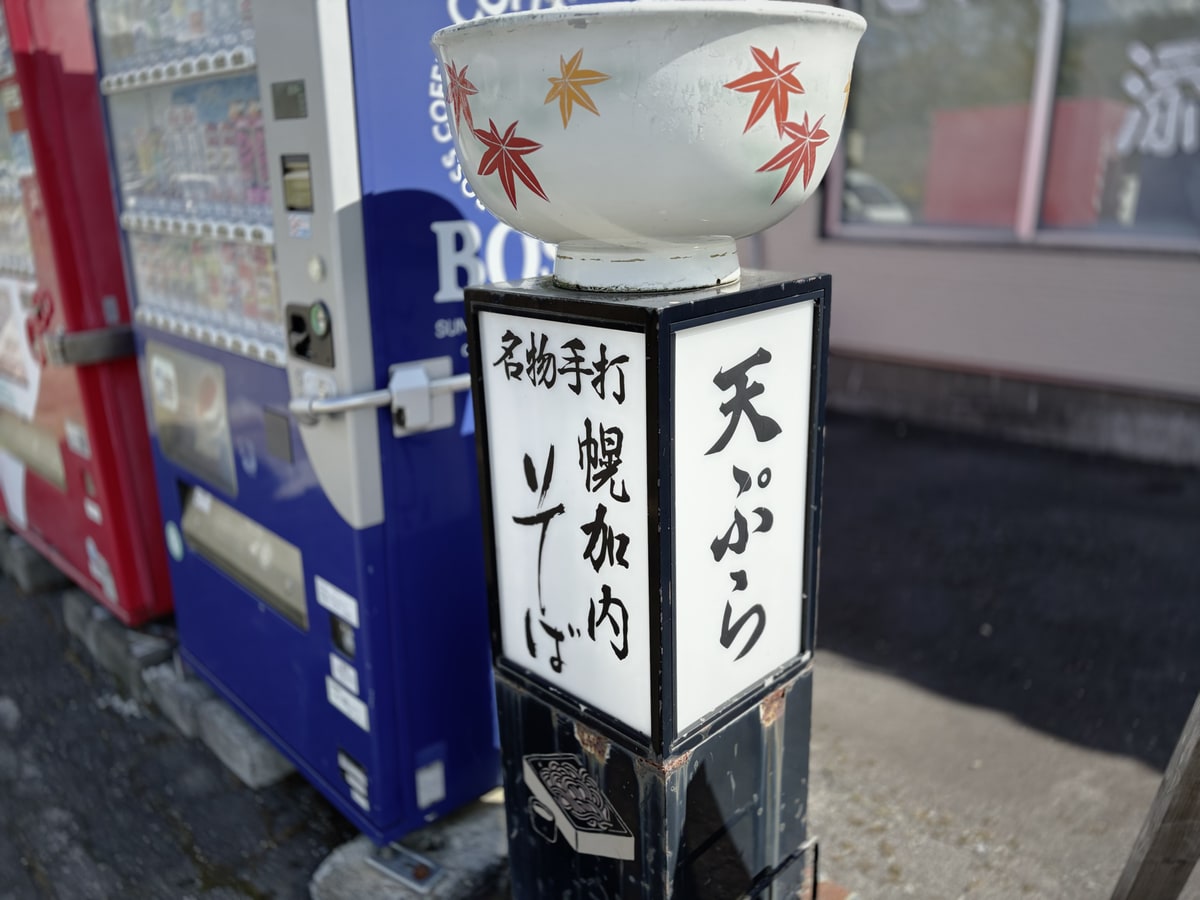
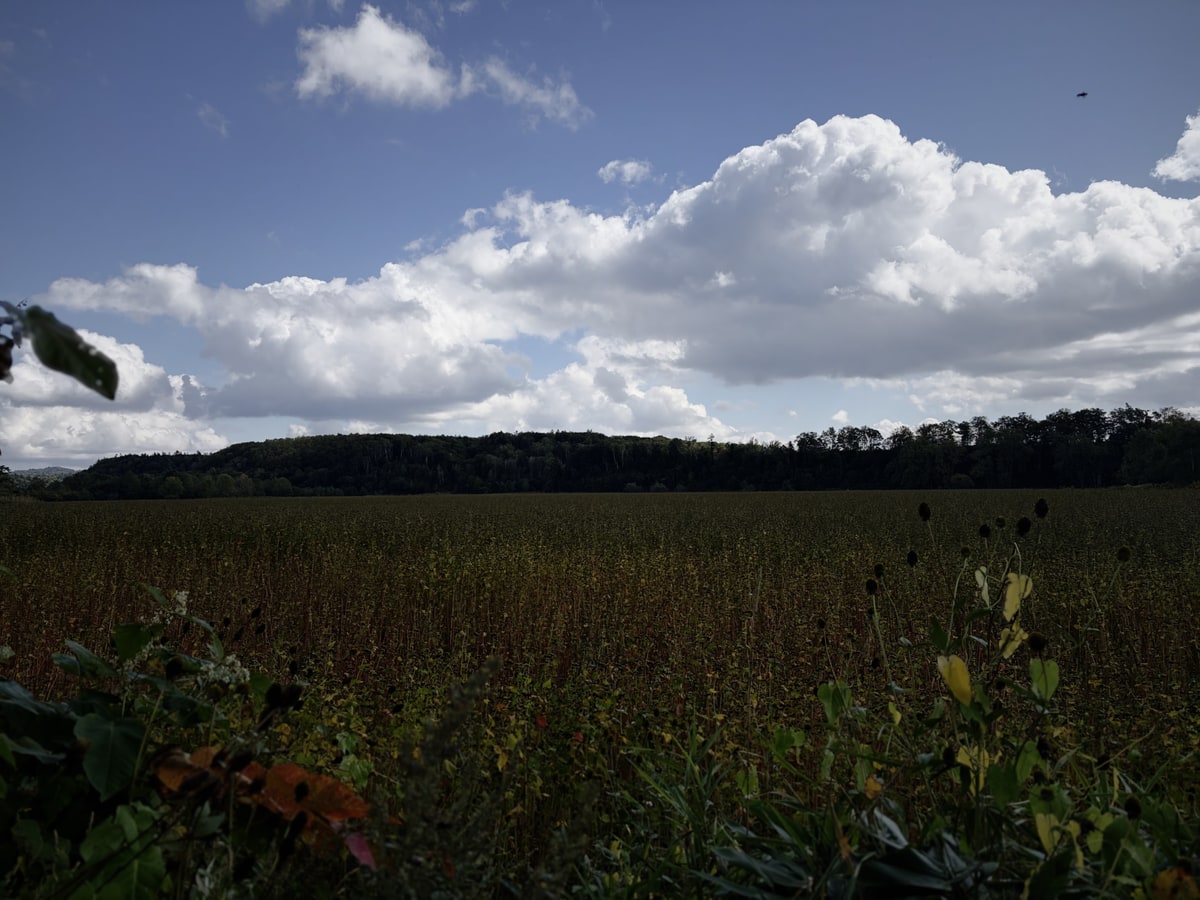
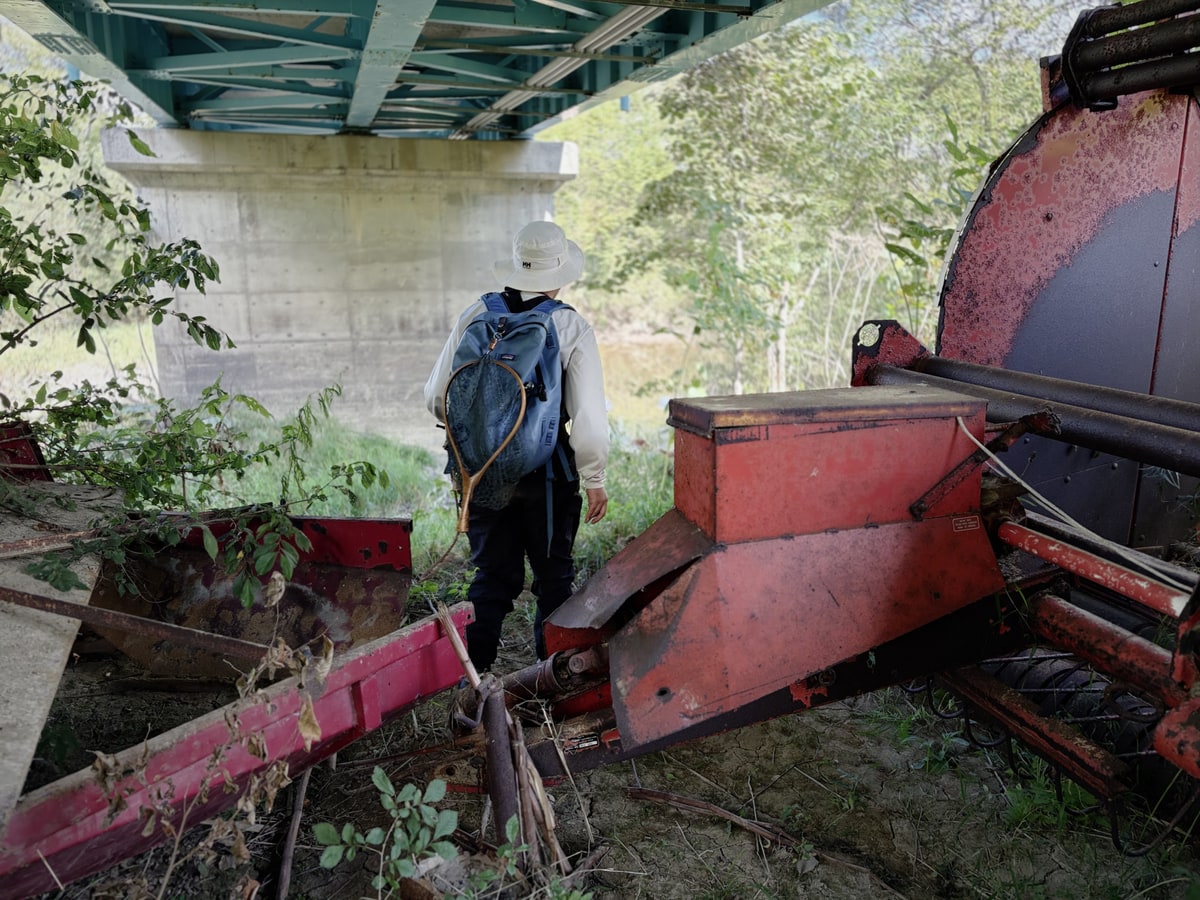
We never got to the soba. On the way down south a river we passed caught our eye and we got out of the car. Nobody decided it. The colour of the water through the window was good, roughly; that is the level of reason on which this crowd stops a car.
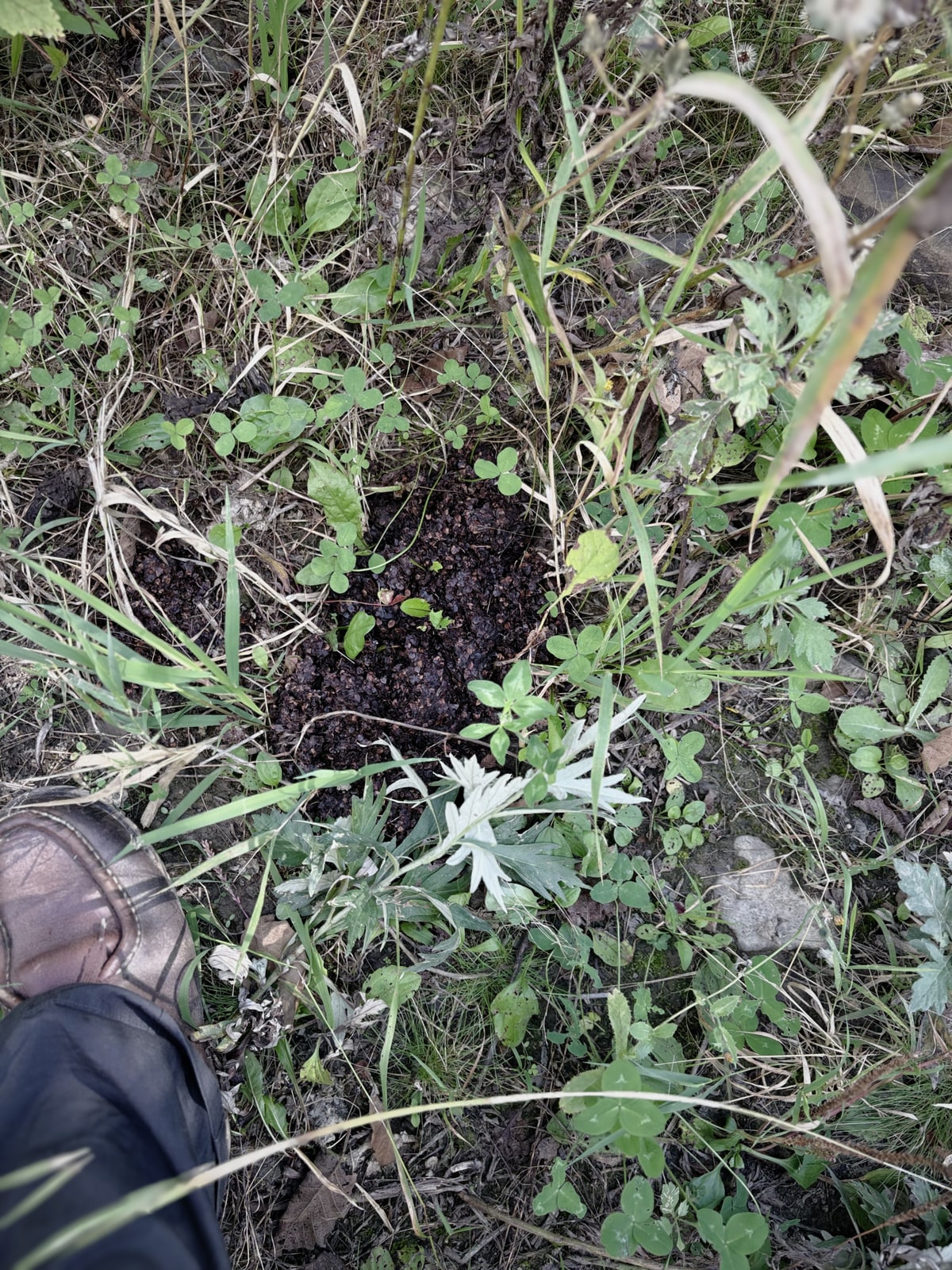
There was something black on the grass. Scat. The berries in it had not broken down and the surface was not dry. In the photograph the toe of a boot is in the frame to give the size. The person taking it was comparing as they shot. It is a bear's. It is fresh. After that we wandered for a while looking for a way down to the water. The talk was about where to get in, and half the talk was about whether we should. Voices got a little louder. Somebody clapped. Nobody had a whistle. Nobody said let us go back, and nobody said it would be fine. Without either of those being said, we spent twenty minutes looking for a gap in the scrub.
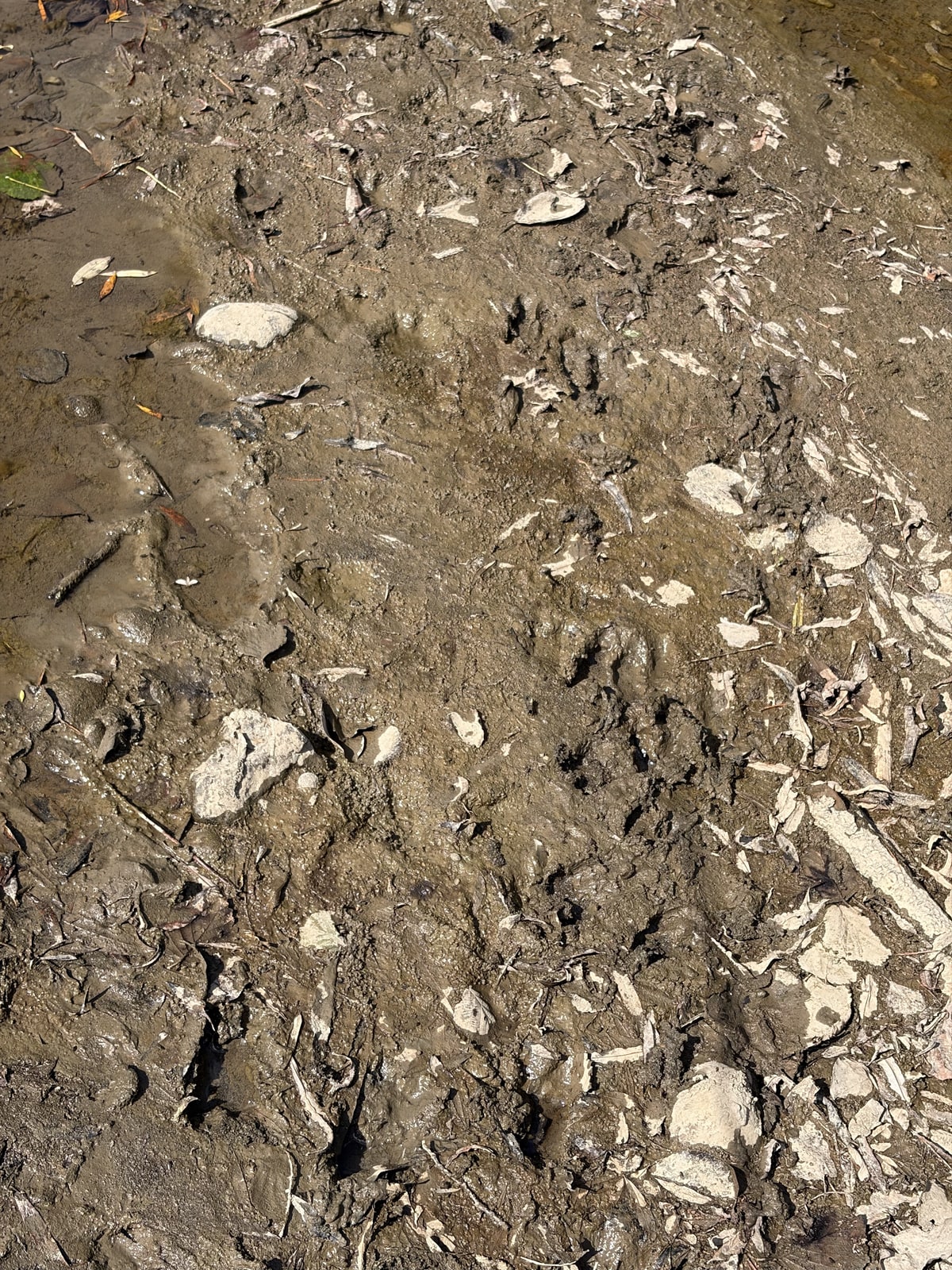
There were tracks in the sand and mud at the water's edge. Not one set. Fore and hind paws together, and past the toe pads the marks of claws. Large ones and less large ones mixed. They had come down to drink and gone back up, and from the way the edges had crumbled they looked like this morning's. This is their river. We were about to go into it. Nobody spoke for a while, and I think that was less from being startled by the tracks than that it was the stretch of time in which each of us was privately deciding whether to go in. In the end everyone decided the same thing.
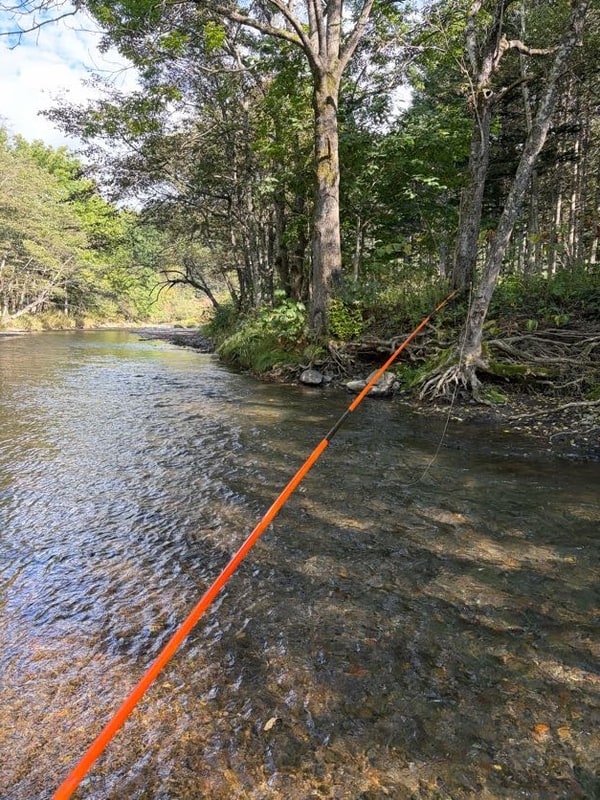
The water was low, drawn down by the dry spell. Low means less cover for the fish, and for people it means you can stand up in it. Knee to thigh deep, sand and small stones on the bottom. Both banks closed in with willow, and only the sky open in a long thin strip. We spread out to the distance where a voice carries but a figure does not show.
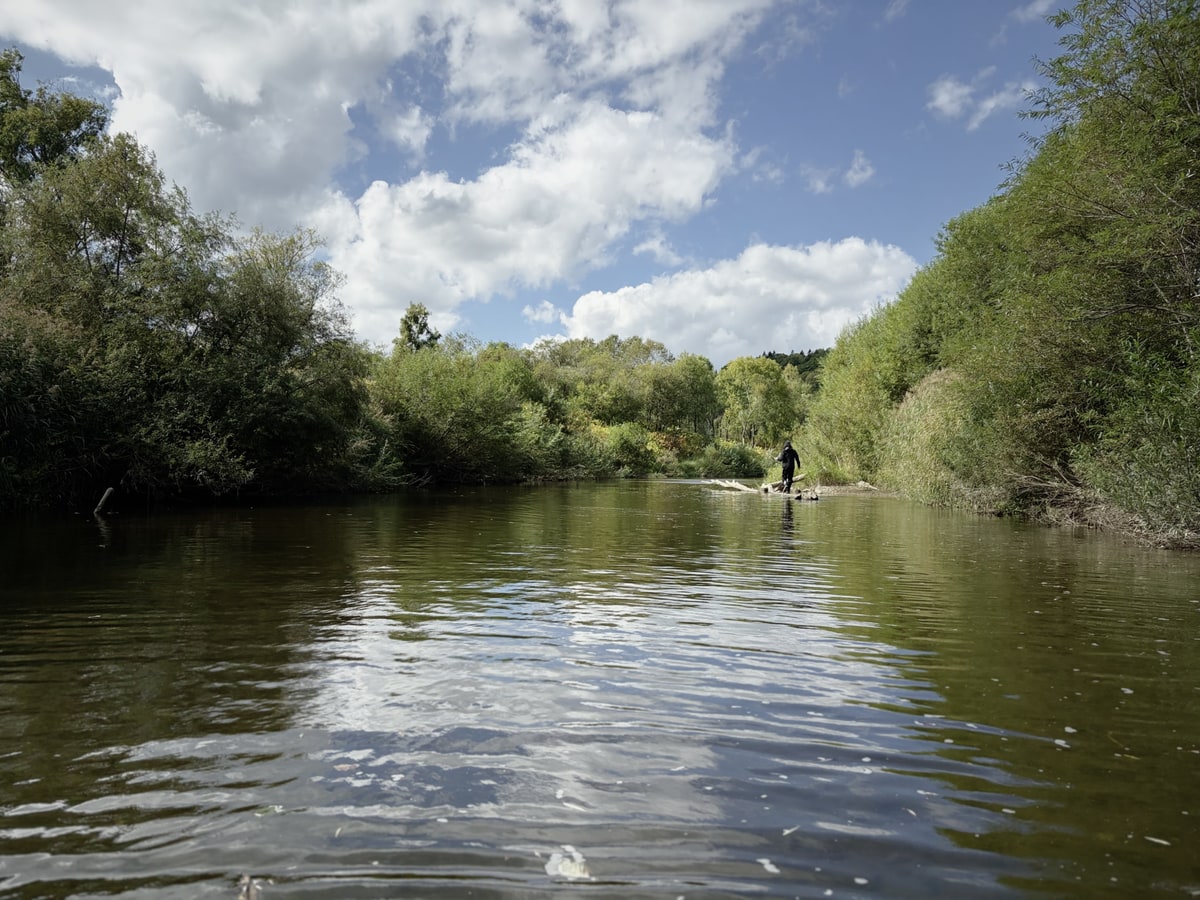
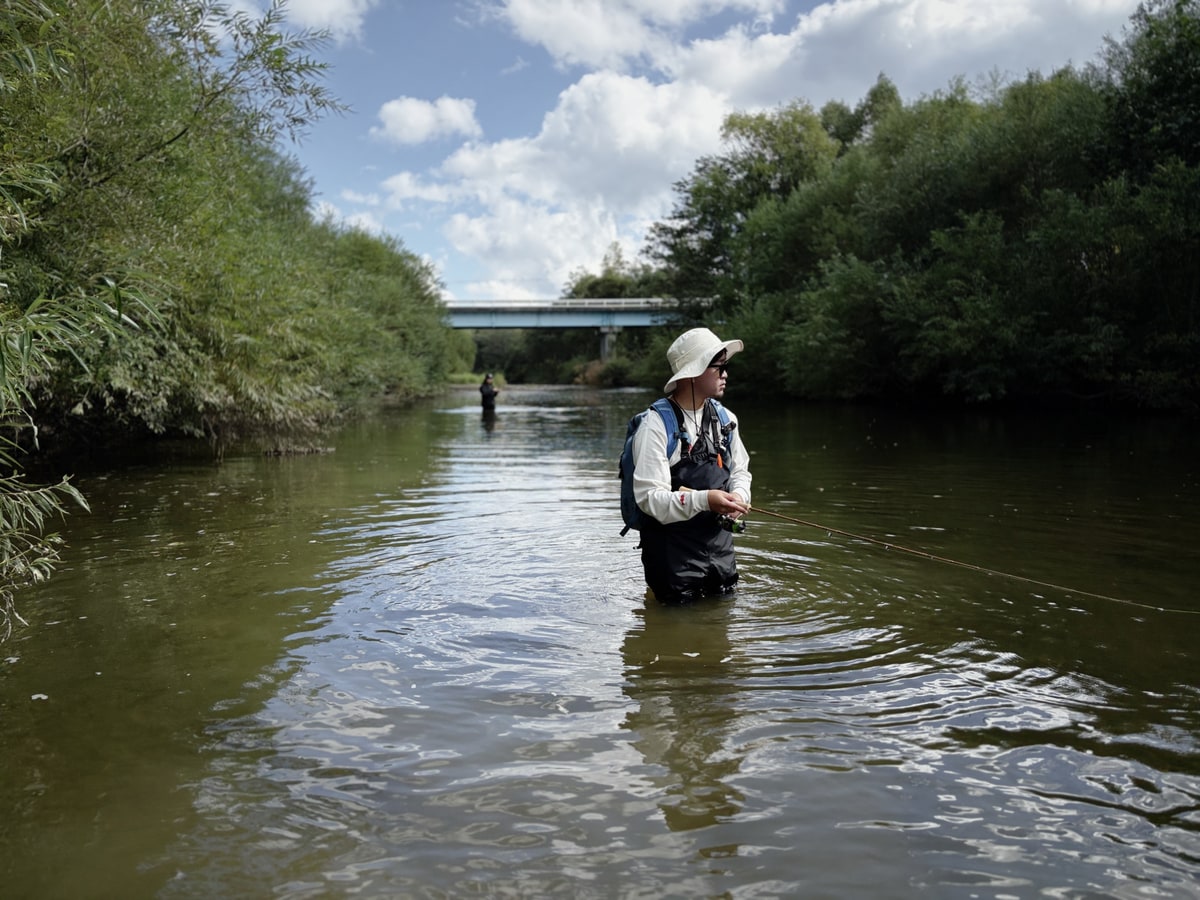
The takes came as soon as we were in. Not one. Run the lure down the same seam and it comes in the same place in the same way. Comes, and does not stick. Comes again. That went on, and somewhere past ten I stopped counting. Then move a little and it stops dead. Ten metres down, ten metres up, nothing. It is that one spot and nowhere else, and the rest is quiet. A river looks like the same water all the way along, and the fish do not use all of it the same. This is the kind of day that makes the body learn what the head already knew.
Small ones came at it hard. Fish too small to get a hook home knocked at the back of the spoon again and again. At the time I took them for minnows. Looking back now, I think those were ito as well. Fish at a size that cannot take the hook, going after a piece of metal bigger than they are, over and over. I ought to have known it; I had read it in any number of places.
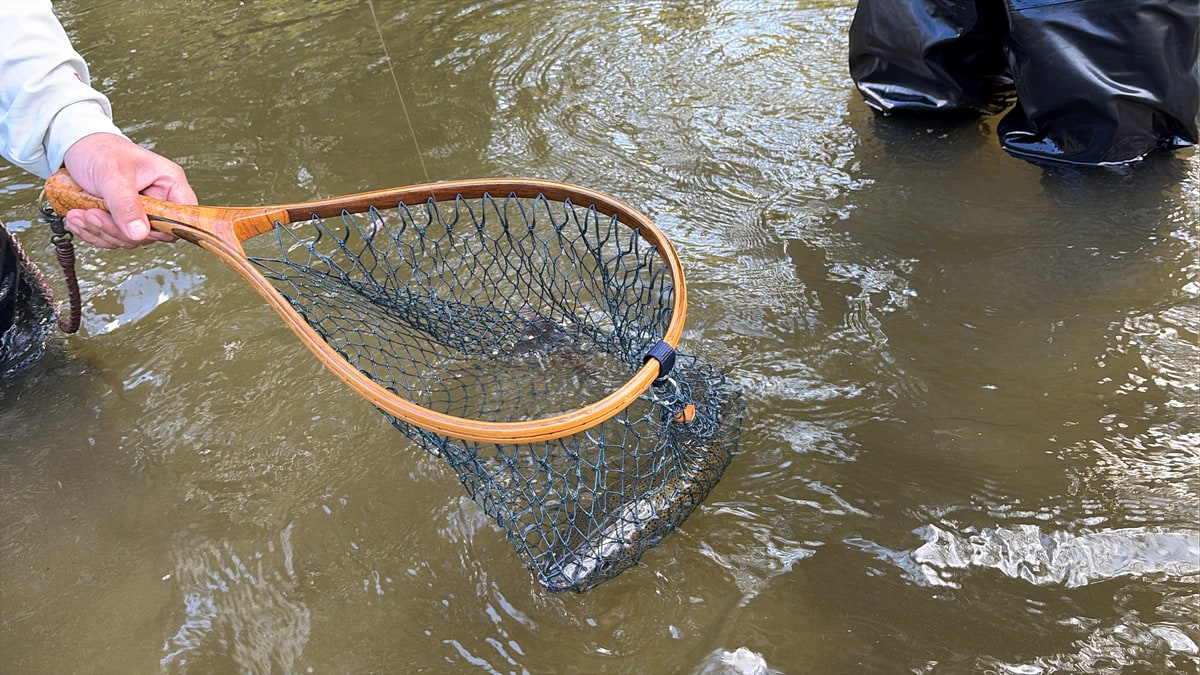
And then it took. Twelve fifty-two. Once it was on, it was quieter than I expected. No run, no jump, two pulls that were only heavy, and the rod bent from the butt and stayed bent. Nobody shouted. With the oddly careful footwork of people who think a sound will shake it off, three of them moved the same way. The hand with the net went out first and was held ready under the water. That interval is the longest part of it. In fact it can only have been some tens of seconds.
It came into the net. Laid on a palm in a black sleeve and lifted with the fish still in the water. Fine black spots crowded from the back down onto the flank, the belly silver, the head clouded yellow-green. Long in the body. A big mouth. A small silver and black spoon still hanging at the front of it. Four days of driving, and on the fifth, a face we were seeing for the first time. This is the shape an ito that lives in a river has.
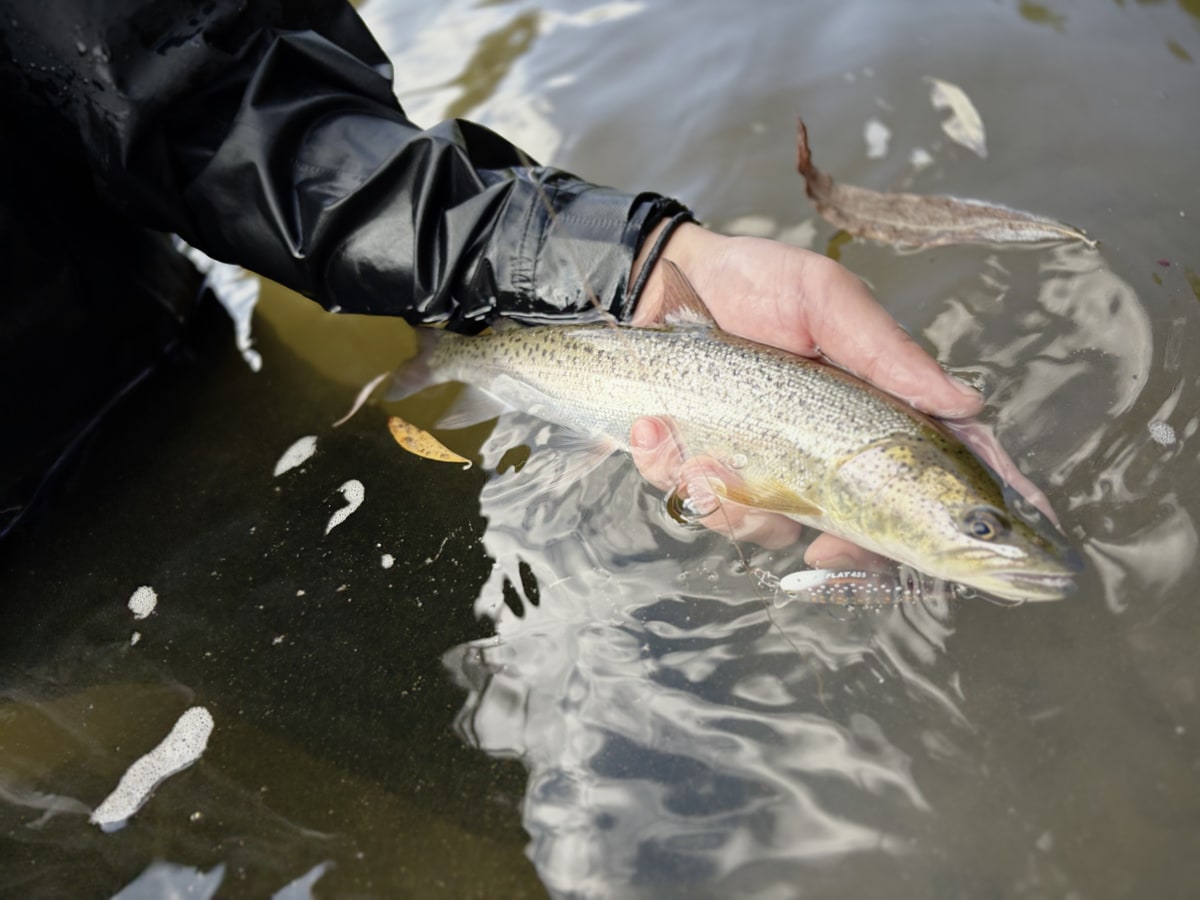
The hands holding it were plainly shaking. Not from the cold. If you want the temperature of the water a machine will do it for you, and the impounded area and the lowest temperature have been counted by somebody. Nobody counts the shaking. Nobody said anything. It was not that there was nothing to say, but that we knew it would spill a little if it were put into words.
The river we had gone into is the Uryu. The lake we stood at that morning was made by damming this river. The Uryu comes out of the mountains in the north, runs through the lake, and joins the Ishikari a hundred and sixty kilometres on. Which is to say that between morning and midday we had stood twice in one and the same river. Five hours on the side with the name and nothing came; it came at a bend with no name. The water wears the same face either way.
When the fingers came away it shivered once and went off into the brown water. After that the net went back into the water and we finished there. It was a place where another one might have come, and nobody said so.
Measuring is a strange business. On this day the temperature of the water was measured, and the impounded area, and the lowest temperature, and the operating ratio of a railway line: all of it counted. Where the counting had been done there were no fish. The fish were at a bend with no name and no measurement, and the bear tracks had got there first. Four days of driving, and this was the fifth. Was it long? It was long. A day spent opening one unknown water after another does not hold a single day's worth of anything. Counted out it comes to five days, and the body has the sense of having been there a good deal longer.