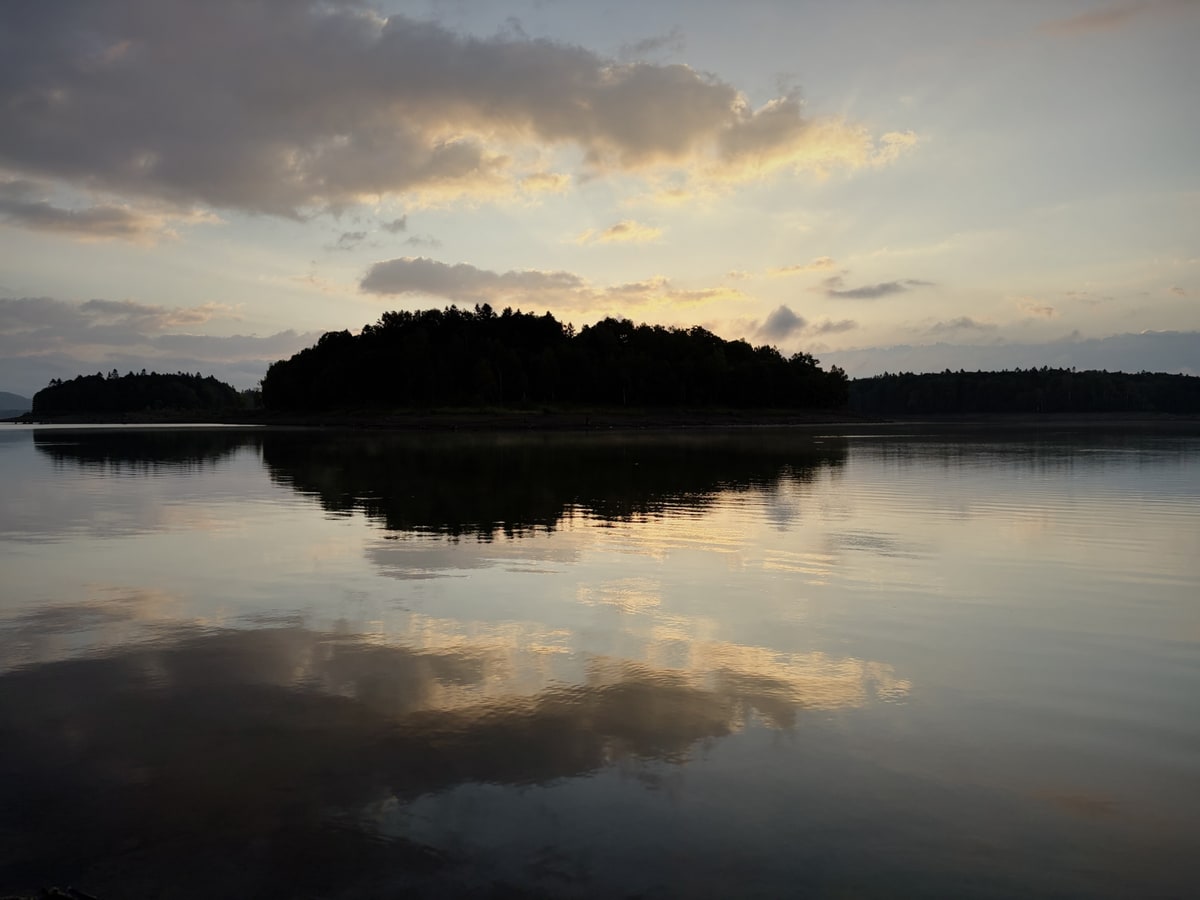
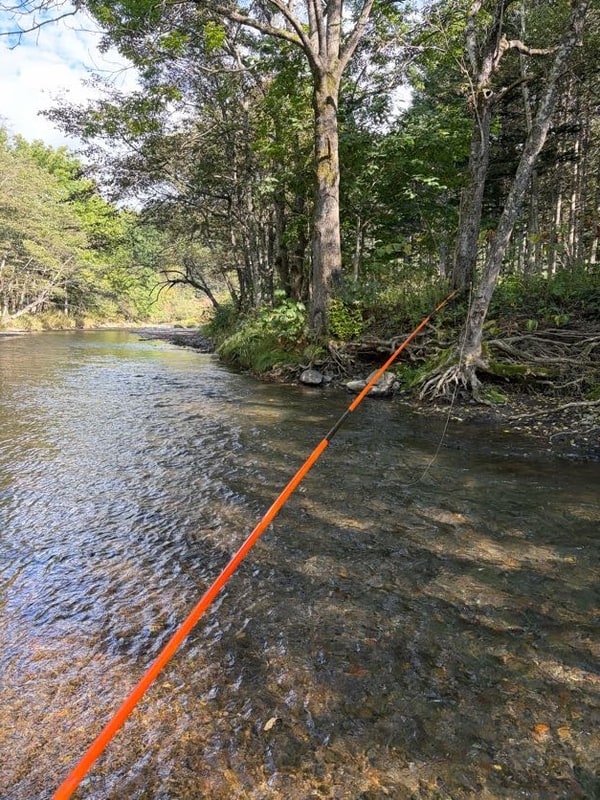
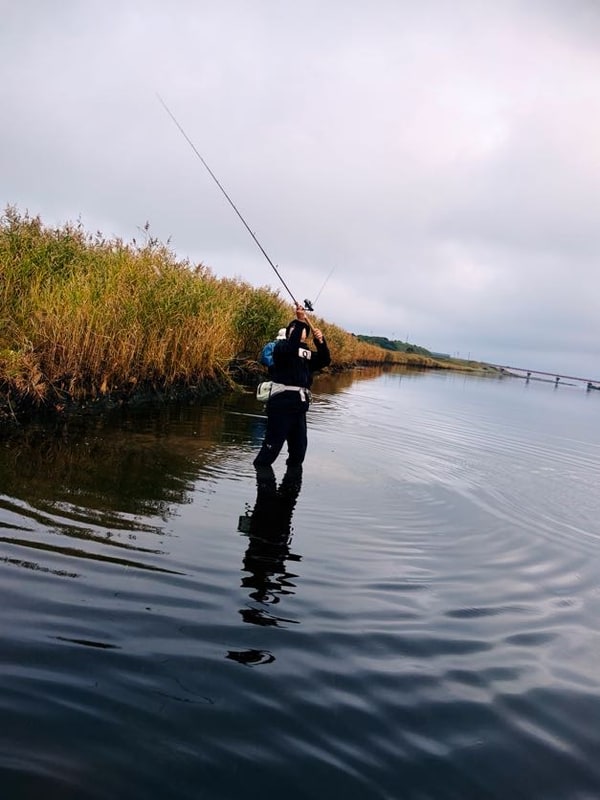
Dawn came somewhere around Iwate, and it was raining. Fine drops hit the windscreen and the two tail lights of the car ahead bled at the edges. The sky was a colour you could not settle as white or grey, and driving an expressway on a morning of that colour, you forget once where it is you are going. Forgetting, the car goes on north.
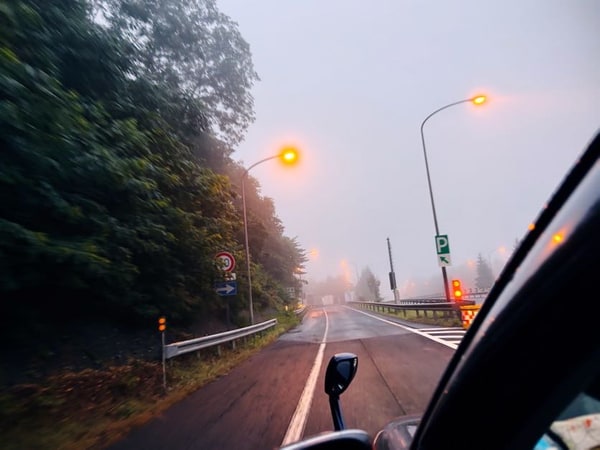
We reached the port at Hachinohe a little after seven. The ferry terminal. The ship stood beyond the pier with its flank to us, white hull with a red mark on it. The waiting room windows were running with rain and past them you could see the line of cars. The fare slip, when I looked at it, was printed twelve thousand yen. Crossing a sea with your vehicle along is, when you think about it, an impertinent way to travel.
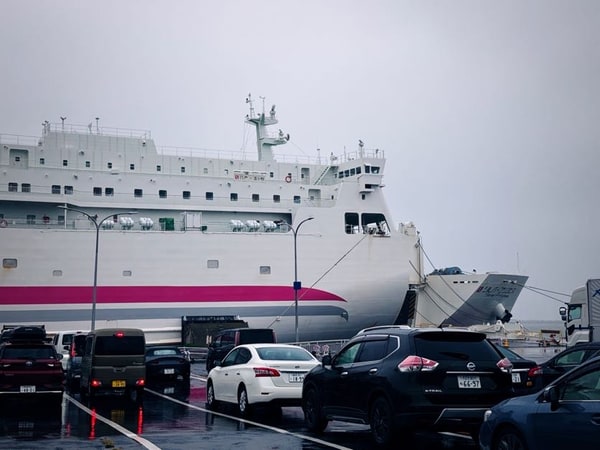
An announcement came before we boarded. Swell from the typhoon is coming in, it is going to move a great deal, brace yourselves, is what the captain said. There was an odd amount of force in the delivery. That was a threat. Inside the harbour the water lay as though oil had been poured on it, and there is nothing harder to take at face value than a warning heard while looking at a sea like that.
In the small hours of that day the large typhoon, number twenty five, was moving west northwest a hundred and ninety kilometres southwest of Chichijima. That is over a thousand kilometres south of where we stood. Far away, surely, I thought. A thousand kilometres and more is about twice the length of the Tohoku Expressway we had driven the night before. The sea at a place we could not have reached driving from last night through to this morning was about to pick this ship up.
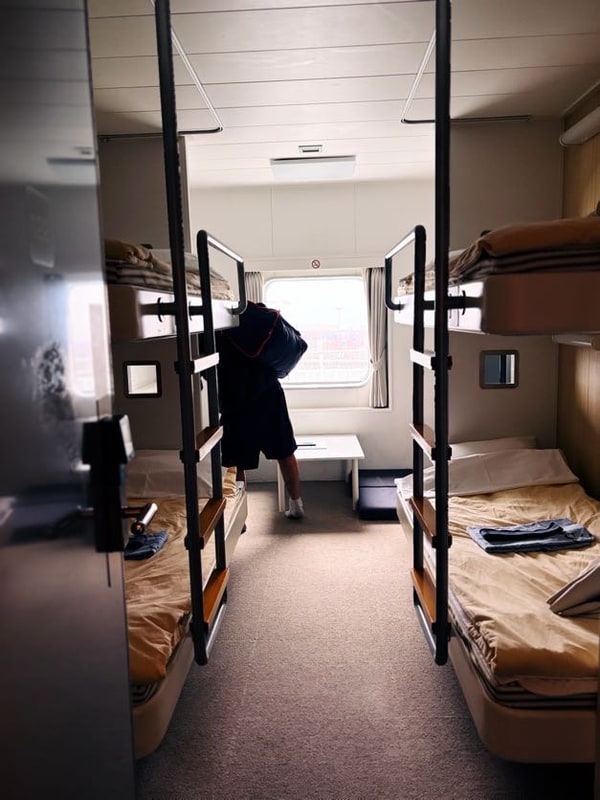
We had taken a first class cabin. Two sets of bunks facing each other, one window, a raised platform at the back. Whoever had been driving through the night threw their bags onto the upper berth and lay straight down. I cannot sleep to order, so I went out on deck. The rain had stopped but the wind was cold, and beyond the rail was a grey sea with no telling where the horizon was.
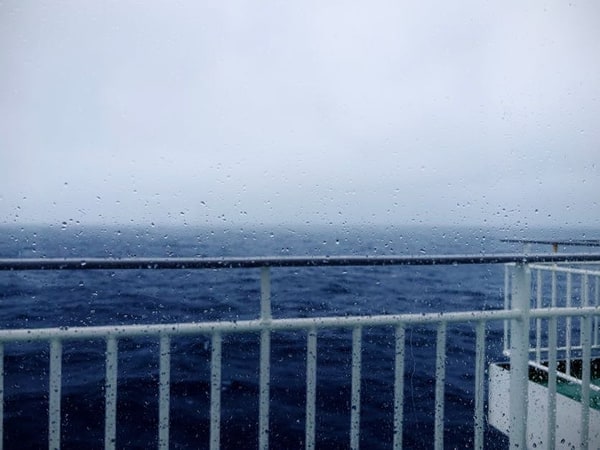
For a while out of the harbour it was nothing much. What changed came when we reached open water: the bow lifts, holds a moment, and drops. Where it drops, the hull is struck from underneath. A thud that carries into the stomach, and it comes back at dutifully even intervals. Dutiful is the trouble with that sound. Violent motion you can at least brace against, but a thing that arrives at the same interval teaches the body when the next one is due.
Swell is the name for waves that travel out of the area where the wind is blowing, and unlike wind waves it is round in form, with a long wavelength and a long period. Waves raised by a typhoon thousands of kilometres south can reach the coast of Japan, and the summer version has a name of its own, doyonami. Nothing is given a name unless it comes back every year. People do not name a thing that comes once. Far away, surely, I had thought, and that was shallow of me.
Back in the cabin everybody had the same colour in the face. Not blue so much as white. Nobody talks. Talking is known to bring it on, so each of them held the edge of a berth and fixed on some point on the ceiling. A room full of people who are seasick goes strangely quiet. About half of the eight hours was that quiet.
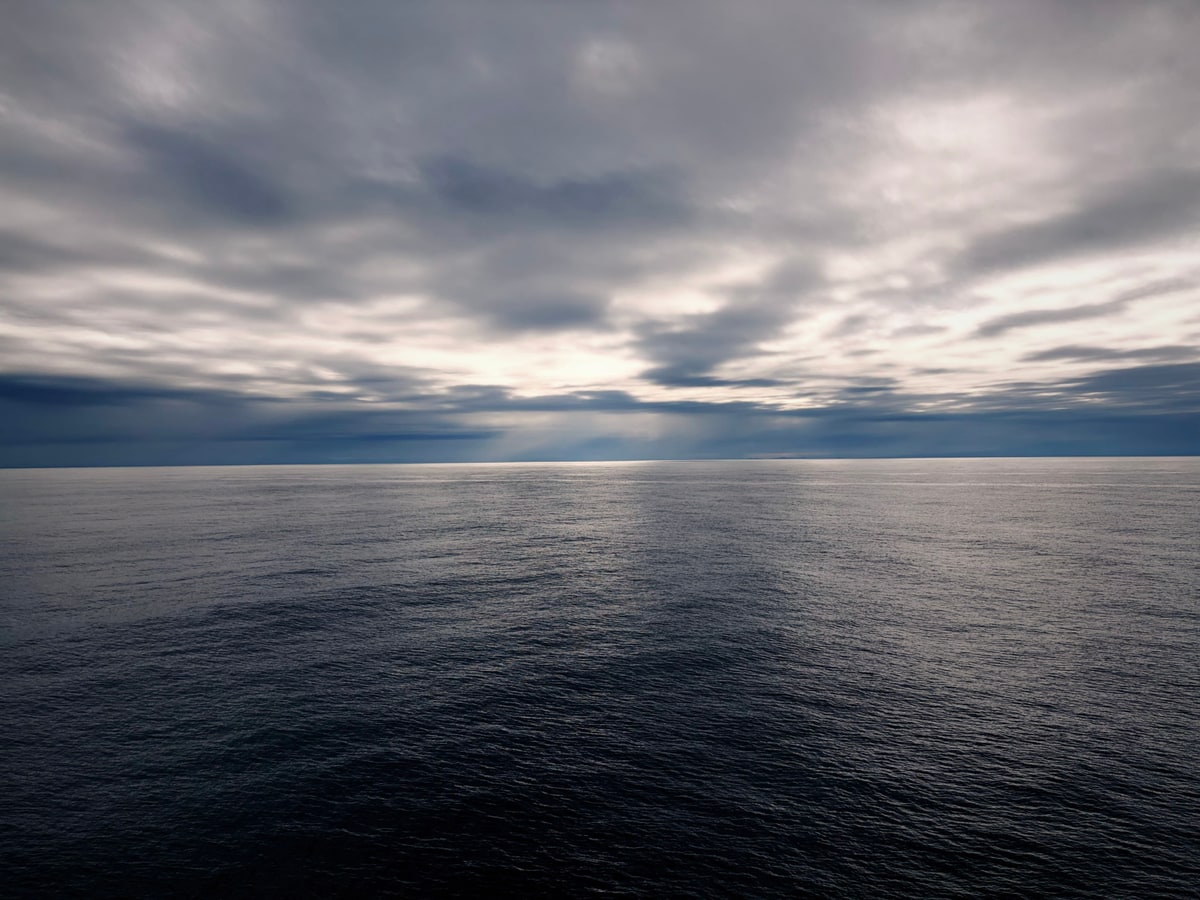
Somewhere past noon light dropped through a break in the cloud and one part of the sea alone went white. Not so much lit as thinned, just at that patch. For as long as I stood on deck watching it, I forgot that we were moving. What you can forget is the motion. What stays is having been moved.
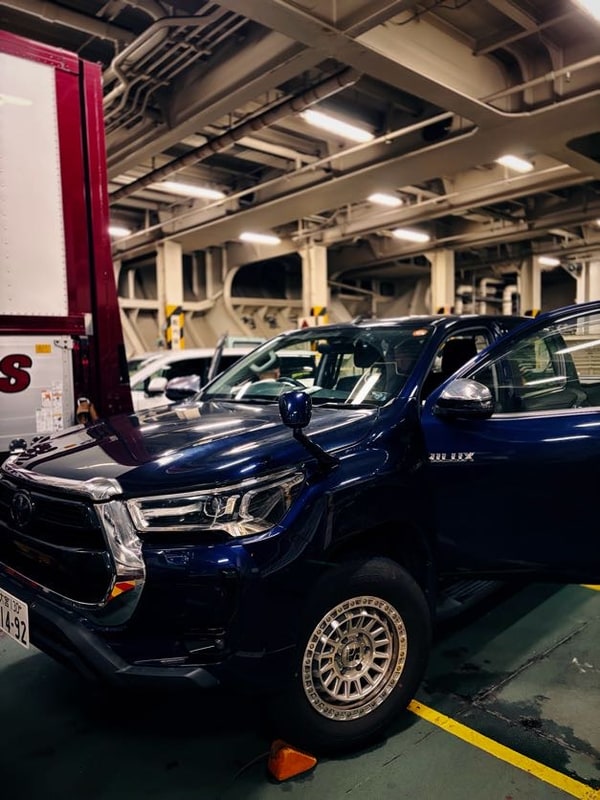
Just before four we went down to the vehicle deck. Between the stacked freight and the line of cars stood a black pickup with the rods still on the roof. Seen in the belly of the ship, it was remarkably small. The doors opened, outside light came in, and that was already Hokkaido.
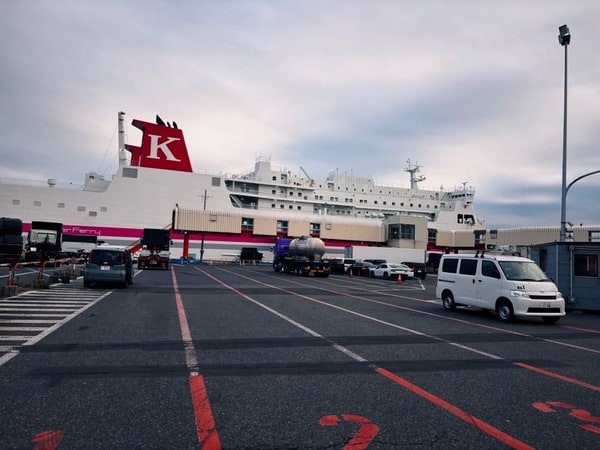
We came ashore at Tomakomai. It is a town where the chimneys and the white steam reach you before the name does. The paper mill was put here in 1910, the forty-third year of Meiji, when the country was still importing the paper its newspapers were printed on. To make that paper inside Japan, a site was chosen with mountains around it and the water of Lake Shikotsu behind it. Lake water serves for making paper, and dropped through a turbine it serves as electricity. It is still the largest newsprint mill in the world under a single roof, and about a quarter of the newsprint the country needs leaves from here.
The port was not originally here either. There was no natural bay. It was cut into the land from 1951, the twenty-sixth year of Showa, an artificial harbour. Which is to say the town is made of things people put where nothing was, the paper and the port alike. They put them there, and the place began to run. And we had come up into that town with the displaced side of the trade lashed to our roof.
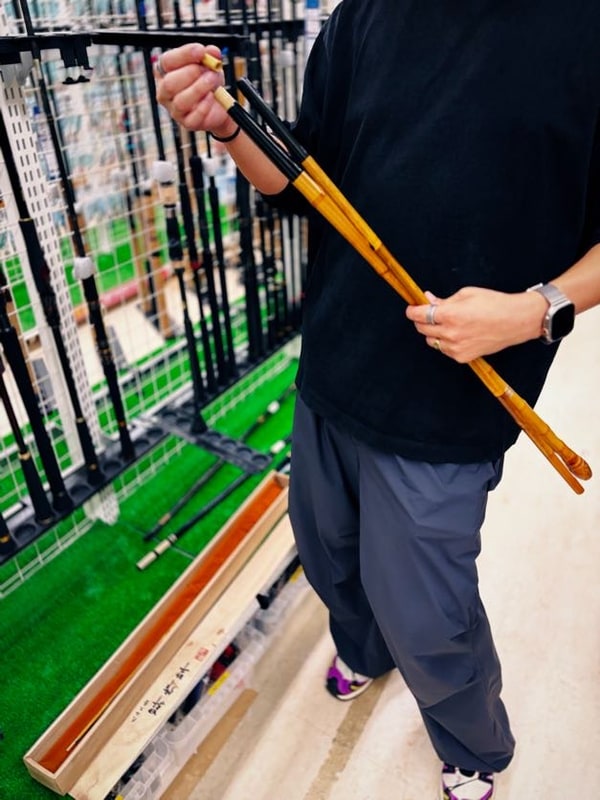
We went straight out to a big tackle shop on the edge of town. A wide place, with carbon rods by the hundred down both sides of the aisles. At the end of one of those rows was a glass case, and inside it a single paulownia box lay on its side. Characters in ink on the lid, a vermilion seal stamped in the corner. Taken out, it was an amber bamboo jointed rod. In the line of Edo wazao, we were told.
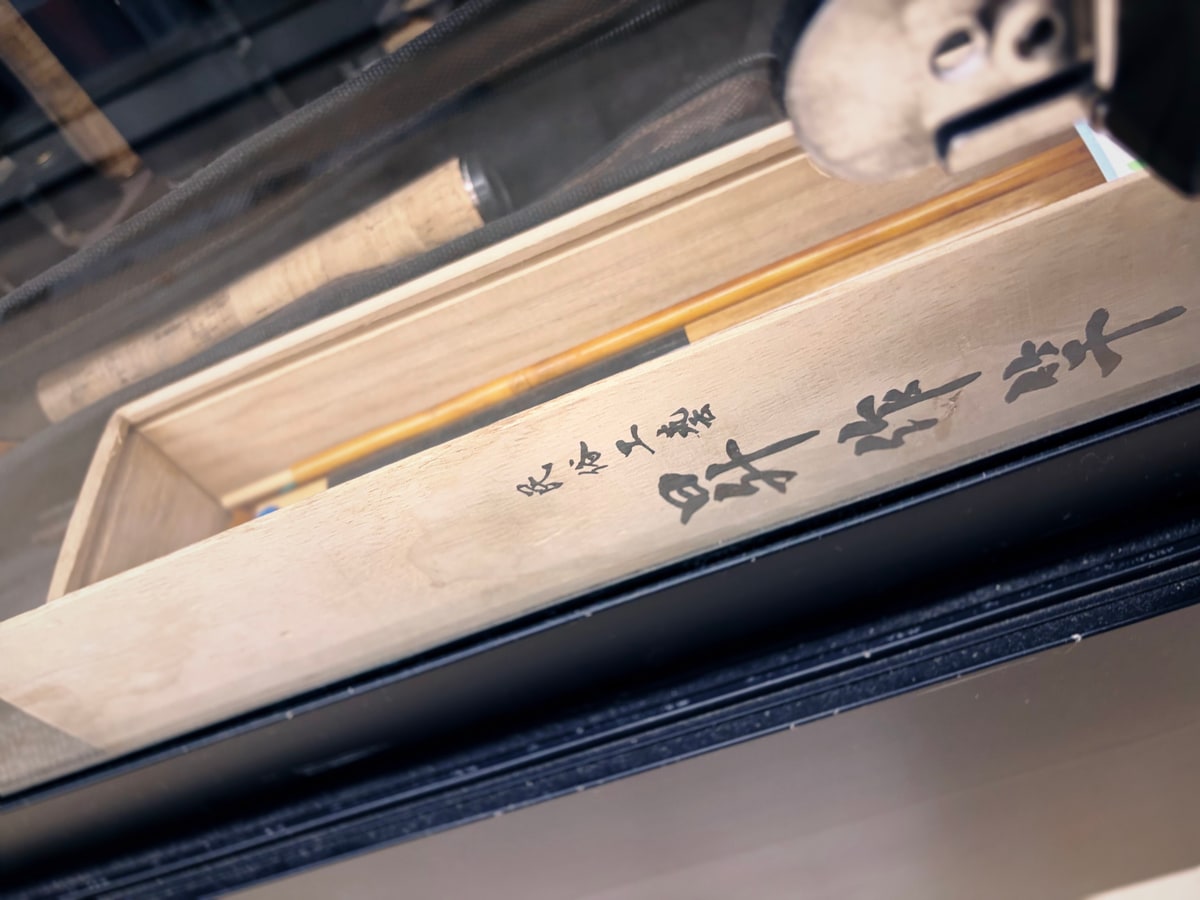
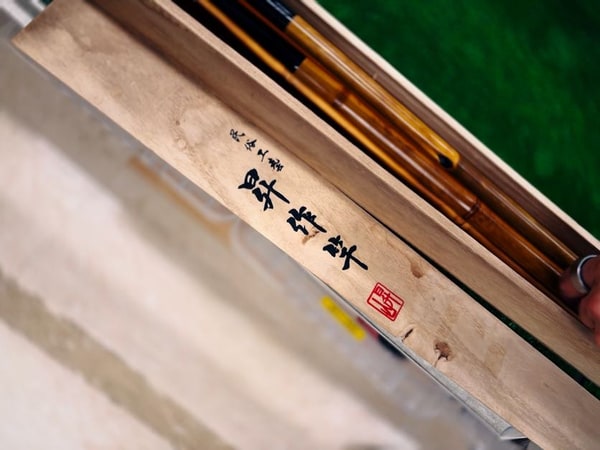
Edo wazao is settled by lineage. A rod may be made in Tokyo, but if the maker does not belong to the lineage it is not Edo wazao. It begins with Tosaku, in front of Kotokuji in Ueno, and the year of that founding is split between the sources. The house itself gives 1783, the third year of Tenmei; the municipal literature writes 1788. Five years apart, and neither has corrected it to this day. Out of Tosaku came a pupil, Tsurine. Tsurine's own child was Chu, and Chu's uncle in a collateral line was Ji, and Ji's pupil is held to be Tatsu. It is not one straight line of descent.
On the roster of rod makers now living there is a name, Jusaku. This rod is by Shosaku, a pupil of Jusaku, and Shosaku made rods in Korea. Jusaku was keen on spreading the craft outside Japan. The name Shosaku, however, is not on any published roster of rod makers. Neither the pupil line from Jusaku nor the making in Korea appears in anything published. A rod from a trade settled by lineage, leaving no footprint on the side of the lineage. It may be no more than a disagreement between what I know and what has been printed, but that there is no way to check it I will set down.
What nags at me is where the bamboo came from. The grip of a wazao is hoteichiku, so called because the nodes at the base swell irregularly and resemble the belly of Hotei. That plant is native to somewhere around the Yangtze basin in China and came over to Japan, where it went wild. The yadake used toward the tip runs from Honshu to Kyushu and is said to have spread by planting. If the rod was jointed in Korea, was the bamboo from over there, or carried across from here? It is not the sort of thing you learn by holding it. While I am at it, there was a period in this country when fishing rods of hoteichiku were a star earner of foreign currency. The ones making them and sending them out were on this side.
It was put together there on the floor of the shop, and held. A bamboo rod in the hand with a row of carbon behind it is a strange picture, and the shop staff watched without saying anything. There is no sound when a joint goes home. When the joint seats, what changes is the feel in the palm, and that is how you know it has become one rod.
Strange or not, carbon is what folded this trade. Demand fell away as soon as glass and carbon appeared, and a great many rod makers gave up or retired. Several hundred of the side that folded it stand in rows, and one of the side that was folded lies behind glass. The paper and the port in this town were both put where nothing was, and the town came of it. As a story about the thing that gets put there winning, this ought to be the same story. What differs from the paper and the port is that the displaced side is still here, one of it, inside the glass.
What I do not understand is why it is here. A rod born of a lineage in Edo, over one border or two, through however many pairs of hands, sitting in a glass case at the roadside in Tomakomai. Who brought it in does not come out, nor in what order it travelled. No paper of provenance came with it. The rod says nothing. In the end we were in that shop for more than two hours, and I closed the lid without saying anything either.
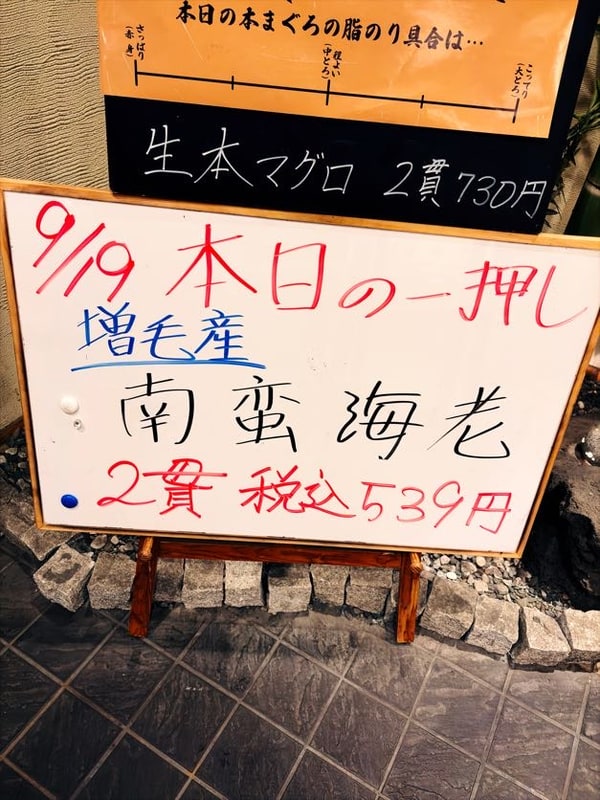
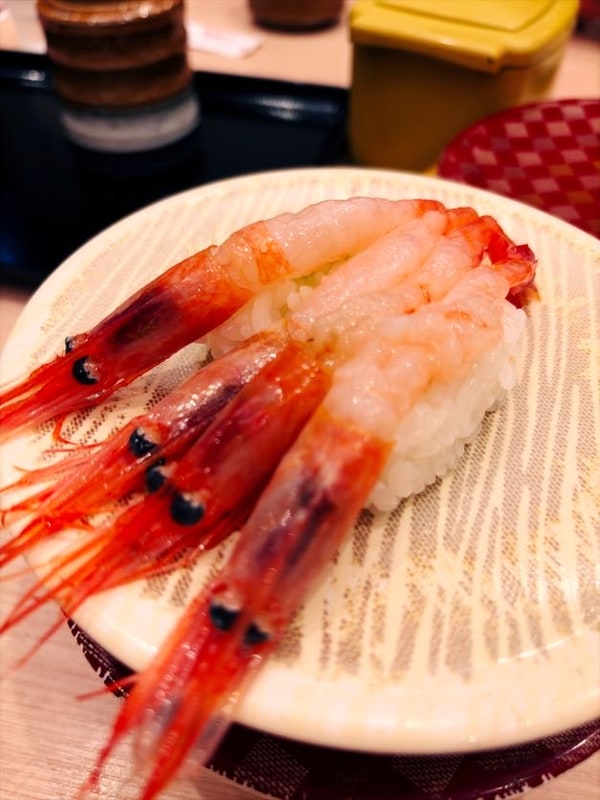
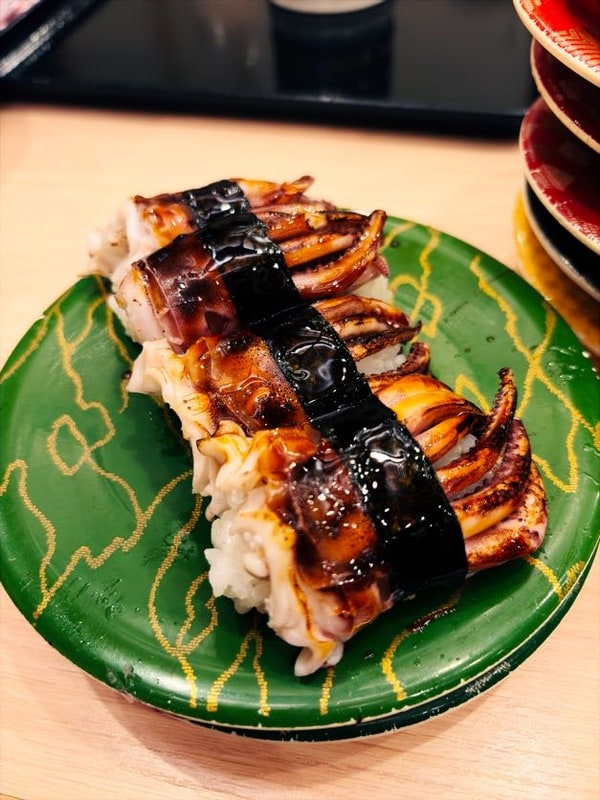
Dinner was sushi. Beyond having come to Hokkaido and therefore eating sushi, there is no argument. A conveyor place, with the nineteenth of September written on the blackboard, today's pick, nanban shrimp from Mashike, two pieces for five hundred and thirty nine yen. Nanban means chilli, and on the Sea of Japan side they call this shrimp that because the colour and the shape are alike. Mashike and Haboro both face that sea, and shrimp out of it were going round a plate in this town on the Pacific side. The shrimp was sweet, the shellfish squeaked against the teeth, the conger came apart under chopsticks. For a stomach emptied out by eight hours of motion, taking whatever comes round is about right.
Stacking plates, the talk turned to where we would go tomorrow. Looking at the weather, they had decided to head up into the far north. The original plan had been to cross to Rebun, but no lodging on the island could be had. So Sarufutsu it would be. Sarufutsu River was on somebody's phone map, a thin pale blue line winding away up at the top end. I listened to the name of a river I had never been to while chewing the shrimp on my plate.