![[Wazao Basics 1] Learning the Fundamentals of Handling a Wazao](https://pub-197a2129a35c40e8ab8fb64a949e43e6.r2.dev/articles/editorials/wazao-basics-01-handling/wazao-basics-01-handling-02-1200.jpg)
When handling, keep in mind that the load is spread across the whole rod
This holds true for rods of any material, but for the wazao as well, the No. 1 cause of damage is a snap at the tip section. This kind of trouble happens when force is concentrated at a single point on the tip. And almost all of these are accidents — in the course of normal fishing, breakage rarely occurs.
To avoid such accidents, the most important thing is this:
【Avoid letting the load fall on a single point — particularly at the tip section.】
Once you understand only this, you have grasped the minimum of how to handle a wazao.
[Preparation] How to assemble a wazao
🔳 Assemble from the tip first
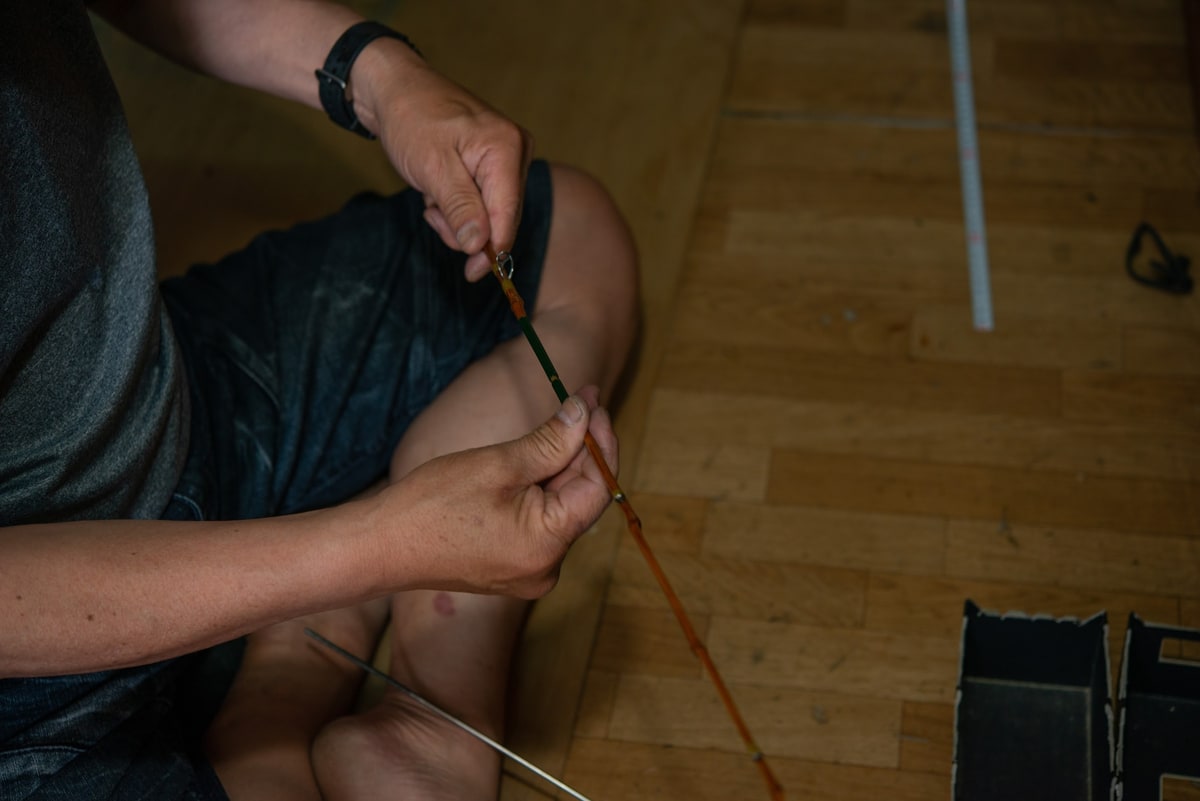
Assemble a wazao from the tip section, then the second section (hojimochi), working from the thinner end downward.
This, too, is to keep stray force from concentrating on the tip section. If you assemble from the butt, the full weight of the rod falls on the tip section in the final moment of joining — which can lead to an accident.
🔳 Align the bamboo nodes alternately, left and right
Bamboo has nodes. In the wild, these nodes grow alternately to the left and right; matching this natural arrangement gives the bamboo its highest strength. When joining the rod, set the nodes alternating left and right. And insert each joint as deeply and firmly as you can.
If the nodes are mismatched, or the joint is not fully seated, that point can take on a twist or excess load — leading to breakage.
[Casting and Playing] How to flex a wazao
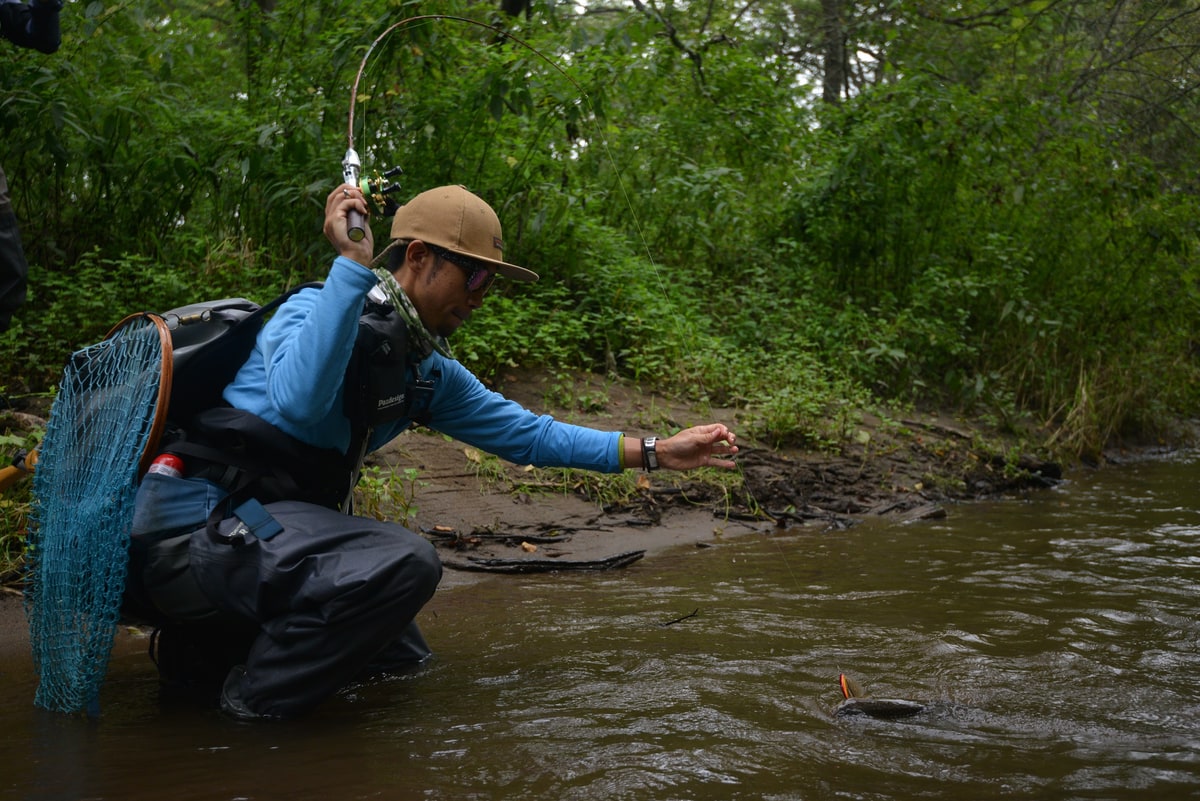
🔳 Use the whole rod, with awareness of how the bamboo flexes
When a fish is on, handle the rod so that the weight rides through the entire bamboo — this is how the rod's flex works to its fullest. Be careful of curling only at the wrist, or of "yanking" a fish in at your feet by bending the rod sharply.
It can help to imagine raising your arm high, with the butt of the rod brought slightly behind your head.
An aside: in the manga Tsurikichi Sanpei, Sanpei thrusts his rod high into the sky when he hooks a fish. This is, in fact, in keeping with how a wazao is meant to be handled. (Remarkable.)
[After Fishing] Disassembly and maintenance
🔳 When putting away, start from the butt
When disassembling the rod, work from the butt section, taking the joints apart in sequence. To separate a joint that has tightened, hold close to the joint, and pull straight without twisting.
🔳 Bends will return on their own, to a degree
Depending on how a wazao is used and the fish hooked, the tip section may take on a bend. To a certain degree, the bamboo's shape memory will bring it back. As with bamboo fly rods, because the material is natural, some bends may not fully return — but the impact on the feel of the rod is minimal.
🔳 On rinsing
Especially when seawater has touched the rod, rinse it. Soaking the rod in water is not desirable, but the bamboo's surface is coated in urushi (Japanese lacquer) and the like, so a quick rinse is not a problem. As a point to note, the inside of the bamboo is not lacquered, and water entering the rod's interior is not desirable. Rinse with the rod assembled. After rinsing, dry it in the shade, away from direct sunlight.
🔳 If you have the chance, sending it in for maintenance from time to time is recommended
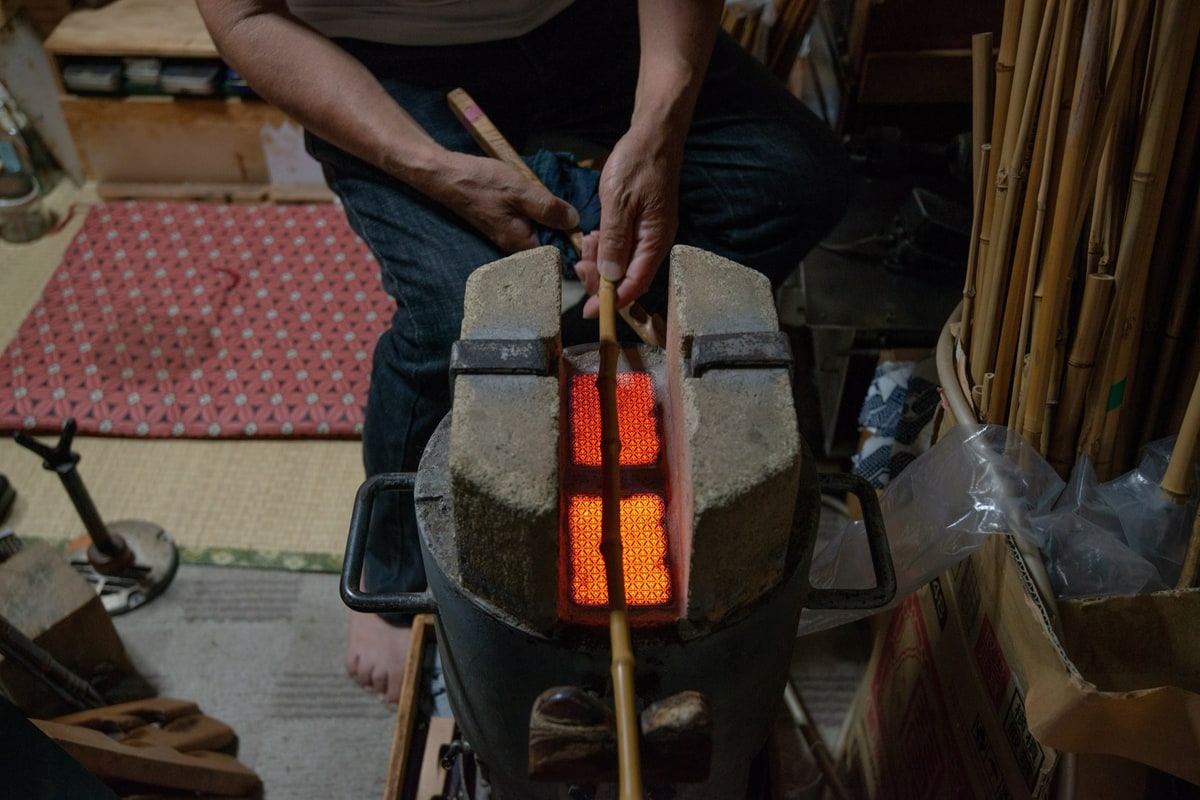
Sending the rod in for maintenance at the end of a season lets its condition be checked. Through hi-ire — heat-treating the bamboo, a rod maker's technique — bends in the rod can be brought almost entirely back.
*Note: hi-ire is among the most demanding tasks for a rod maker. Doing it on your own is not recommended.
If the rod should break
Because every wazao is built by the hands of a rod maker, in principle any repair is possible. If a rod should break, please don't give up — by all means, get in touch.
"Repair," SAONAKA, a director of the Edo Wazao Guild, once said, "is making something better than it was." A rod becomes better with use. Even when it breaks, it can become more than it was. With wazao, even repair becomes part of what you can take pleasure in.
That covers the basics of handling a wazao.
Each rod has its own character — letting your body grow accustomed to it, we hope you will find your own style of fishing alongside the rod.
![[Wazao Expedition 01-B] The Egi of the Ishigaki Locals](https://pub-197a2129a35c40e8ab8fb64a949e43e6.r2.dev/articles/editorials/wazao-expedition-01b-ishigaki-egi/DSC_7862_(2)-1200.jpg)