You don't even have to fish
Our brand has long carried a single line: you don't even have to catch fish. With this new rod, we want to add one more layer. Its name is TABI (旅, "journey").
You don't even have to fish.
A rod the size of a passport
The idea came from a regret. We had once stayed by the water; from the window of the room, in the morning, we saw fish rising on the surface of the river. If only there were a rod we could carry, we thought, right then. By the next day we were in a different town, and that morning never came back. A rod that fits in a bag would have saved that morning.
From there, working backwards, we arrived at the size of a passport.
The order we gave the maker was simple:
"Make it the size of a passport."
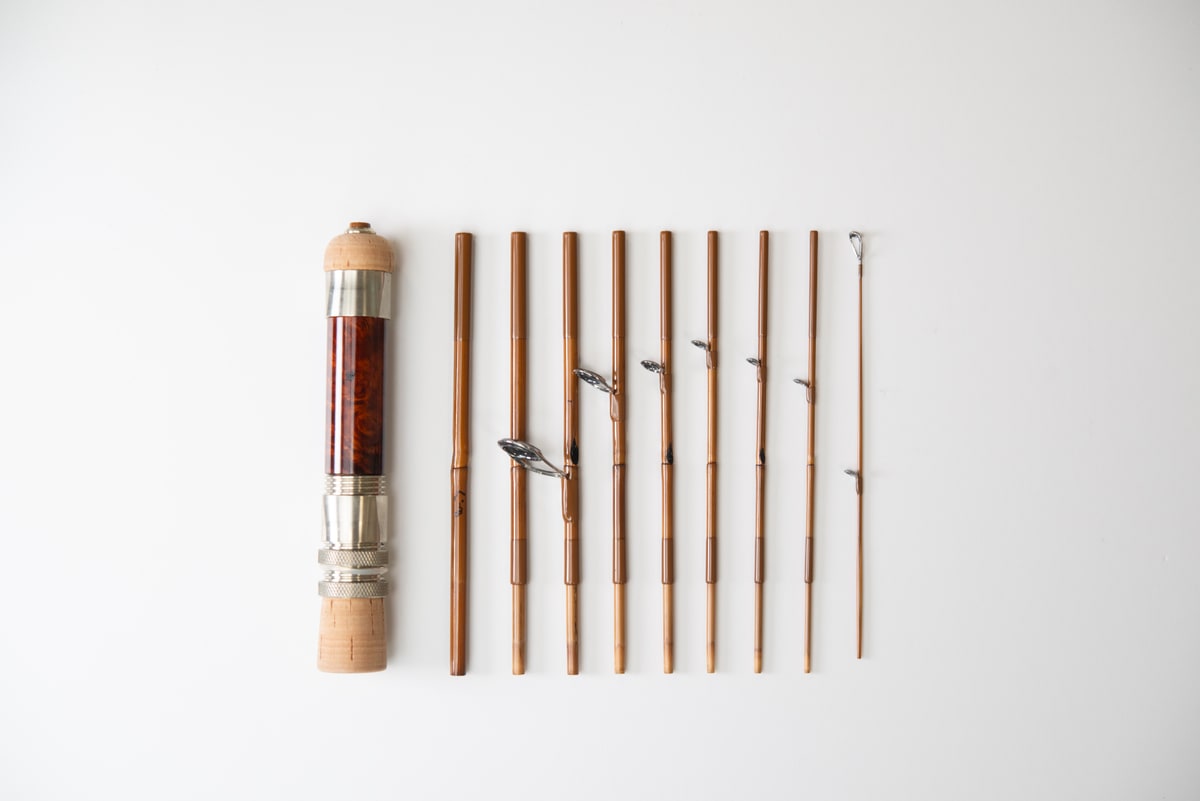
Stowed length: roughly 15 centimeters. It fits in the palm of your hand, and slides into the pen loop of a travel organizer alongside a ballpoint. Ten joints. Assembled, it reaches about 1.6 meters.
We pushed the maker, again and again: can it go smaller? The final piece is — in his own words — something he made by stretching the limits.
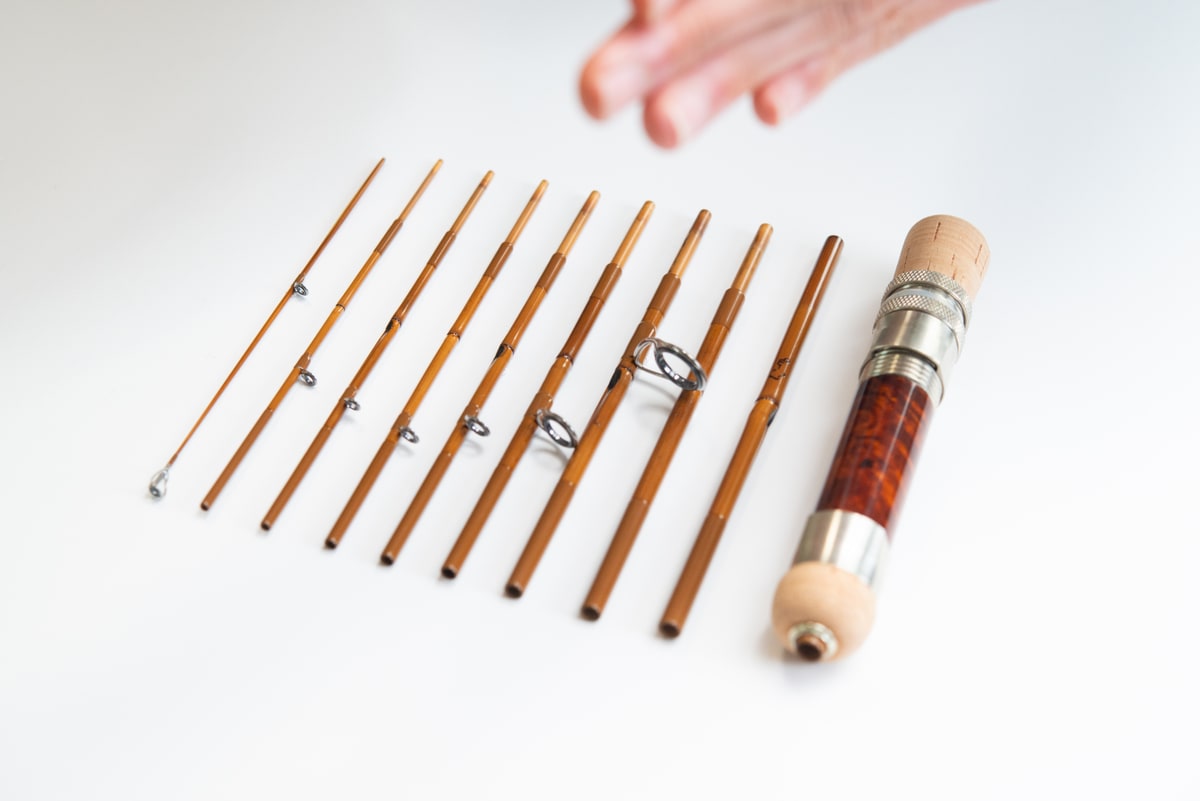
And yet — it casts
This isn't just a foldable curiosity. The bamboo runs continuously from the tip down through the grip:
- Yadake bamboo body
- A tip woven from four splits of yadake
- A bamboo core that extends to the deepest point of the grip
From the tip to the grip, the rod is a single piece of bamboo, with the grip wrapping around it. Every action at your hand travels cleanly to the tip — no rattle at the joints, no loss in the connection.
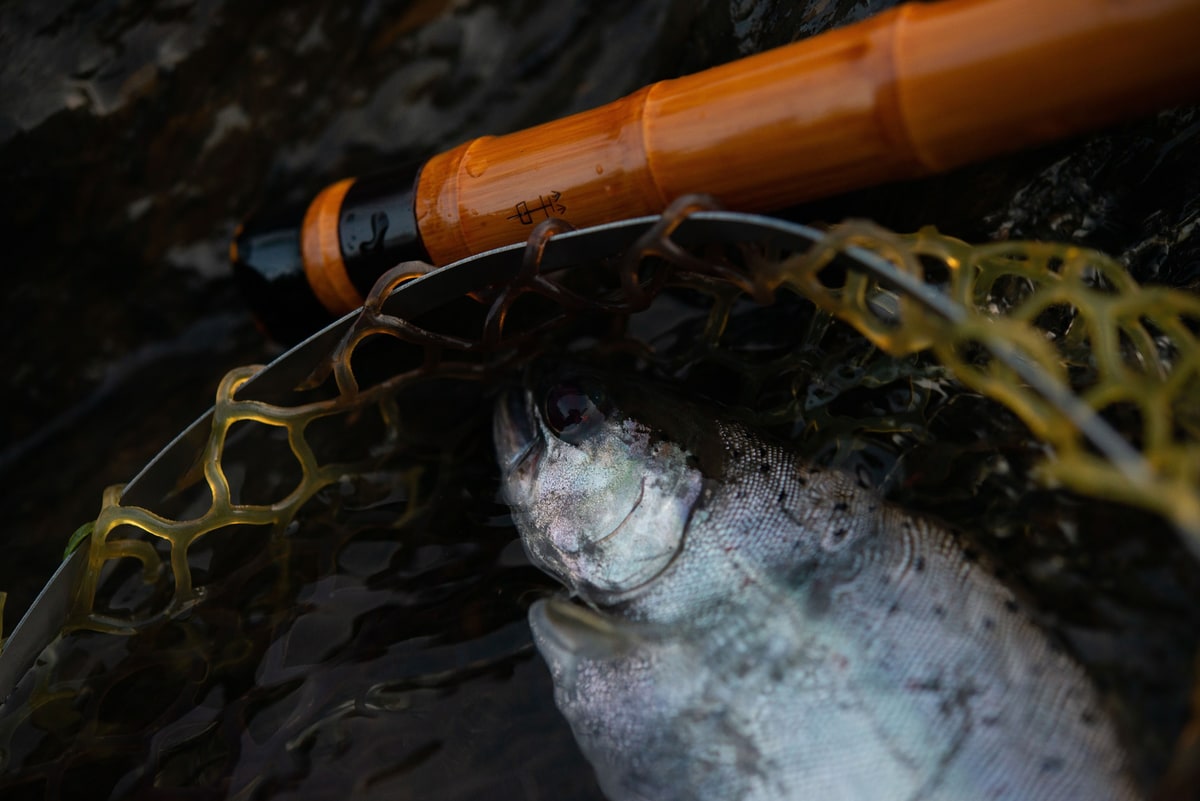
You can cast lures with it on a normal mountain stream. A 30-cm fish is no trouble. The long tradition of Japanese bamboo jointing lives inside this rod.
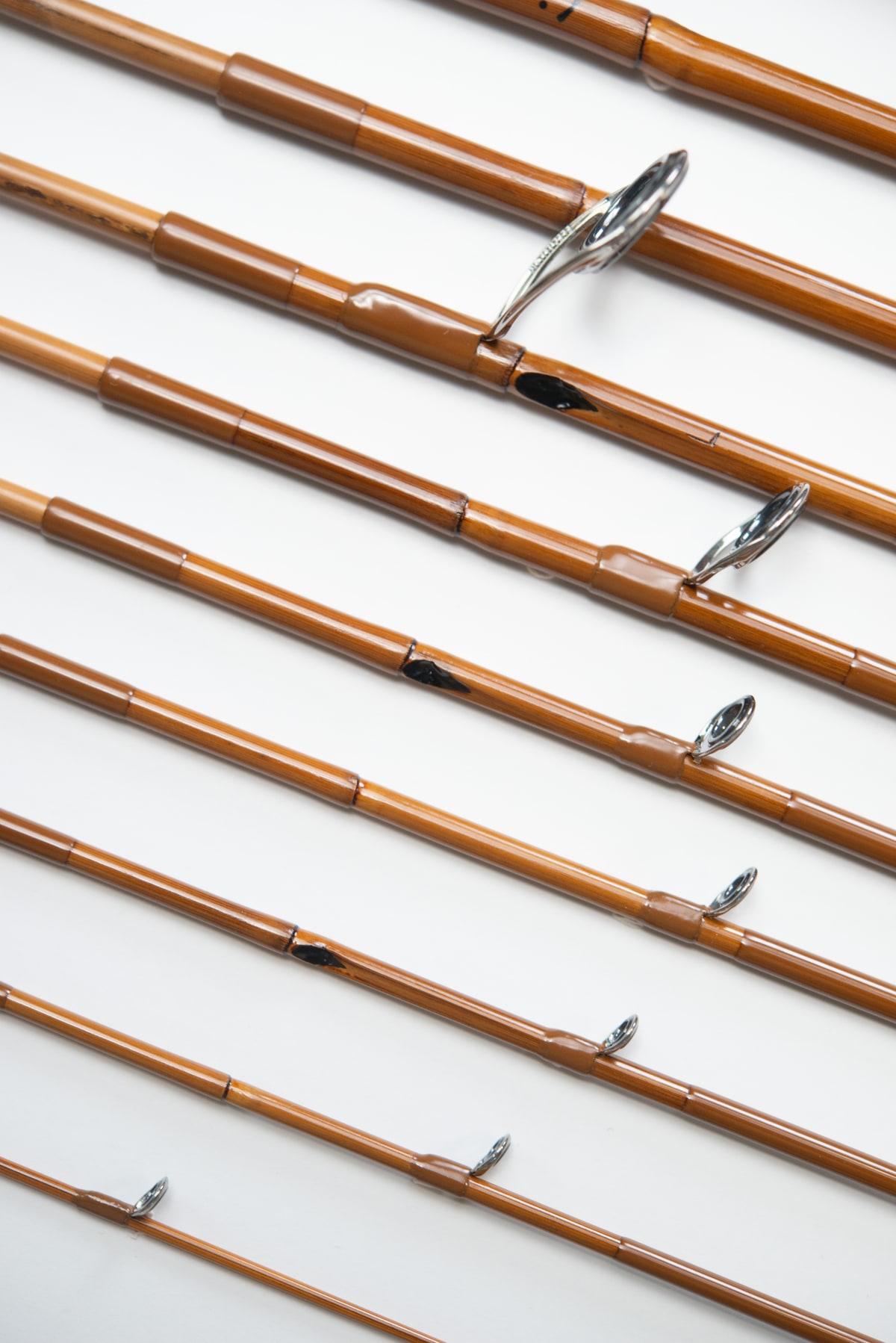
Ten joints, inrou ferrule
Ten joints and yet, during the cast, slip is held to a minimum. This is thanks to inrou-tsugi, a Japanese ferrule technique where an inner sleeve bridges each joint. More joints normally mean more risk of loosening; inrou-tsugi turns that logic around. Each joint adds rigidity to the whole while also reducing slip. We worked through the spec with the maker until it sat right.
Burlwood, layered with raw urushi
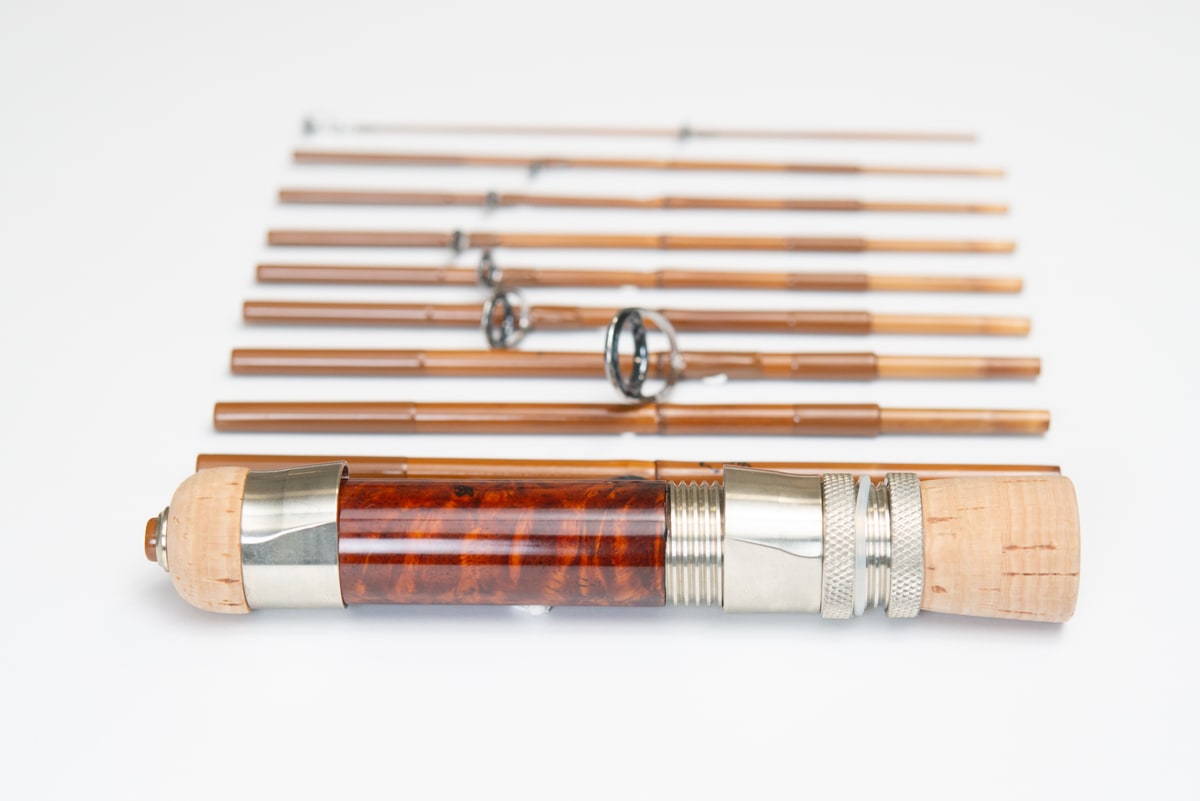
The grip is made of selected burlwood, coated with raw urushi lacquer applied in many layers, with no base coat. Skipping the base coat lets the urushi sink into the grain of the wood. With each coat, the wood itself starts to carry a deeper color.
At time of order, you can choose the burlwood. Every rod ends up with a different face.
More than the joy of landing a fish on a bamboo rod, we want you to hold the grip in your hand, and look — really look — into the depth of the urushi on this wood.
See it in daylight. See it with the broken light of leaves above a stream falling on it.
Fluorescent light won't bring that color out. Take it to a mountain stream, let the green light and the dappled shadow find it, and only then will you understand.
Nickel silver metal, drawn from scratch
The metal parts around the reel seat were drawn from blueprints and machined specifically for this rod.
The material is nickel silver (yōhaku / 洋白). It's weak against salt water, but we chose it for its quiet depth of color and the way it feels under the hand. The contrast with the burlwood grip — and the temperature of the metal against the palm — were both part of the design conversation.
This rod chooses its rivers
We will be honest with you.
This rod chooses its rivers.
You have to find a stream where the rod works. If you don't find one, you don't fish on that trip. That's the truth. This is not a rod that says "let's go fishing."
When we designed it, the rivers in our heads were the small streams of Europe and Eastern Europe. Walking down to a thin river running through a Bohemian forest, meeting a small trout — that picture sat behind every conversation we had with the maker.
No one can promise you the fish will be there. We want to share this rod with the kind of person who, standing on the same stream, can already see the small trout rising to a lure.
You don't even have to fish
For years we've carried the line: you don't even have to catch fish.
Fishing is the means. The wazao is the flag.
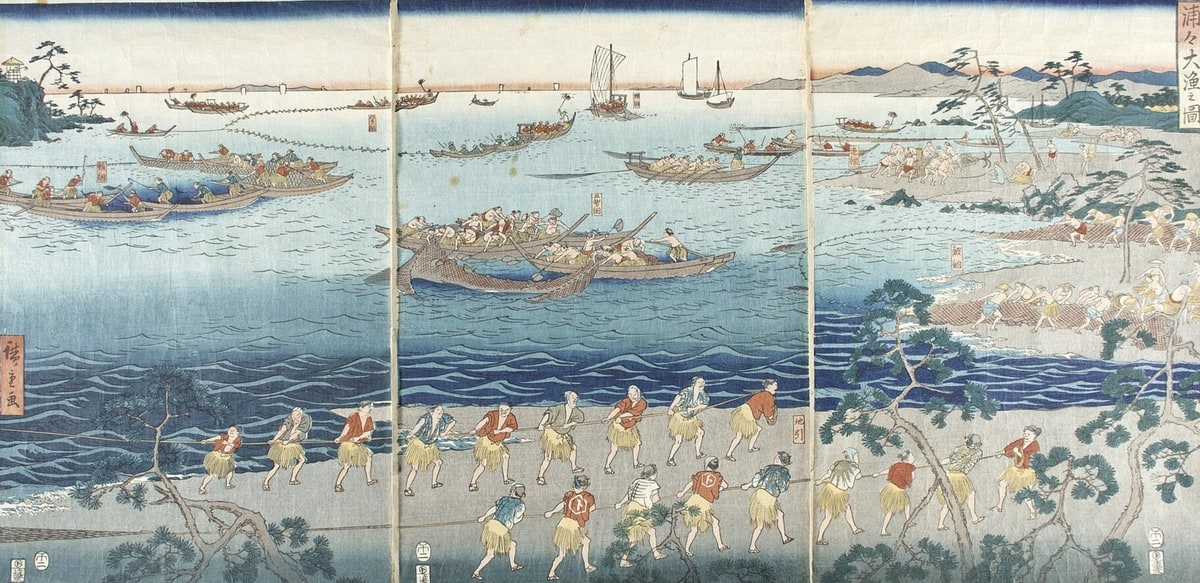
There is a stance Edo-era anglers called "kiiki" (小粋) — quiet style. The angler walks out of the house as if going nowhere in particular. The rod is broken down into many short sections, tucked into a sleeve pocket. None of the gear shows. The skill is not in displaying the tools, but in making them disappear. The Edo wazao's many-piece ferrule tradition was sharpened against this stance — make the rod small, make it vanish.
TABI takes that stance and pushes it all the way to the bottom of the travel bag.
Slip it into a leather sleeve. Tuck the sleeve into your suitcase. Pull it out at the hotel and look at the burlwood under the lamp. If there's a stream outside the window, assemble it, hold it. You don't have to cast. You don't have to join the pieces.
This rod allows all of that.
Specifications
| Item | Detail |
|---|---|
| Stowed length | ~15 cm (passport size) |
| Assembled length | ~152 cm (5 ft) |
| Number of pieces | 10 |
| Ferrule | Inrou-tsugi (internal sleeve) |
| Bamboo | Yadake |
| Tip | Four-split yadake |
| Grip | Burlwood with layered raw urushi (selectable at order) / cork / bamboo core through grip |
| Metal | Nickel silver (yōhaku), designed and machined for this rod |
| Reel | Spinning (fly reel mount also conceivable) |
| Field | Small mountain streams, fish up to ~30 cm |
| Production | Fully made-to-order. Single-piece work. Each rod is unique. |
| Price | JPY 800,000 (tax included) |
What to look for, made by hand
A few things in this rod that you can only see in person.
- Ten ferrule joints, all cut with inrou-tsugi precision.
- A grip designed at the edge of what 15 cm allows. The grip is only as long as the reel seat needs.
- The bamboo core, threaded perfectly through the center of the burlwood and the cork. Even 0.1 mm off, and the hand notices.
- The four-split yadake tip, at a thinness where four splits is its own minor miracle.
- The nickel silver parts, drawn and machined from a blank sheet.
None of this can be mass-produced. Each rod is a single shot. The maker's hands, and the bamboo's mood that day, both have to land.
In closing
That this rod, with this spec, exists in this era, in this place, right now — that is close to a miracle.
Someone on set said it almost in passing.
Each time we receive an order, we will go and trigger that miracle, one more time, together with the maker.
A more private record around "TABI"
A short series of pieces written from the designer's perspective — on the origin of TABI, and on a place we are about to go. Read in order; the disclosure deepens with each piece.
- Tabi (旅) — Part 1. The Edo "kiiki" stance, and the rod at the bottom of a bag.
- Tabi — Plans for the Trip — Part 2. Going to New York to fill in the blanks.
- Tabi — Origin of the Passport Rod — Part 3. The rod that started it, across a sixty-year gap.