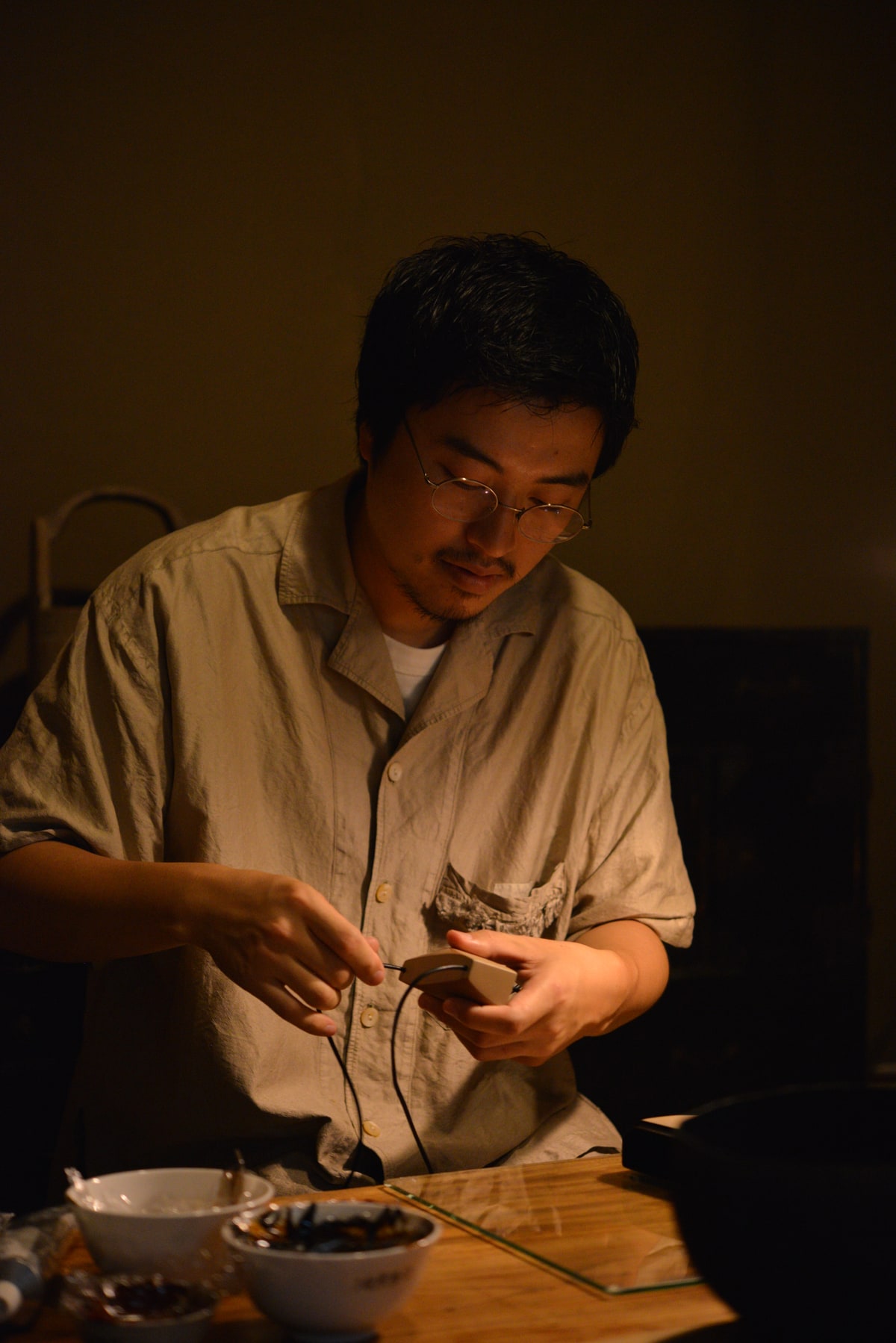
To Wajima, to See a Lacquer Artist
On August 17, 2023, we headed for Ishikawa to visit Kohei Kirimoto, an urushi (Japanese lacquer) artist and the eighth generation of a Wajima-nuri house. Wazao are finished with urushi. Listening to lacquer being talked about in the place where lacquer comes from was something we had long meant to do. Tomoka Furutani of the Japan Kusaki Research Institute traveled with us.
Where we arrived was a traditional wooden house standing in the hills. The depth of the house, the fine grain of the mountain village around it. We were shown into the family workshop as well. It was the kind of place where you could see a house, a piece of land, and its people turning slowly around a single material called urushi.
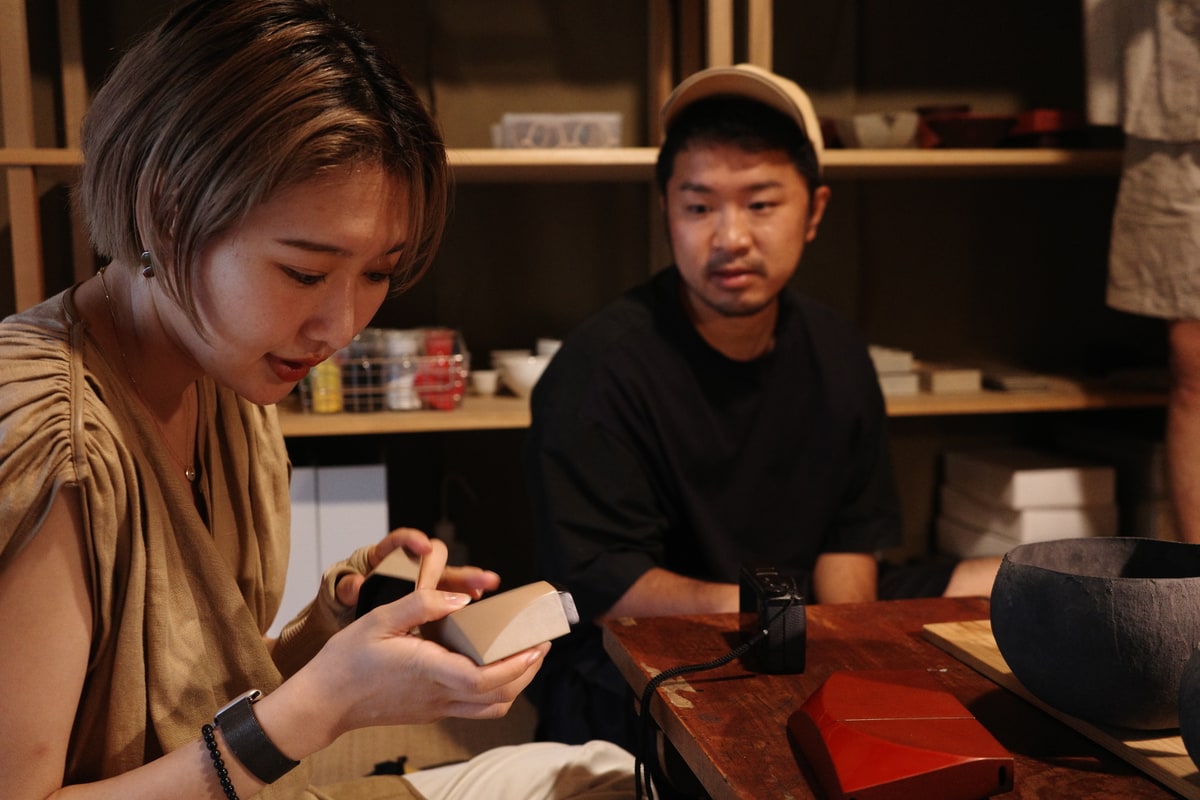
On the table sat bowls of black and vermilion lacquer. How urushi is tapped, how it is layered, how it settles into the skin of a thing — every part of the talk carried the weight of Wajima itself.
Evening, Working a Wazao for Squid
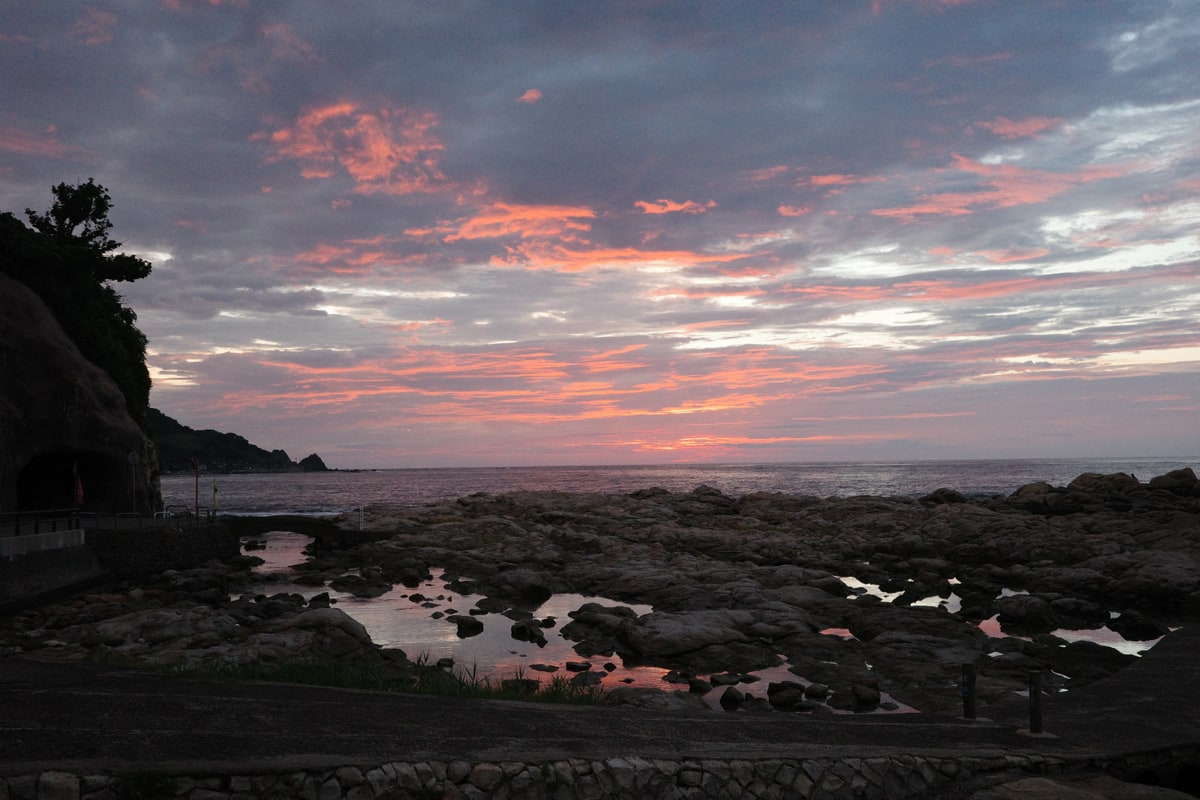
There was time before dinner, so we went out to the sea. With urushi-finished wazao, we jerked lures for bigfin reef squid. Standing in the sea of lacquer country, holding a tool finished with lacquer — that alone felt like a catch, before any squid.
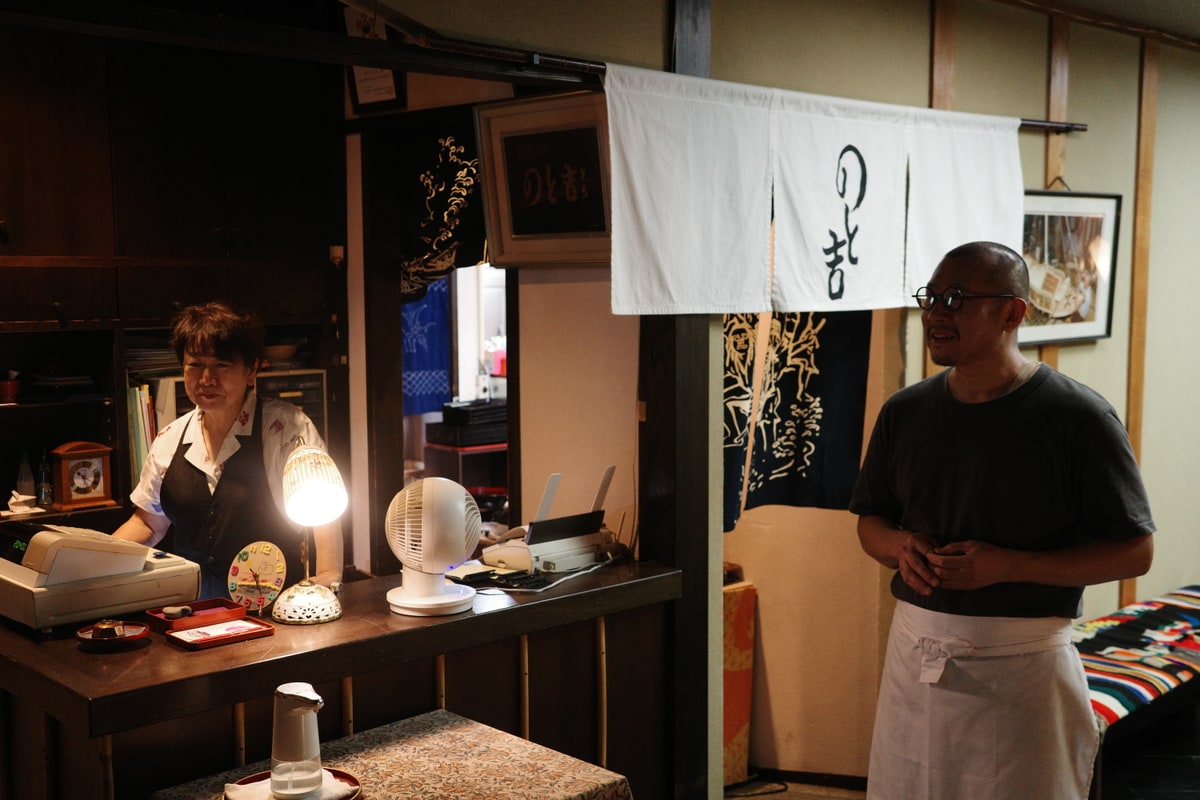
In the dusk off Wajima the wazao drew its slow arc. A squid, taken on a wazao. Walking the town at night, we sat down at Notoyoshi, the restaurant Kirimoto had chosen for us. Steamed rockfish in sake, rockfish sashimi, summer cod cured in kelp, whelk sashimi, fried conger, and somen noodles in flying-fish broth.
The sashimi is eaten with salt made by the old agehama method: seawater scattered over sand, dried by sun and wind, the crystals gathered. The talk of Noto salt branched into the ama divers of Hegura Island and legends not widely told. A peninsula that would reward a folklorist, we thought, more than once.
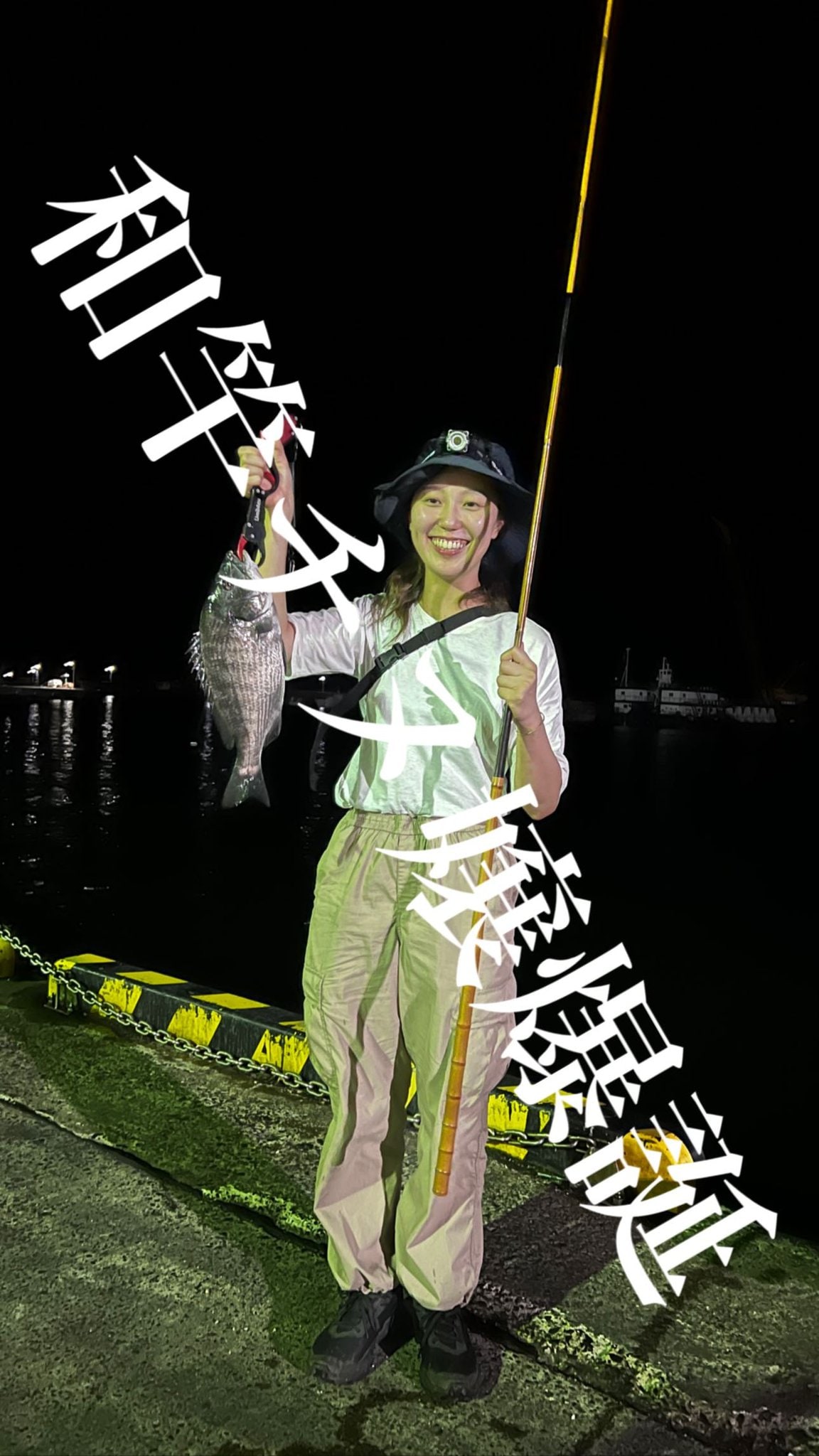
A Rod That Slept Fifty Years Catches a Kurodai
On the night of the second day, the Kirimotos, Furutani, and the rest of us went out to the quay. Kirimoto's wife is one of Ishikawa's finest kurodai anglers — in our words, the Chinu Lady. We asked her to try a wazao, and handed her a deadstock nobezao (telescoping rod without reel) that had likely been asleep for fifty years.
Hechi fishing, working the wall of the quay. There was real authority in her hands. The rod answered with a fine bend. And the kurodai came — only to her rod; ours stayed quiet to the end. A rod that had slept for half a century bending again in the night sea of lacquer country. For us, who have taken on the deadstock wazao, there are few better sights. The Wazao Chinu Lady was born.
Fukube Kaji — A Blade That Exists Only for Squid
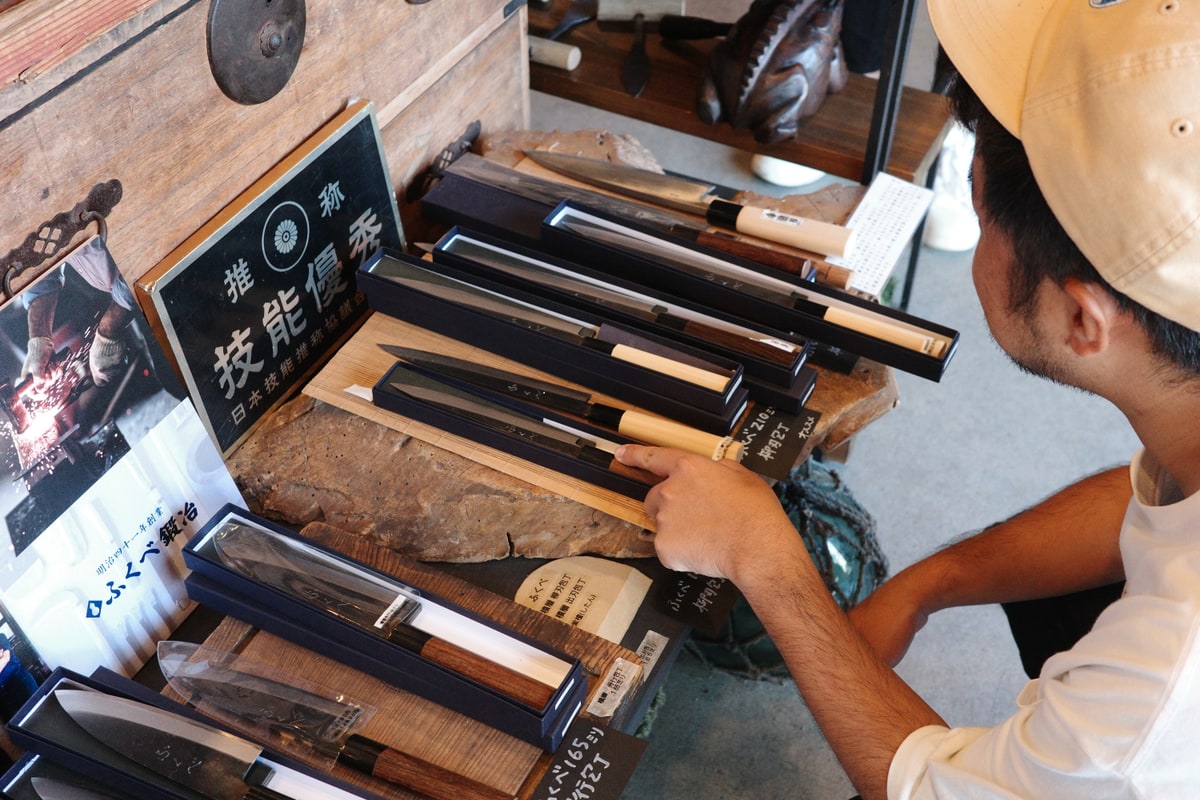
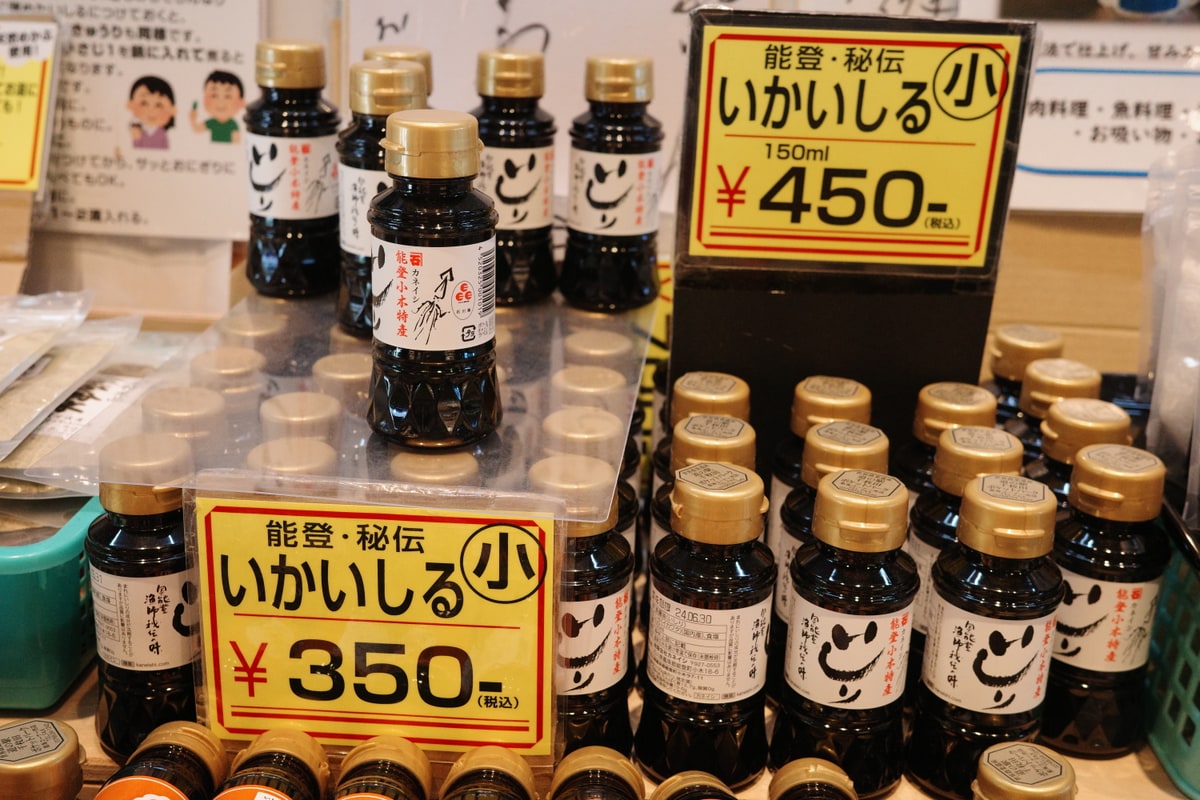
The next day we drove to Noto Town. Lunch under a sushi shop's noren, a stop at a farm store to look at bottles of ishiru and agehama salt from Wajima, and then to Fukube Kaji, a town blacksmith. Founded in the Meiji era. Knives, farm tools, fishing tools, blades for the mountain woods — a smithy that has kept making tools for daily life, fitted to the one person who will use them. For more than a hundred years it has held up the farming and fishing of Noto. There were once many smithies in town, they say. Now there is this one.
The ika-saki knife born here is a fine thing. This port town of Noto, recognized as a Globally Important Agricultural Heritage System, lands some of the largest squid catches in Japan. A blade was born for one purpose only: to dress the town's squid, fast. That a knife exists only for squid seemed to say something essential about how Noto lives.
The other blade is the Noto makiri. The makiri, said to have come down from Hokkaido on the kitamae-bune trade ships, has long been loved by Noto fishermen as a simple, tough knife. The Noto makiri is called Japan's oldest outdoor knife, forged from traditional iron. One to two years' wait after ordering. Good for fishing, we thought, plainly.
Blades hammered out one by one by a smith are beautiful in form alone. Through the kitamae-bune, Hokkaido and Ishikawa are joined as cultures. Listening to the talk of blades, we thought about the sheer volume of history that has traveled over the sea.
Lacquer, Sea, Forge, Ferment
There is a fish sauce called Noto ika-ishiru. Raw squid is salted and left to ferment over a long time. As it ferments, the squid ink dissolves and the liquid turns black. Like nam pla, and blacker.
Wajima is known as a lacquer town, but in its shadow sleep several cultures of its own. Lacquer, sea, forge, ferment — all of them stacked on one peninsula.
Wazao, too, are finished with urushi. To hear lacquer talked about in lacquer country, to fish with lacquered tools, to eat fish with salt made where lacquer is tapped. For three days, Wajima kept turning slowly around the single word urushi.
And Then, Suddenly, Kyoto
On the third day, while we were still in Wajima, a single inquiry arrived. By that evening it had us driving for Kyoto. Saitama → Wajima → Kyoto. The story of chasing a vanished Kyoto rod in a single day belongs to another record.
Our deep thanks to Notoyoshi for their hospitality, and to the Kirimotos for showing us their town. The house in the hills, the town at night, the waterside, the smith's workshop — each scene is still sharp.
This is a record of Wajima in August 2023, four months and a little more before the earthquake.