TABI Series · Part 2 of 3 — a three-part record where the disclosure deepens, piece by piece.
After making TABI, I grew curious about the provenance of the rod. The original inspiration came from a very small, foldable rod that Abercrombie & Fitch once sold. A fiberglass rod that fits inside a box the size of a passport. I have one at hand. But I do not know much about how this rod was planned, or whose hands it passed through. The catalog and the rod itself are the only clues; most of its history is blank. TABI feels like it is telling me to trace its origin. I spread a map of New York.
The catalog's colophon lists three branches: New York, Short Hills, Chicago. The flagship was at the corner of Madison Avenue and 45th Street in New York. As I dug in, I learned it had been a twelve-story building, home to A&F from 1917 for sixty years. The basement held a shooting range; each floor displayed hunting trophies; the rooftop even had a pool for testing fly casting. Not only fishing rods — the store dealt in the whole of adventure and travel. It closed in 1977, and the location is now an office tower called 360 Madison Avenue. I want to see the place where this rod once sat on a shelf.
Going further, the name Charles Ritz appeared more than once. Proprietor of the Hotel Ritz in Paris, and a master of fly casting. This person seems to be connected to this rod in some way, but the whole picture is not yet clear. The one thing I learned is that Ritz, in his youth, was in New York — around 1916 and 1917, in his mid-twenties, working as night manager at the Ritz-Carlton on Madison and 46th. There is also a story that he bought broken bamboo rods at a Manhattan pawn shop, repaired them, and sold them. There was a fishing club in lower Manhattan called the Anglers' Club, founded in 1906; Ritz was apparently a member. The club is still at 101 Broad Street. I will put it on the itinerary.
Two hours by car northwest of Manhattan, you enter the Catskill Mountains. I learned that a town called Livingston Manor holds the Catskill Fly Fishing Center and Museum. It maintains a bamboo rod workshop and a rod maker exhibit, and apparently the museum collection includes a rod by Phillipson, the company believed to have made this Passport Rod. If I bring my own to compare with the museum's holdings, something might become clear.
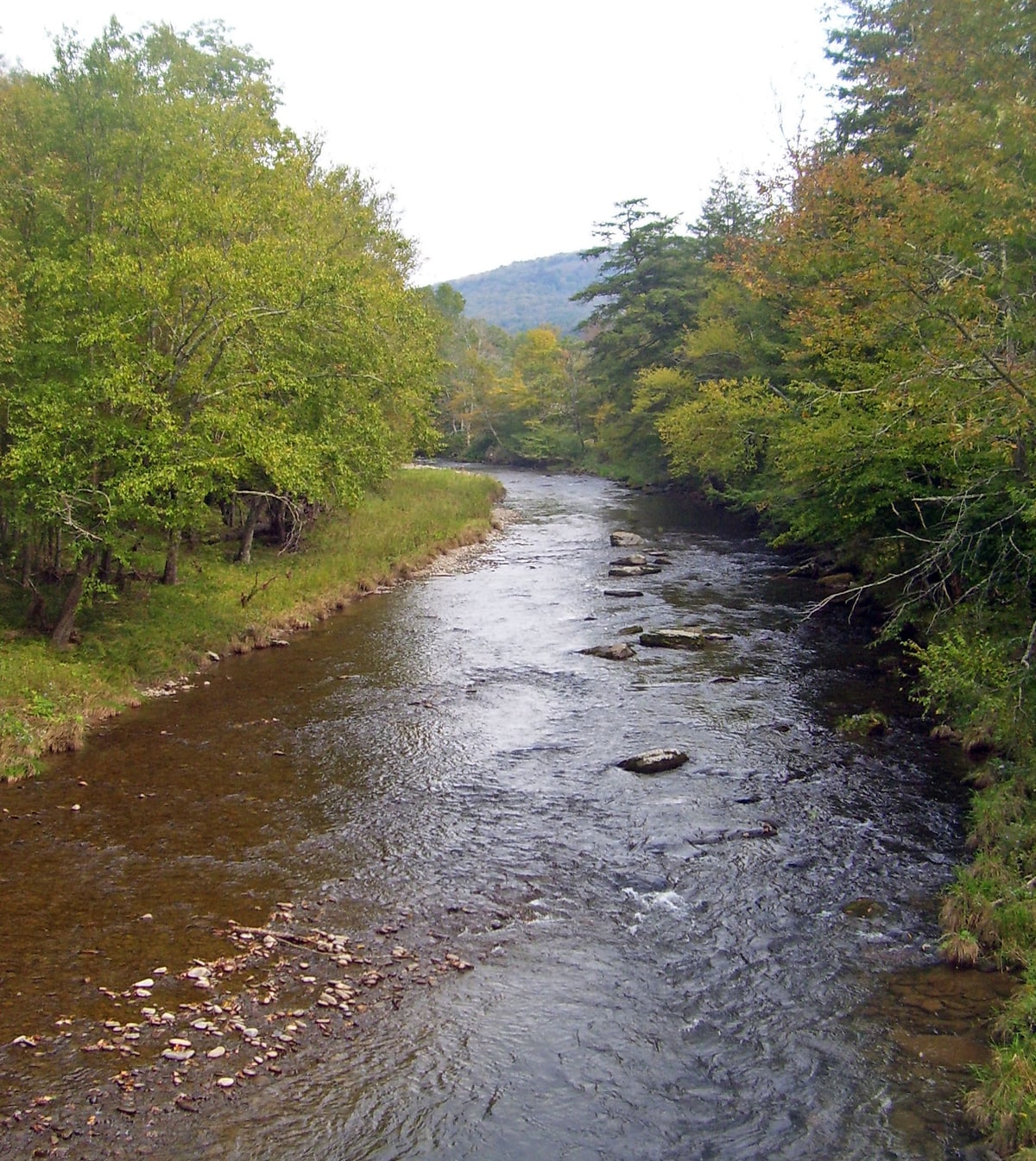
From the museum, another fifteen minutes by car puts you in the neighboring town of Roscoe, where the Beaverkill and the Willowemoc Creek meet — considered the birthplace of American dry fly fishing. Ritz, too, has a record of casting on the Beaverkill during his New York years. Standing on that river, I suspect, will reveal a little of the cultural backdrop behind this rod.
The route is starting to surface. Enter Manhattan; first, stand at the corner of Madison and 45th. Pass by the Anglers' Club. The next day, rent a car and head to the Catskills. Standing on the bank of the Beaverkill, I may feel like taking TABI out. I may not. Even without taking it out, the river will look different because the rod is in the bag.
In the bag I will carry two rods — the Passport Rod and TABI. Fiberglass and bamboo. A rod whose history I do not know, and the rod born from being led by it. With these two, I will go fill in the blanks. The plan is still only on paper, but watching the map, my mood has already gone on ahead.