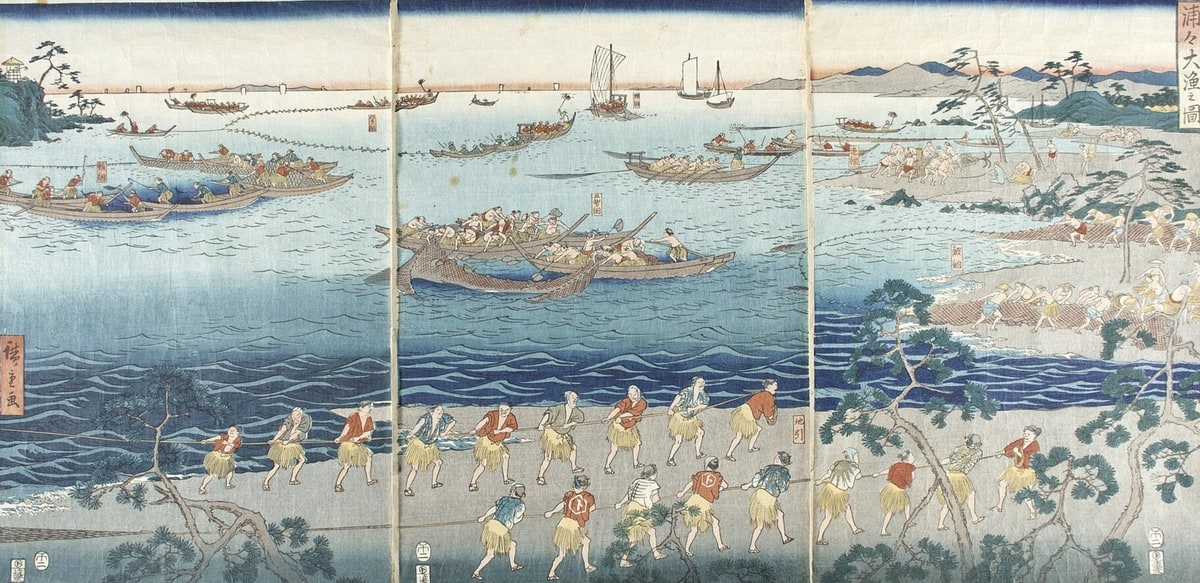
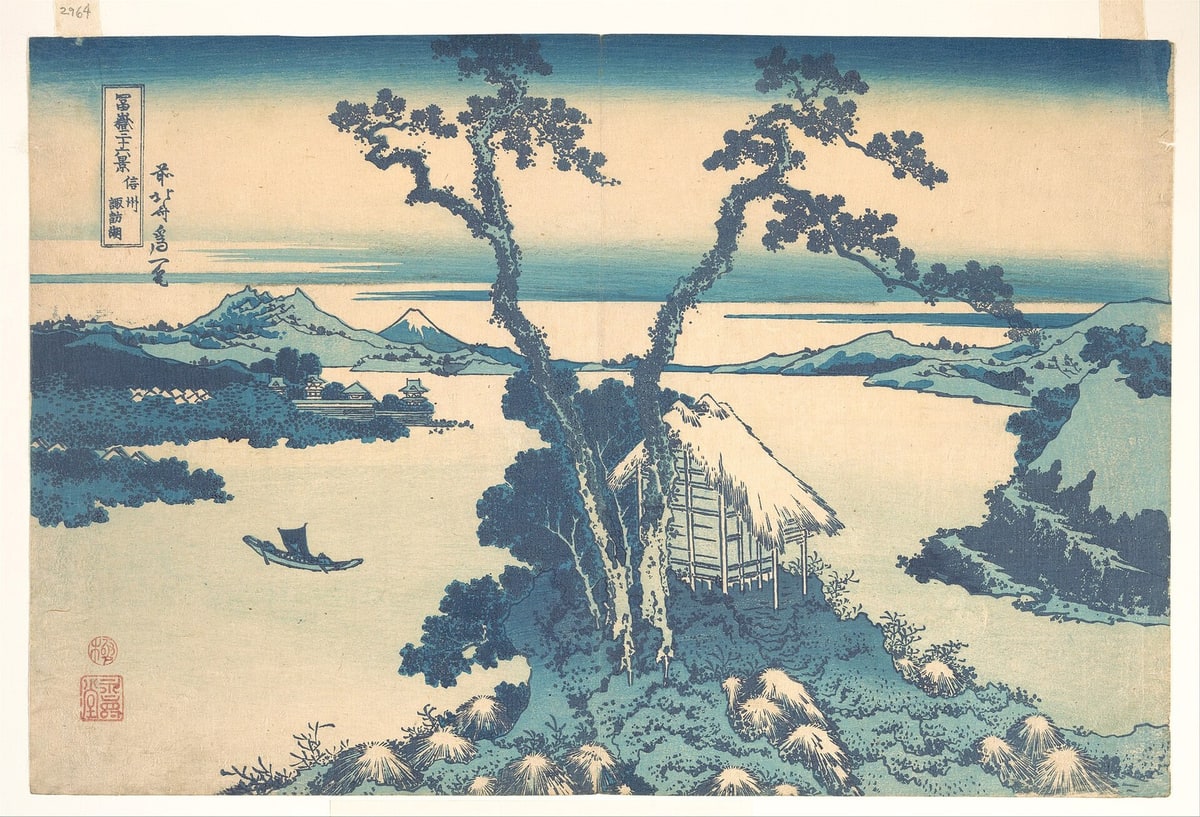
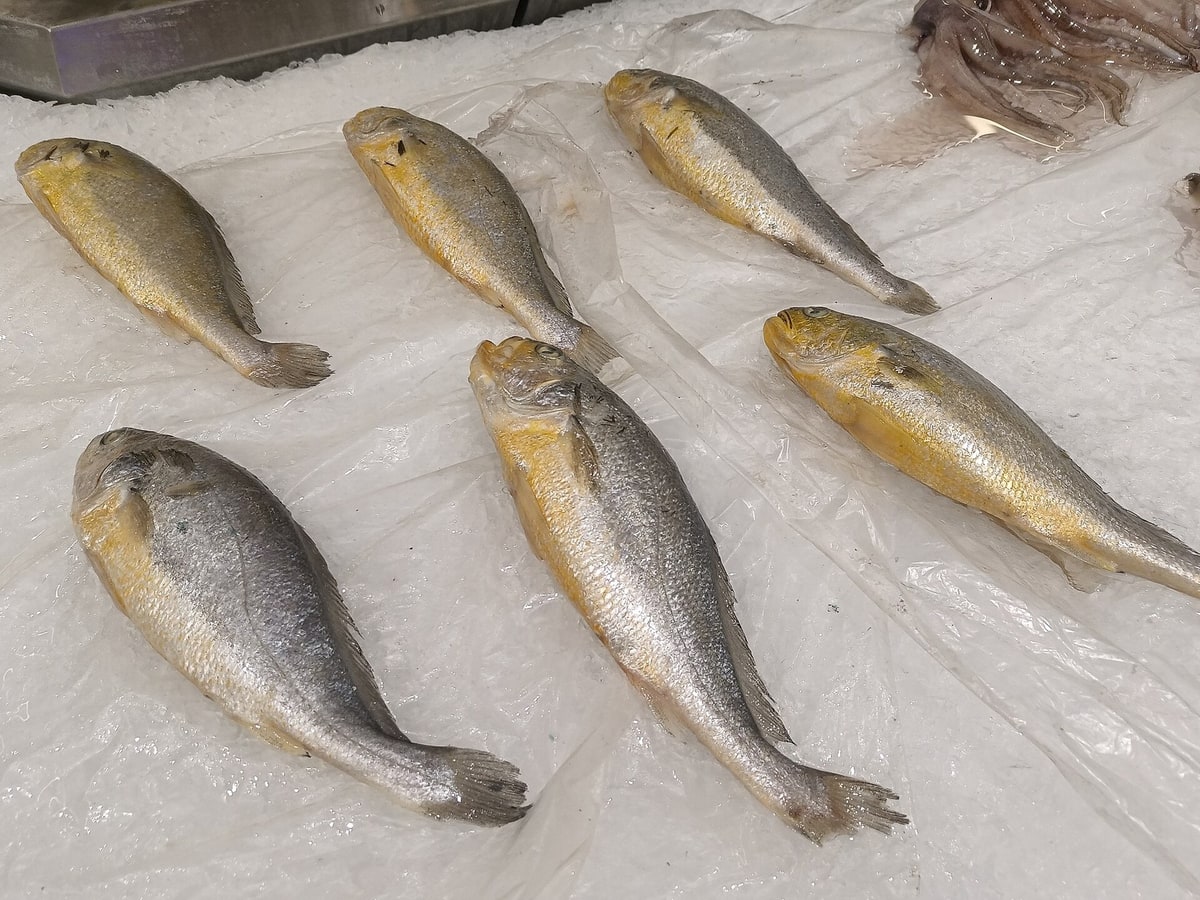
The rocky shore is still cold in March. So is the sea wind. That anglers stand on it even so is because the sea has its run as well. Just as the crucian carp inland comes in to the reeds in April, the black sea bream comes in to the rocks in March. The same event of nature, in fresh water and in salt, two months running. Keeping company with it is the spring angler's business.
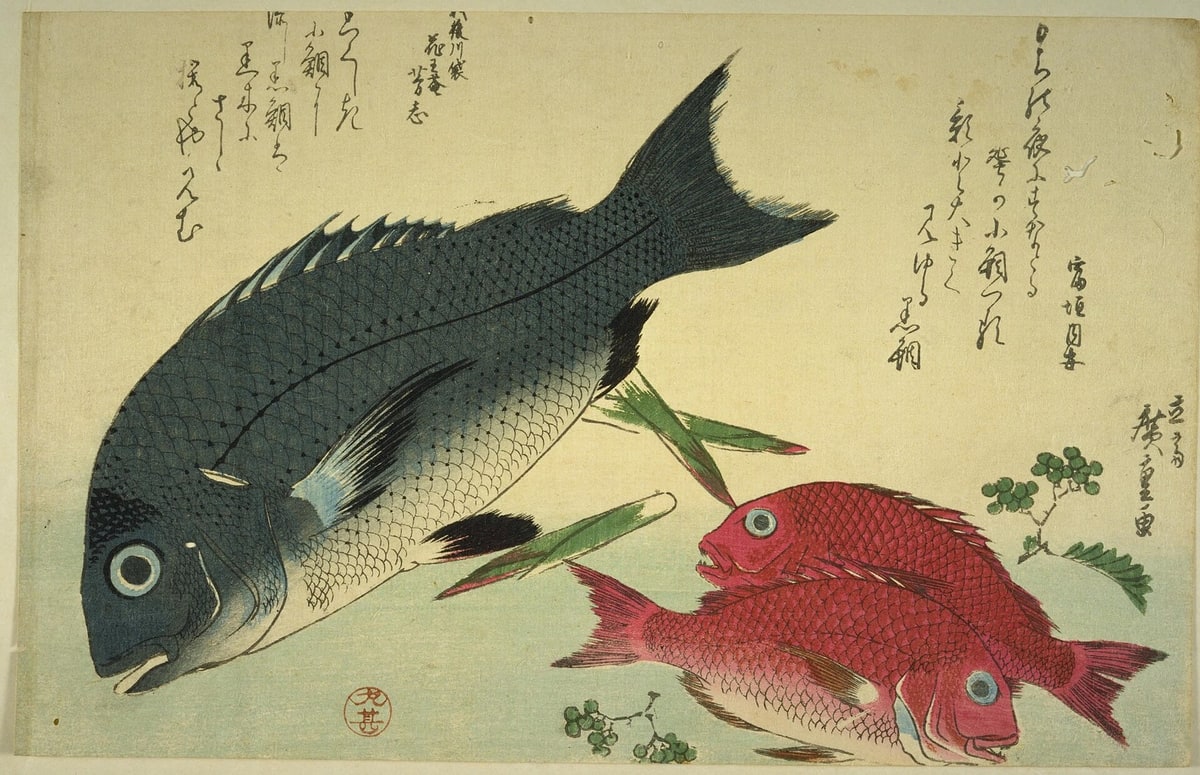
Utagawa Hiroshige / National Diet Library (public domain)
The Name Chinu
The black sea bream's old name is chinu. The sea of Izumi, now Osaka Bay, was anciently called the sea of Chinu, and because they were taken there in numbers the name stayed with the fish. In the Kansai they still call it chinu. It lives along most of the coastline of Honshu, from the rocks of Wakayama, Osaka and Hyogo to the breakwaters of Tokyo Bay, and in spring it comes up into shallow water to spawn. The run bream, the nokkomi chinu: a fish of its season.
The Schools of Each District
The methods developed by locality, and the schools differ plainly.
The dango fishing that the fishermen of the Kishu rocks worked out — the Kishu method, as it is called — is said to have begun at Tanoura in Wakayama. Rice bran, sand and pressed barley are worked together and packed round the bait, so that as the ball dissolves in the water the bait is exposed; it stands up well to bait-stealers and is good for working the bottom. It was put together to take, efficiently, a fish that can be caught from a breakwater close to home, was tidied into a method as it passed from a fisherman's work to a pastime, and spread through the country after the war. The bamboo chinu rod is built strong in the upper section, to bear the weight of the ball and still not throw off the bite.
From the breakwater culture of Tokyo Bay came something more modern. Hechi fishing — some call it the drop — puts the bait tight against a vertical wall and takes the bite as it falls, and it spread from late Meiji into early Showa as the reclaimed breakwaters of Tokyo Bay multiplied. This too moved from work to pastime, and in the bamboo era a dedicated hechi rod with a fine tip was made for it. It is a short rod, fished in a posture that clings to the breakwater, and from a distance the angler appears to be talking to the wall.
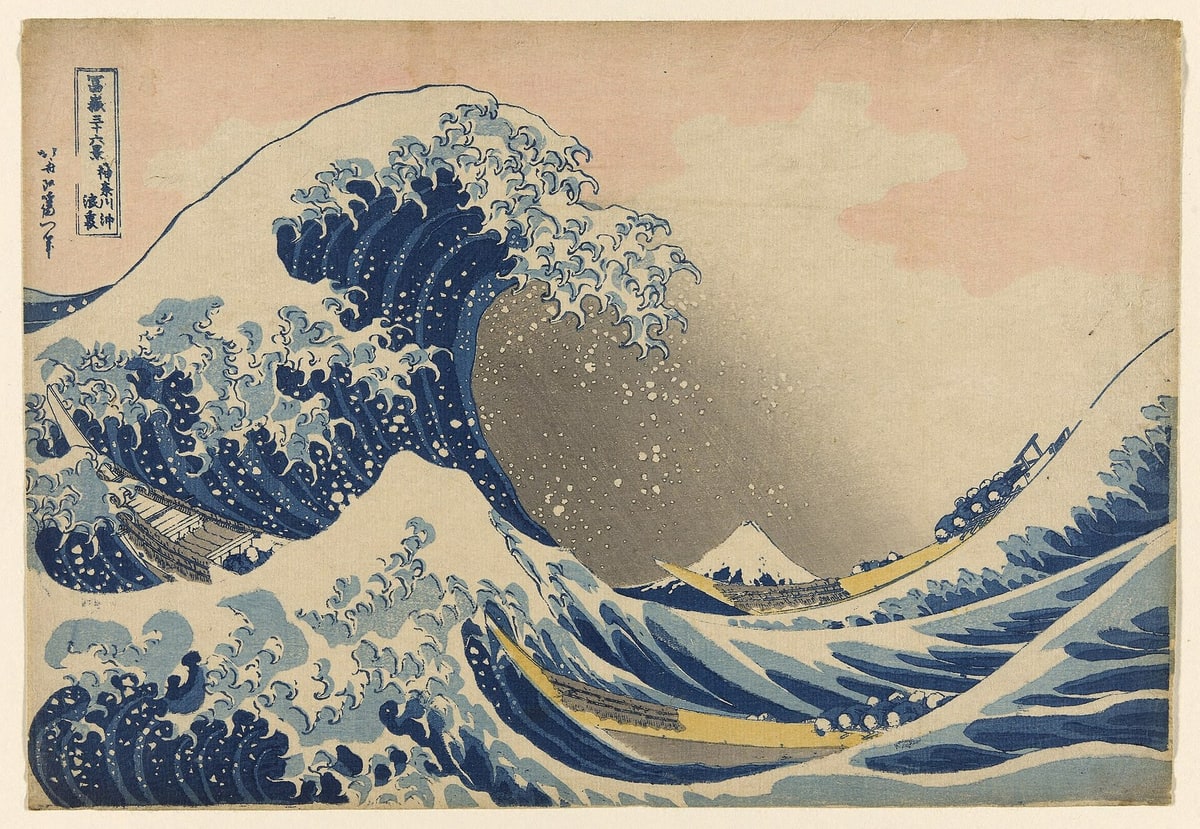
Katsushika Hokusai / The Cleveland Museum of Art (CC0)
Older than either is float fishing on the rocks, which runs from the Edo period. The float sets the depth and the bait rides the current. The bamboo-era rod for it was long, built to a taper that suited running a bait from a high place on the rocks.
The Tackle
Now the tackle. What I put together is a rock rod of 1.5 at about seven metres, a lever-brake or through-the-handle reel, nylon of 2 for the main line and 1.5 for the tippet. A small conical float or a stick float, a chinu hook of size two. To that, krill and bran for groundbait. A rig anyone can assemble from a tackle chain, and with a rig anyone can assemble I finish with the catch of anyone.
The bamboo-era rig was a good deal different. The rod was a jointed one of four ken, about seven metres twenty, made by a Kishu rod maker from hoteichiku and yadake, and some had baleen at the tip. The line was silkworm gut of three to five rin, the tippet silk of one and a half to two, and the hook a hand-forged one of streamlined pattern, beaten by the local smith and sharpened by the angler. The float was cut from paulownia by hand and finished with lacquer. Tying the tippet was handwork too; some say a rat's whisker went into the core of it, others that silk was twisted together. It is best taken at half its value.
Bait and Method
For bait, the Kishu method packs krill, corn or pupae inside the ball. In Wakayama a bran ball built on pressed barley is traditional, and I have heard that soybeans and boiled crab were once used. For the drop, rock crab, white shrimp, green lugworm. For float fishing, raw krill, or shrimp such as the boke. What they will eat changes with the place and with the season.
The way of fishing differs by place as well. The Kishu method sets the ball on the bottom and waits: a fishing of patience. The drop moves along the breakwater every few metres, searching: a fishing of the legs. Float fishing reads the tide and keeps groundbait and rig together: a fishing of the eye and hand. All three take black sea bream, and all three demand an entirely different use of the body. Even with the same fish, a different method leaves you feeling you are dealing with a different animal. That too is part of what makes fishing interesting.
The run bream has fed up before spawning and is thick and heavy. Its scales are a blackish blue with bands of silver, and the belly carries a faint silver. Held in the hand just after it comes out, there is a tautness and weight particular to a sea fish, quite unlike the crucian of fresh water.
The Cooking
For cooking: taken fresh as sashimi, the white flesh carries the smell of the rocks. Grilled with salt, the rib bones are hard, so the heat wants adjusting. Simmered, the cheek meat beside the head takes on the fat and is rich. If a house in the district will cook it for you, it comes out in that district's manner. It is for that that one goes to the rocks.
Come April the bream finish spawning and go back offshore, and in their place the crucian run begins at the reeds of Lake Kasumigaura. The spring of the sea handing over to the spring of the land: the gap between those months is what March feels like to me.