On the food of wakasagi in January. When a trip to a lake in the cold of the year is in prospect, food is twice the concern it usually is. A body that has been fishing in that cold has to be warmed somewhere before it gets home. Board a train with a cold stomach and you arrive with a thorough head cold. This I learned by catching several. The record of the actual visit is added at the end of this piece.
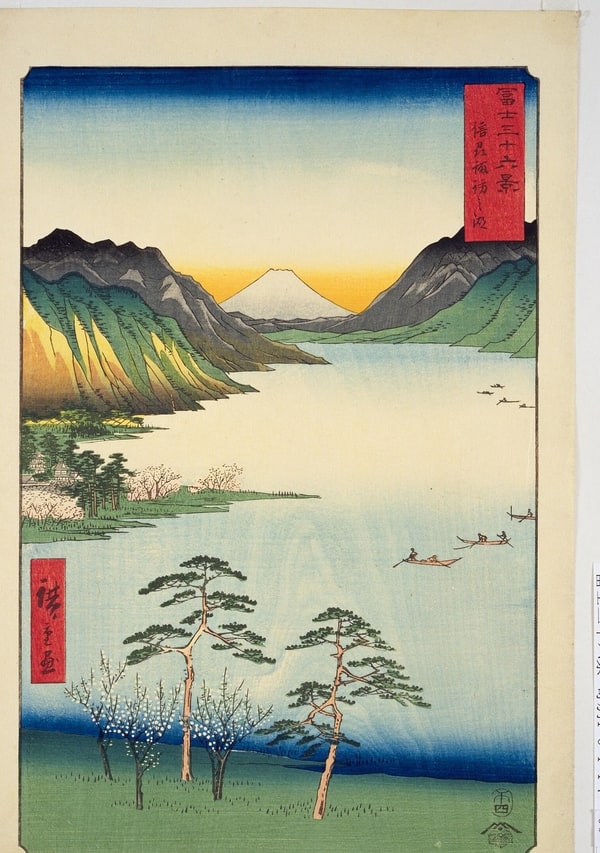
Utagawa Hiroshige (public domain)
The Food of Each Lake
The ground under the food changes with where you go. At Suwa, the food of Suwa; at Lake Yamanaka, the food of Kōshū; at Lake Haruna, the food of Jōshū. The same wakasagi fishing, and yet what you eat before going home changes the whole look of the day.
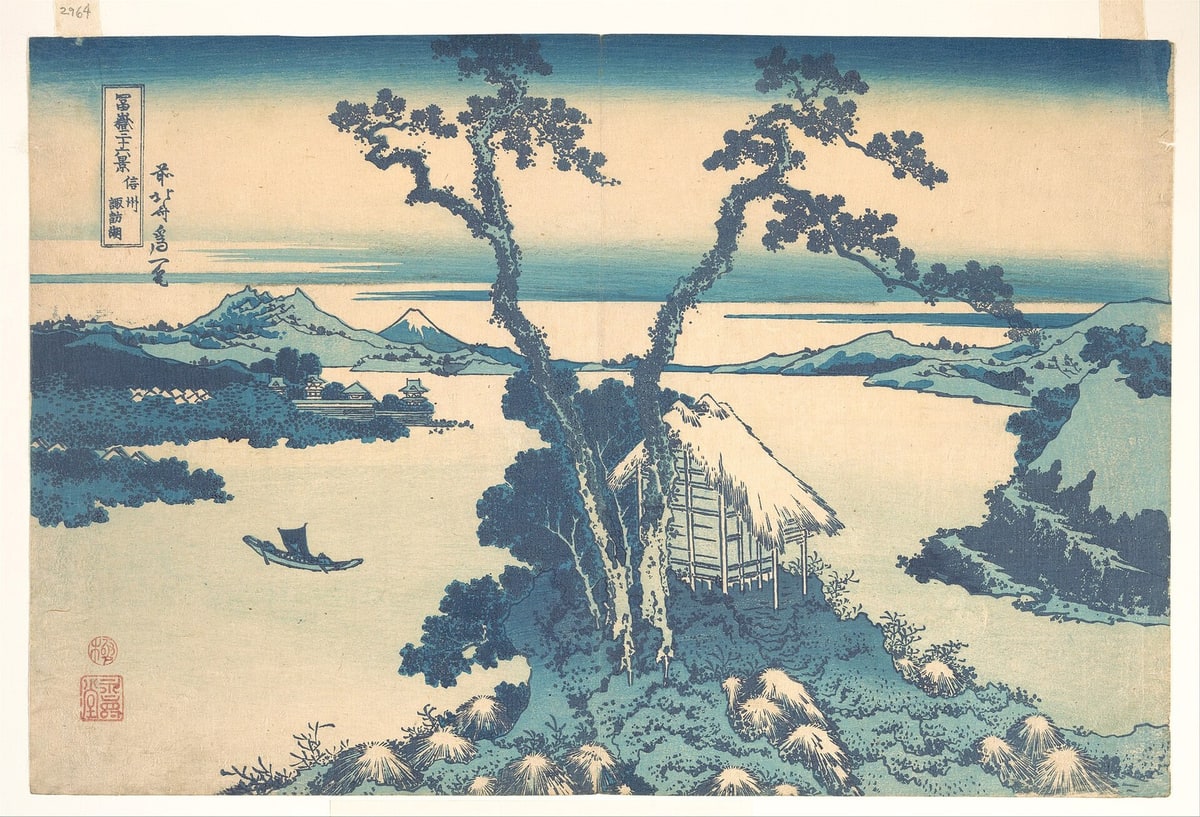
Lake Suwa has the most depth to it, as a place to fish and as a place to eat. There are houses at the lakeside that will take the wakasagi you have caught, that same day, and fry them as tempura for you. Even without your own, wakasagi from the lake's net fishery swim in the tanks. Around Suwa the wakasagi comes out in every preparation one can think of: tempura, breaded and fried, deep fried plain, simmered in soy, candied, and in a bowl with sweet miso. Inns by the water put wakasagi on the table as well. Do not forget the soba. Suwa is Shinshu soba country, and a soba house that serves wakasagi tempura is the ideal form. Yashima Honten on the lakeside road is a hand-cut soba house of more than a hundred years, and wakasagi tempura is on its list. Pull up the soba, then a pinch of wakasagi straight out of the oil. If you are eating soba in Suwa, that is the most straightforward way to set it out. Horse sashimi served in the year of the pillar festival, the local sake of Suwa's five breweries, the miso tempura bowl. It is far too much for one day. To call it eating on the side of a fishing trip is greedy.
Utagawa Hiroshige / The Cleveland Museum of Art (CC0)
Lake Yamanaka is a lake where you fish with Fuji straight in front of you, and the lineage of the food is Kōshū's. Sit down at a lakeside eating house and, along with the wakasagi, there will be hōtō, horse sashimi and simmered chicken giblets, as a matter of course. Many of the lakeside menus carry hōtō, wakasagi and horse sashimi as a set of three. At Sea Horse they put horse sashimi, fried wakasagi and hōtō on a single tray. For a body come up off the water there is nothing to match Kōshū hōtō. Warmed from the inside by the heat of the broth is the correct way to put it; it is closer to having a fire set inside you than to being warmed. Wajūrō and Shōya, houses that carry the warp thread of Kōshū food, stand along the shore.
Lake Haruna is old as a fishing ground, and its eating houses are not showy but have their feet on the ground. Small places at the lakeside such as Asahi-tei and Shirakaba-tei set out fried wakasagi, mushroom udon and maitake tempura. It has none of the flourish of Kōshū food at Lake Yamanaka, but there is the settledness of mountain food from Jōshū. Haruna is old as a hot spring as well, so one can arrange to take a bath on the way back and come down to eat afterwards. Fish, bathe, eat, go home: those four are, I think, the correct way to close out a day of fishing in the cold.
What to Eat
Wakasagi is on the table wherever you go, but what comes alongside it differs by lake. Set them out one at a time.
Wakasagi tempura. A house at the water that will fry the fish you have just caught is the best of it. Even if nothing comes to your line they will take one from the tank. A fish thinner than a finger collapsing in the mouth like meltwater is not something a brazier at home can reproduce.
Candied, and simmered in soy. What you buy to take back is these, and the halls of local produce by the lakes always have them. On warm rice at home, or with a drink on a cold night.
The miso tempura bowl. Wakasagi and river prawn tempura in a bowl with a sweet-salt miso sauce, Suwa’s own way of eating it, and not to be had elsewhere.
Shinshu soba. Ideal if there is a house that will put wakasagi tempura beside it, taken together with cold soba.
Hōtō, horse sashimi, simmered giblets. At Lake Yamanaka these three stand alongside.
Maitake tempura, mushroom udon. At Lake Haruna it is these that warm a chilled body.
A day at a lake in the cold is better measured by the rise and fall of cold and body heat than by the hands of a clock.
Before setting out, a bowl of steaming soba to warm yourself. Whether that counts as having had breakfast or as part of the tackle, either will do.
Once you are out on the ice, nothing goes into you for some while. That one is not hungry when it is cold is a fact that surprises everyone on their first trip to a winter lake. The few hours before the body chills through are the most concentrated fishing of the day, and if you miss them, no amount of persistence afterwards will generally make it up.
Midday, up to a soba house at the lakeside, and wakasagi tempura taken with cold soba. A drink of celebration if you have caught, a drink of consolation if you have not.
Afternoon: the few hours after warm broth has gone into you are fishing time again. You sit in the hut until it is dark.
Evening, and the real business begins once the rod is put away. A bath at the hot spring goes in here. Leave it out and the cold stays in the core of you until you are home.
At night, out of the bath, a measure of Suwa sake. A miso tempura bowl, or some candied fish, to finish.
The next day, the wakasagi that went home frozen are fried. It is a different food from the lakeside tempura of the day itself, and has its own pleasure.
Choose Lake Yamanaka and hōtō comes in; choose Lake Haruna and mushroom udon does. The lake changes, but not the fact that fishing in the cold has to be bracketed by food and hot water, or the day will not close.