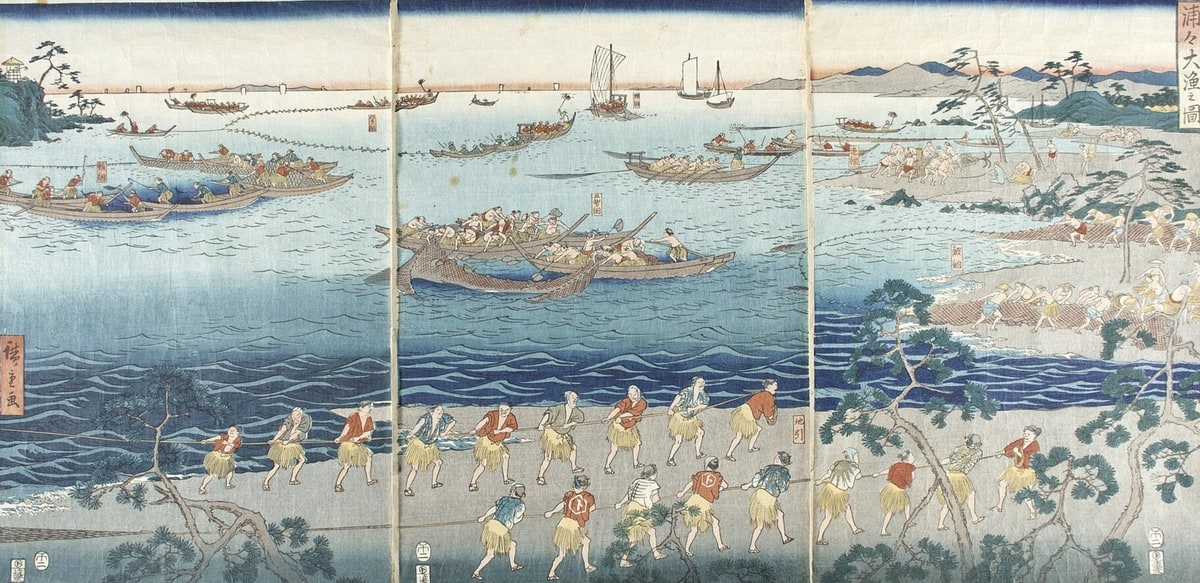
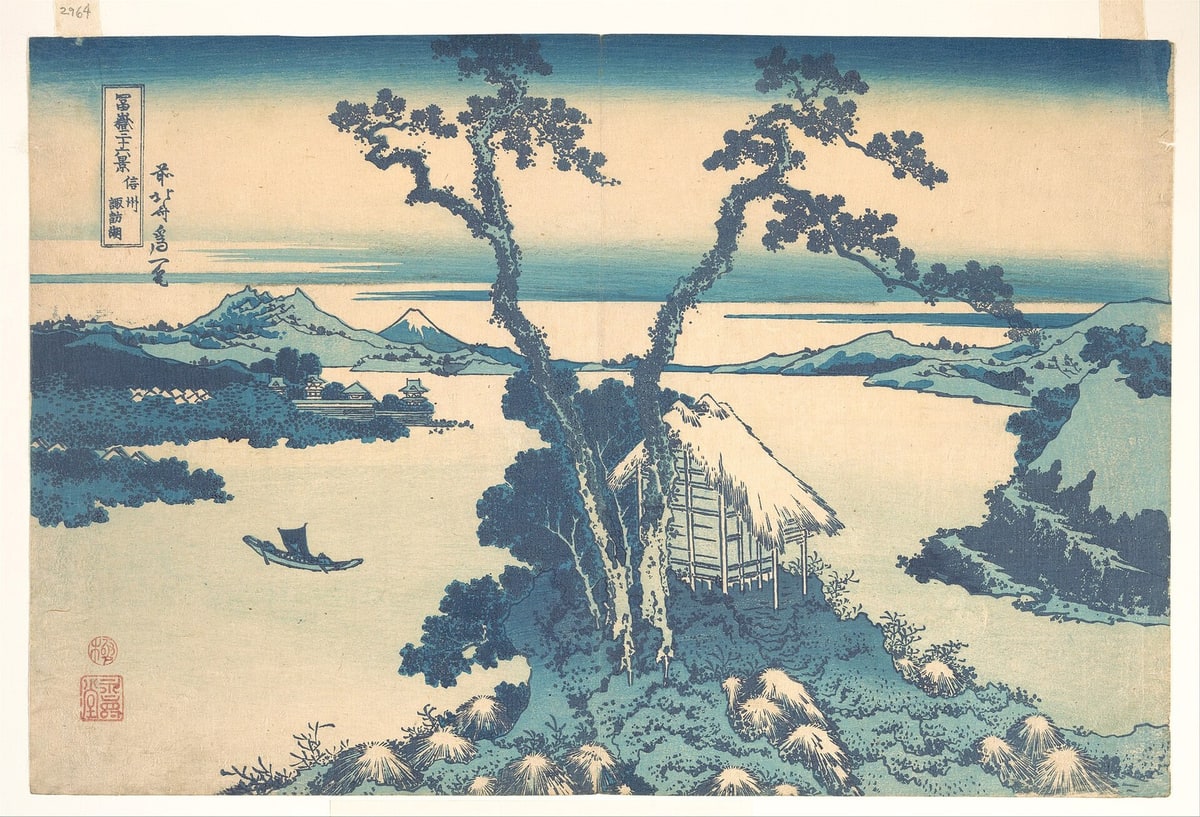
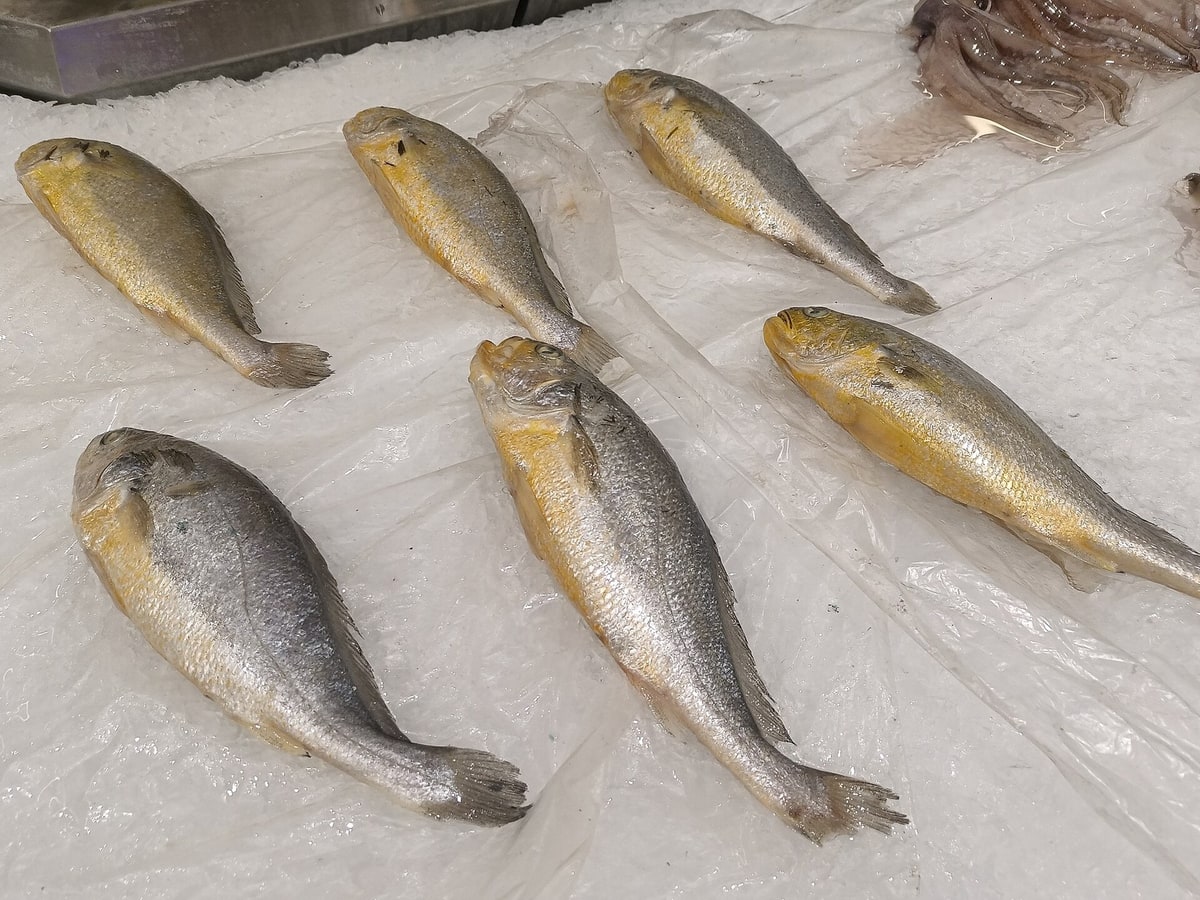
February has few places to fish. The sea is still cold, the rivers do not move, the lakes stay frozen. Asked what one might catch even so, an angler in the Kanto will name the tanago without hesitating. Fishing for tanago in the cold of the year has stood since the days of Edo as a byword for taste: to grip a tiny rod in a cold wind and take a tiny fish was held to be a superior amusement.
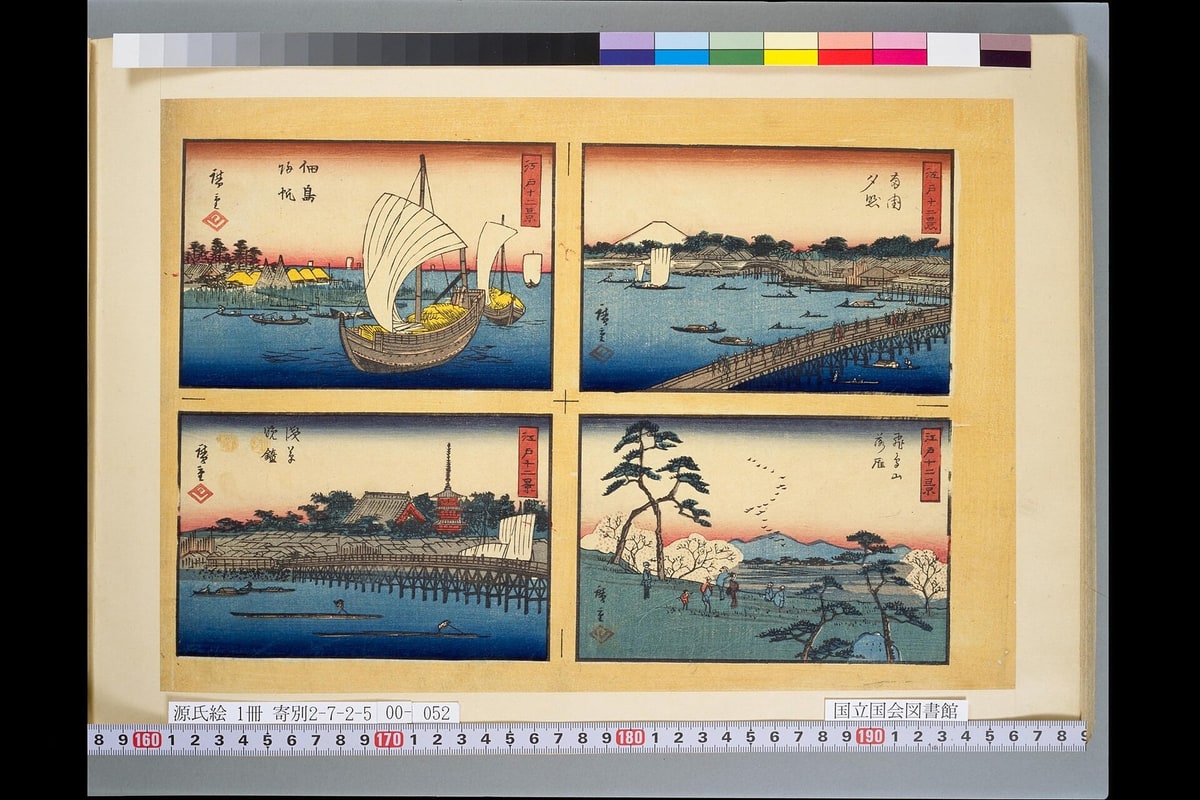
Utagawa Hiroshige / National Diet Library (public domain)
In some provinces the tanago is a fish no angler looks at. Bitter crucian, chamber-pot fish, the one the cat steps over — the poor quality of its names tells you as much. Devoting oneself to tanago fishing is a culture particular to Edo, and there is a trace of the Kanto angler believing that if he does not take a tanago in February he is not quite presentable as a fisherman. I have a trace of it myself.
The Lords at Their Fishing
The fishing amusements of the Edo lords took this to its extreme. In the timber basins of Fukagawa they would set gold screens all round, seat themselves at leisure on a cushion, and place a gilt lacquer hand-warmer at their left. For the tippet they used the hair of a virgin serving woman. Virgin hair has spring in it, and the hair of a woman who has once known a man loses its stretch — a reasoning there is no way whatever to verify, and yet the lordly anglers believed it with straight faces. When a fish of an inch or two came to the rod tip they would call out, it is caught, and the serving woman would unhook it and re-bait. Imagining the scene, I lose my grip on what fishing can have meant to such a man. But then losing one's grip is probably what makes it interesting.
The Tackle
Now the tackle. The tanago rod was called the santori rod. It is said to have been devised by Senosuke Ogasawara of the Ebiya in Honjo Hanamachi, known as Ebi-sen; three pieces, about three feet, held in three fingers as one holds chopsticks at a meal. The joint is the yam joint, named after the old yam sellers who skewered broken yams together with bamboo to pass them off whole, and drawn apart it separates into three. A small ivory line-winder sits at the hand, the tip is of white baleen, and with the years that turns the colour of egg. The bamboo was a special stock called shibadake, whose source the rod makers kept secret among themselves. There is a story that it hung drying at a shop front like a curtain, and that the master Saochu saw through it.
I have no such grand rod. A small-fish rod of two feet or less, tippet of 0.3, a minute sleeve hook of size one. A small rig with five floats set along it and a marker like a dragonfly, the line adjusted to the depth. The standard rig of the bamboo-rod era was silkworm gut of one rin dyed grey, threaded with a marker, and hooks chosen carefully among the mikoshi, the ryusen, the sleeve, the fox and the half-moon. There were schools even in a single hook, and anglers would say of each other that this man is of the mikoshi school, that one of the half-moon party. I belong to none of them, though whether belonging to none is itself a position I have never asked.
Bait and Water
The bait now is the tamamushi. From the Edo period into Meiji they picked rice weevil larvae out of the brown rice in front of the rice warehouses, or worked egg yolk into wheat flour, or held dried udon in the mouth and bit off a piece to put on the hook, or halved a grain of rice on the hook point. Along the road at Sakumacho, where the warehouses stood between Saemon Bridge and Izumi Bridge on the Kanda River, anglers turning over a mountain of brown rice for weevils is a sight it is no longer possible to picture.
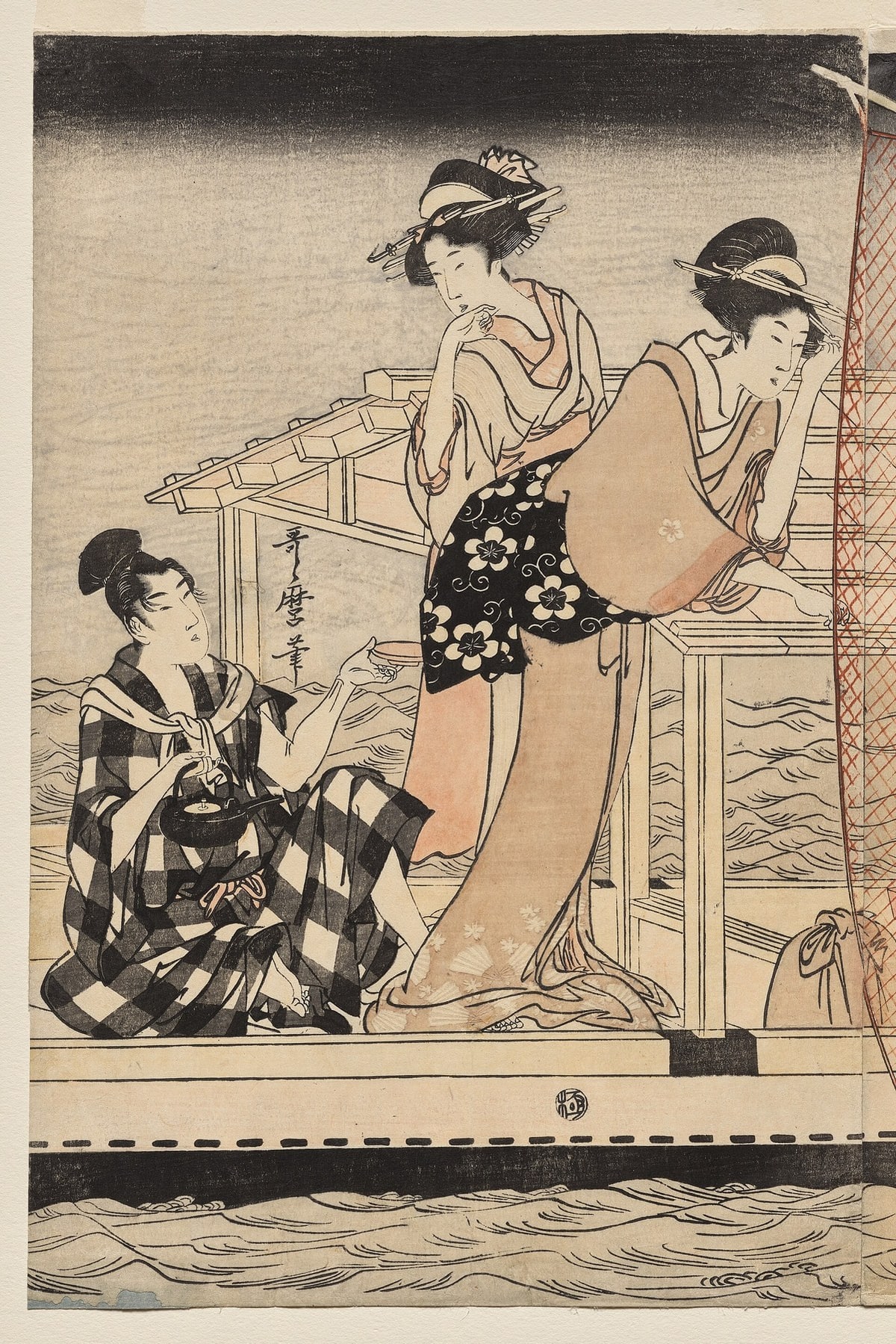
Kitagawa Utamaro (public domain)
As for the water, up to the war they took them well in the Kanda and Yanase rivers and about the Kashima River at Sakura in Chiba. Tanago still remain in scattered waters through the Kanto, but because of the question of protecting where they live, I will not name any here. Some species — the Japanese rosy bitterling, the miyakotanago — are endangered, and in some prefectures fishing for them at all is forbidden by law. Checking the rules of a place before putting out a rod is the least an angler owes it in the cold of the year.
The method is chiefly a touch rig, and dabs, small crucians and eels come as by-catch. An old angler wrote that as a boy the by-catch was the pleasure. For a child, not knowing what will come up is surely the best part of fishing. Grow up and one starts complaining about by-catch. Whether that is progress or the reverse I still cannot judge.
The Cooking
Tanago that are taken are made into yakiju. Nick the belly with a knife or scissors, press out the black gut, wash it well and grill it on a fine wire net. Pour soy into a dish, thin it a little, drop in the fish straight off the fire and it sounds — ju. That sound is what the anglers call it. Powdered sansho over it and eaten whole, bones and head; the faint bitterness is the point of it. Up to the war a shop of preserved fish called Musashiya, near Ryogoku Bridge, made this its speciality. That shop is gone now, and a tanago yakiju cannot be had except by grilling it at home.