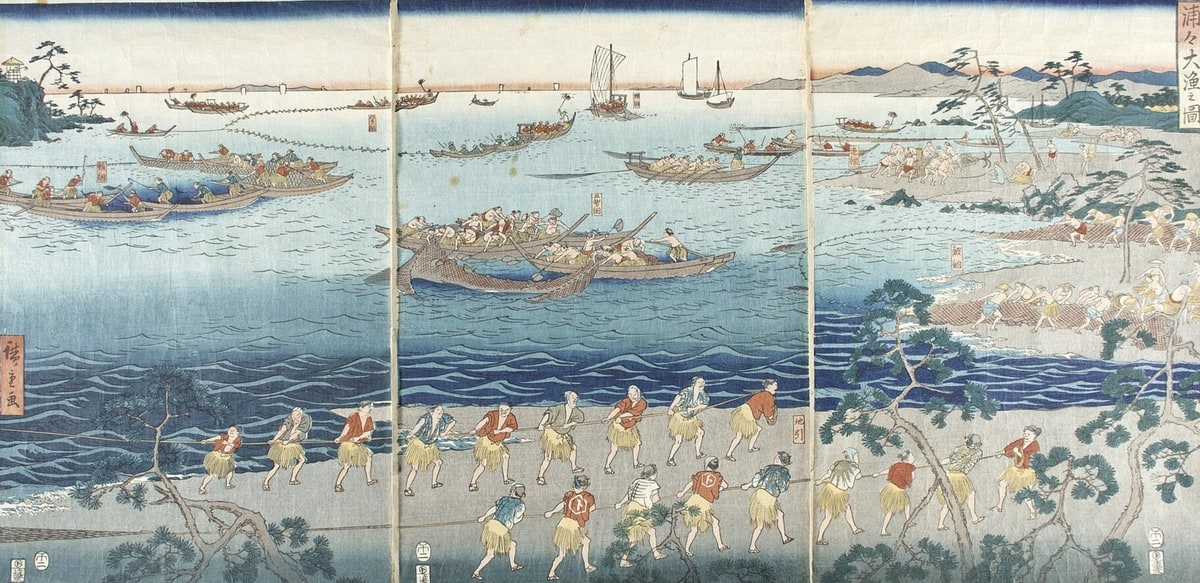
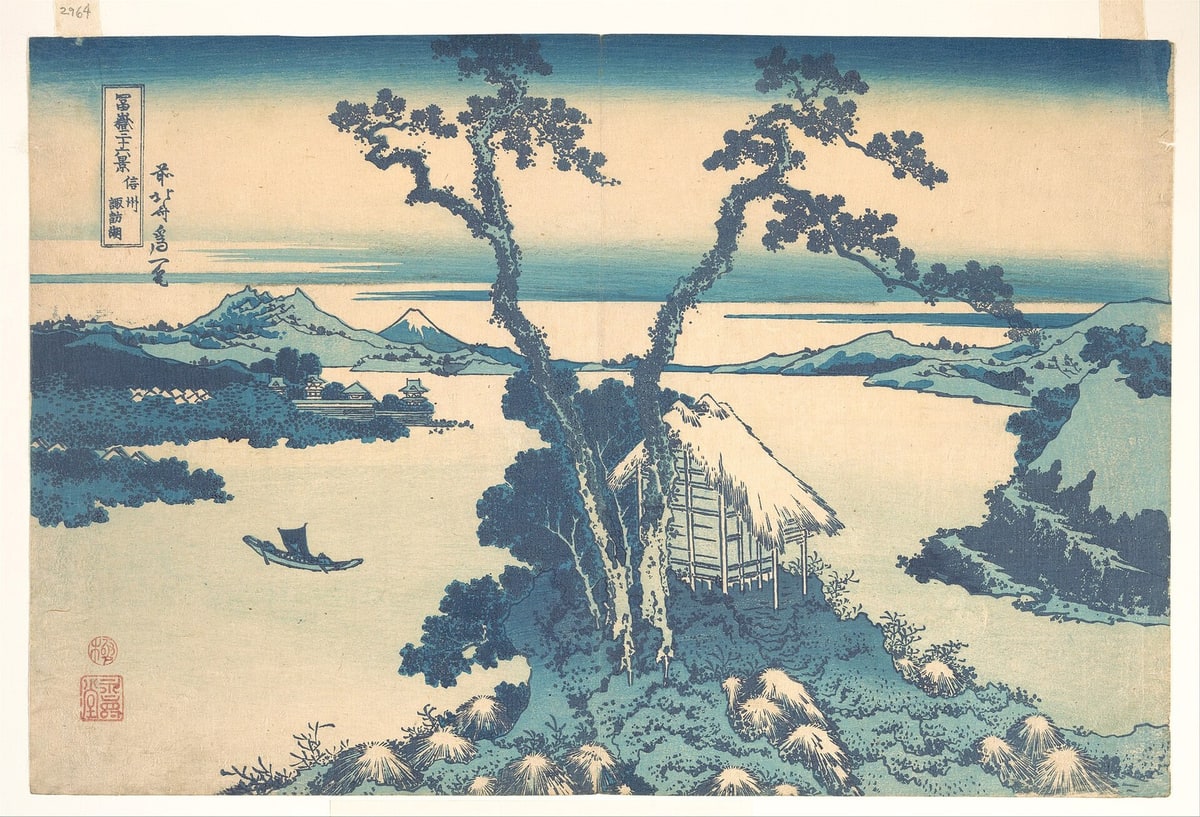
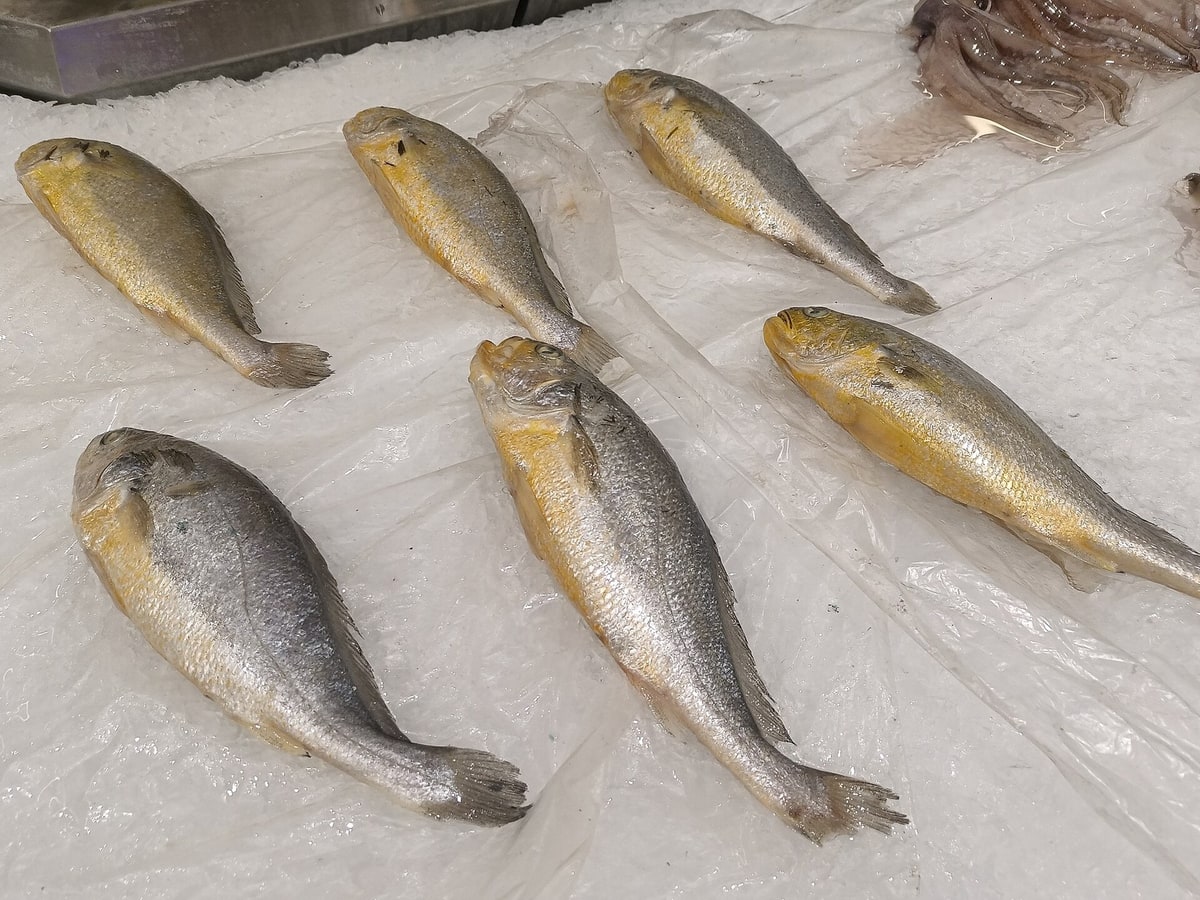
On the food of chinu in March. March chinu fishing scatters its options three ways: Kishu, Osaka Bay, Tokyo Bay. This year, rather than the clever business of working all three in one, I have settled on Kishu, that is Wakayama, alone. I want first to write properly, once, about the food of the district that left its name on the method. The Inland Sea and Tokyo Bay I set aside as homework for another year. The record of the actual visit is added at the end of this piece.
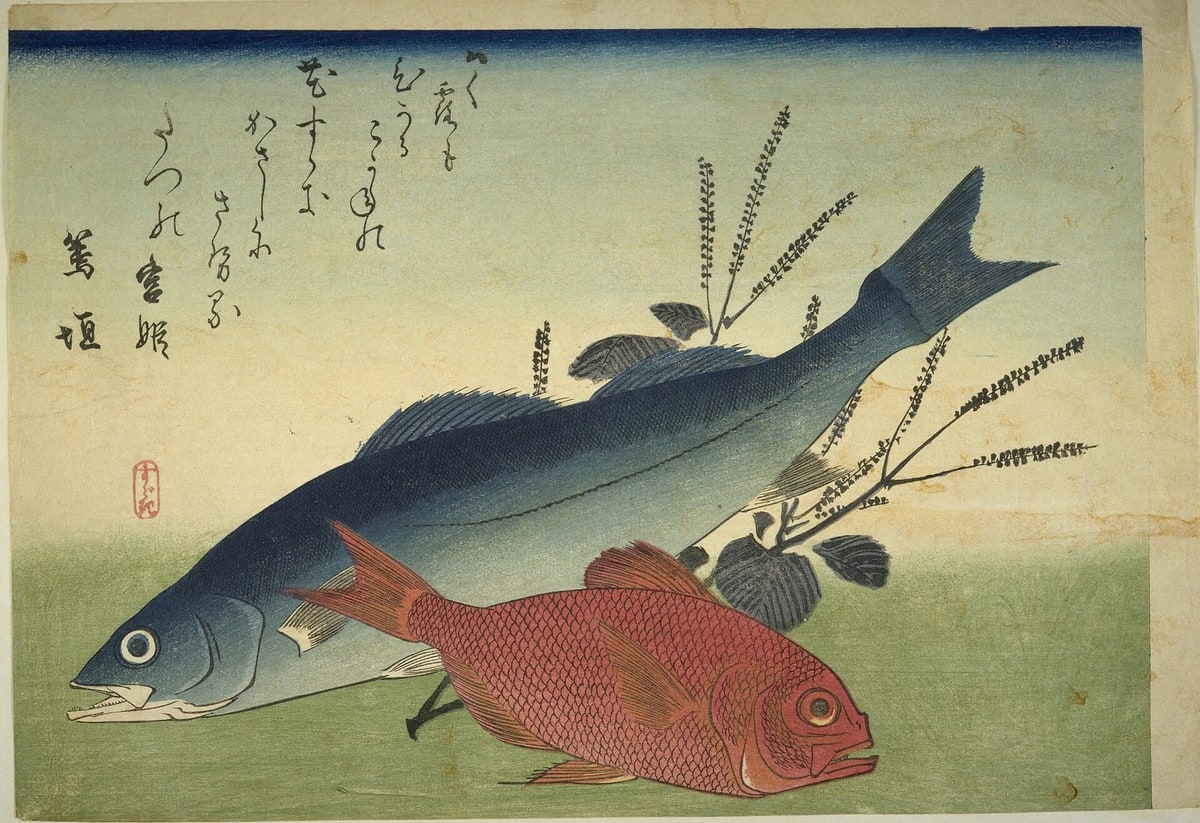
Utagawa Hiroshige / National Diet Library (public domain)
The Food of Kishu
Wakayama, anciently Kii, is a place where the food of the sea and the food of the mountains stand within a short distance of each other. Along the coast, fresh tuna, bonito, spiny lobster, kue, saury. Into the mountains, mehari sushi, fermented sushi, Kishu plums, tea gruel. A place where one can go between sea and mountain in a day, which suits an angler's travelling well.
The rocky grounds of northern Wakayama — Tanoura, Kada, Wakanoura — are held to be the birthplace of the Kishu method. Near the water there are fishermen's morning markets and eating houses that put out local fish. Through the prefecture, houses serve according to their district: fresh tuna, saury sushi, whale, kue, even sunfish. If you are taking breakfast or lunch near the water, the sensible aim is a place right beside a fishing harbour. Along the Kisei line each station has houses that serve the fish of that stretch, so taking one house at the station next to the water is an easy way to put a trip together.
For sitting down to eat properly after the fishing, it means going back into Wakayama city. Search the old houses there and seafood places, sushi counters and Japanese kitchens come up. My experience of Wakayama is still thin and I have not accumulated enough to say I have settled on one house, but I intend to open up one place that treats Kishu fish seriously with each trip. The local list runs to Wakayama ramen, mehari sushi, fermented sushi, kue hotpot and Kishu plums. Closing a day of Kishu fishing with Wakayama ramen would be perfectly acceptable, I think. So would buying Kishu plums the next day to take home.
What to Eat
Here is what I want in my mouth, from chinu cooking to the spring food of Kishu. One at a time.
Sashimi, and the cold-water rinse. The run bream has fed up before spawning and its flesh is firm. Taken the same day, fresh, the white flesh carries the smell of the rocks. Served at a fishing inn, that is the proper form.
Grilled with salt. The rib bones are hard so the heat wants adjusting, as a cook would put it, though at home it never goes right. Safer to have a house do it.
The simmered head and bones. What is left after filleting, reduced in soy and mirin. It is a dish that comes out of having made everything else into sashimi, and it goes with rice and with drink alike.
Fresh tuna. Wakayama, Nachikatsuura above all, is known for landing it. It is off the main line of fishing, but to go to Kishu and come back without eating it is bad manners.
The first bonito. From March into April comes the run, another Nachikatsuura speciality, eaten seared.
Saury sushi, and fermented sushi. Kishu’s own: saury cured in vinegar and pressed into a bar, or salted and fermented. These do not come out except at a house of local cooking.
Kue hotpot. A winter fish, but early March is still in time; there are houses around Shirahama that serve it. To go for chinu and eat kue at night may be one extravagance too many.
Mehari sushi. Mountain food, a rice ball wrapped in pickled takana leaf, and it can be carried to the water in place of an onigiri.
Kishu plums. The souvenir, bought at the station on the way home. That alone is proof of having gone.
Here is the day, supposing one fished for chinu around Tanoura in Kishu.
In the morning, before leaving the inn in the city, eat mehari sushi or fermented sushi at breakfast. That is the first step into the food of Kishu.
Late morning, move to the water. Look over the day’s fish at a harbour market on the way. Sometimes one buys something small to add to the bait.
Midday, a local seafood bowl or a sashimi set at an eating house near the water. Half a measure of beer, no more.
Afternoon, keep fishing. If a big run fish comes, the arrangement of the day changes entirely. Whether too many come or too few, the pleasure of the evening’s food does not change.
In the evening, break off and go back into the city. Stop on the way at a house that serves fresh tuna and take a single plate of sashimi. This is meant as a first course, not the dinner.
At night, go up to a seafood house or a sushi counter in the city. If chinu has come, there may be a house that will take it in and make sashimi of it, but one does not count on that. Eat what the house puts out in the house’s manner. A measure or two of cold sake.
Next morning, buy a bag of Kishu plums at the station and take the shinkansen back to Tokyo.
For the Inland Sea it would be the fish of the Bisan strait and Sanuki udon; for the breakwaters of Tokyo Bay, the eating houses about Omori and Haneda and sushi in Ginza. Another draft could be written if one wanted to, but that I will raise again in a year when I fish for chinu somewhere other than Kishu. One district a year is enough.