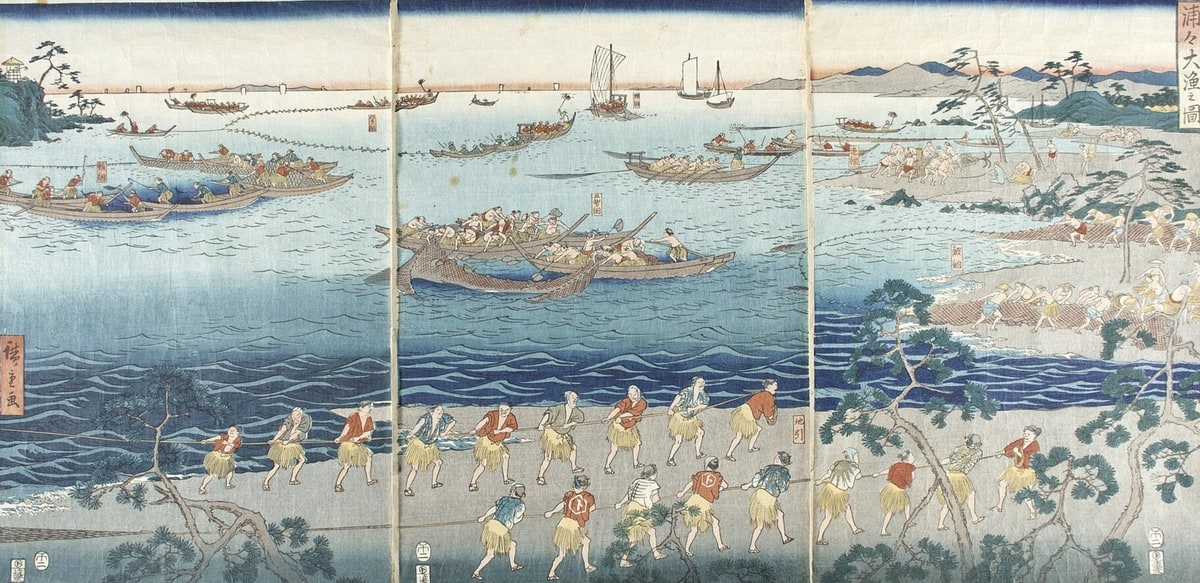
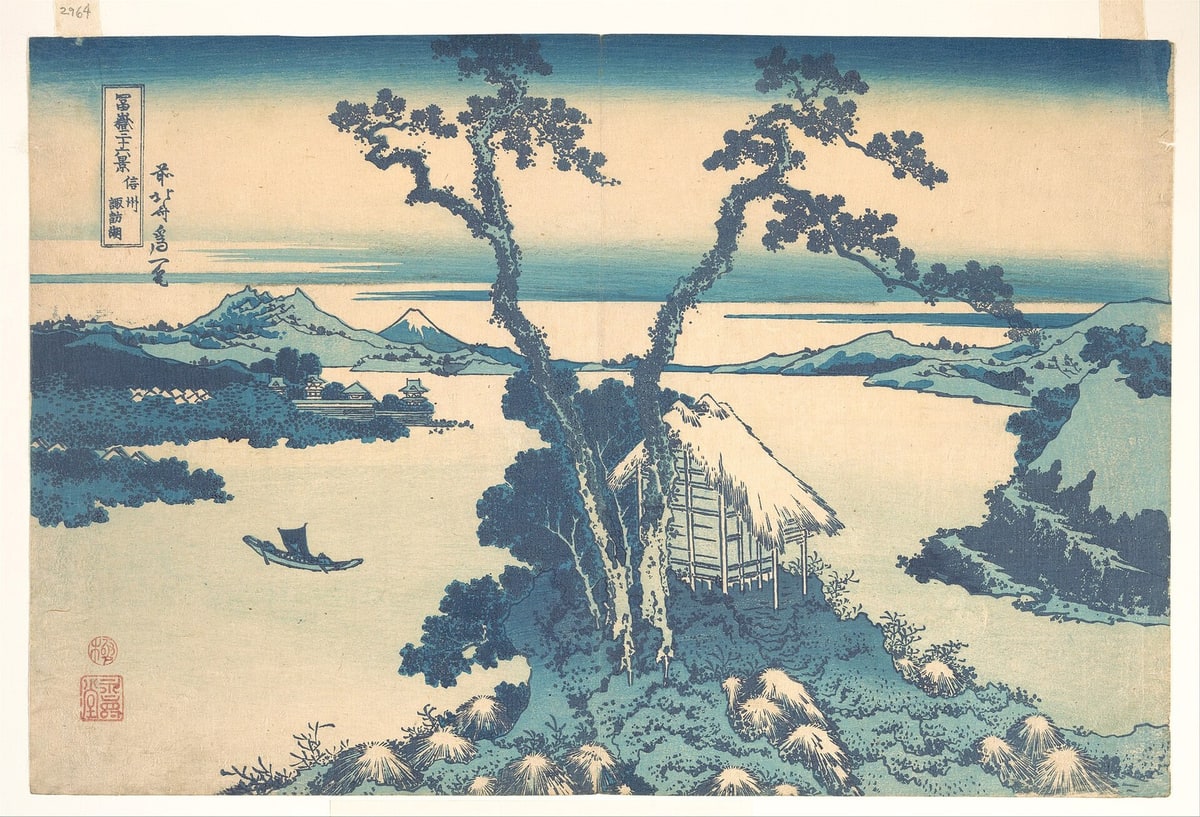
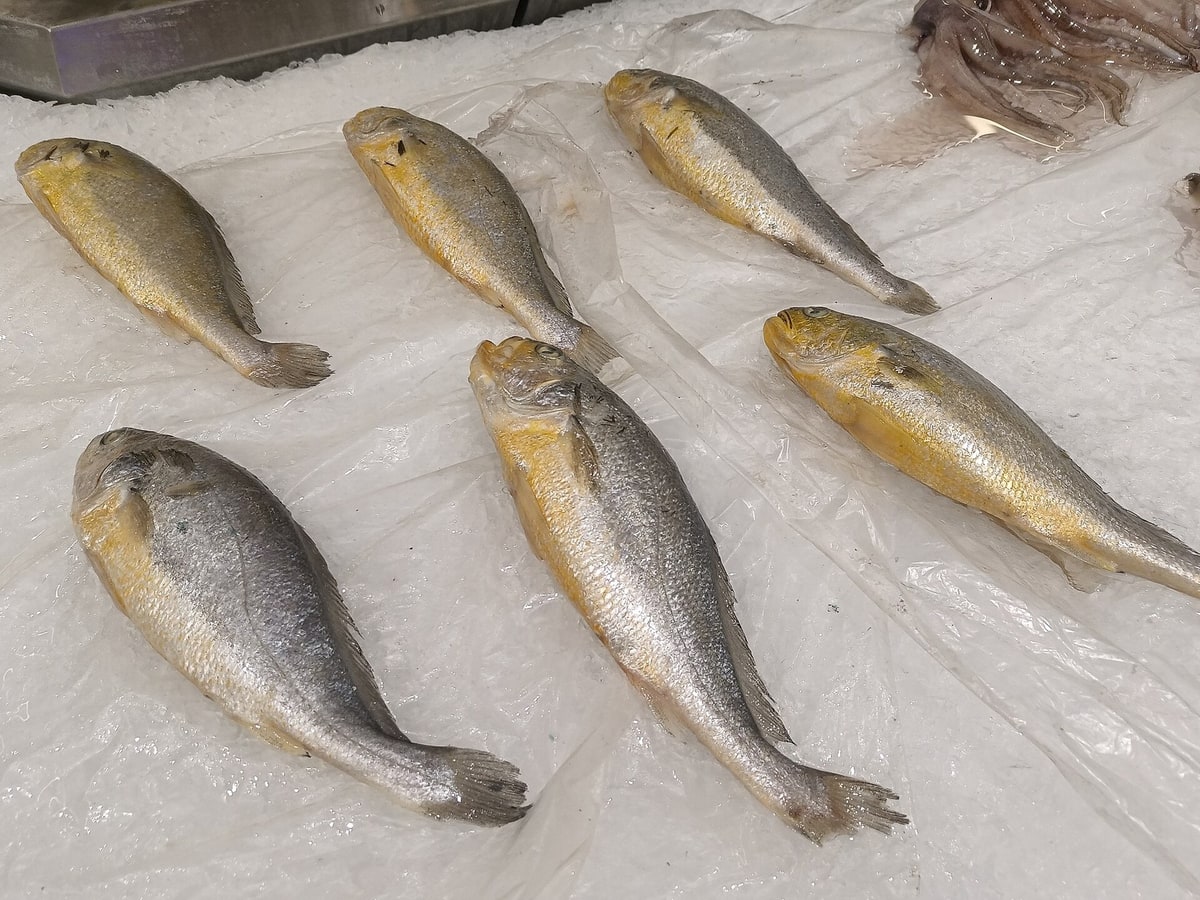
On the food of Lake Kasumigaura in April. This is the first of the food pieces in the series. From this month begins the undertaking of leaving one provisional plan for food each month, twelve in the year. Because it is the first as a matter of the series' posture, there may be a trace of more effort in it than usual. I would ask to be forgiven that. The record of the actual visit is added at the end of this piece.
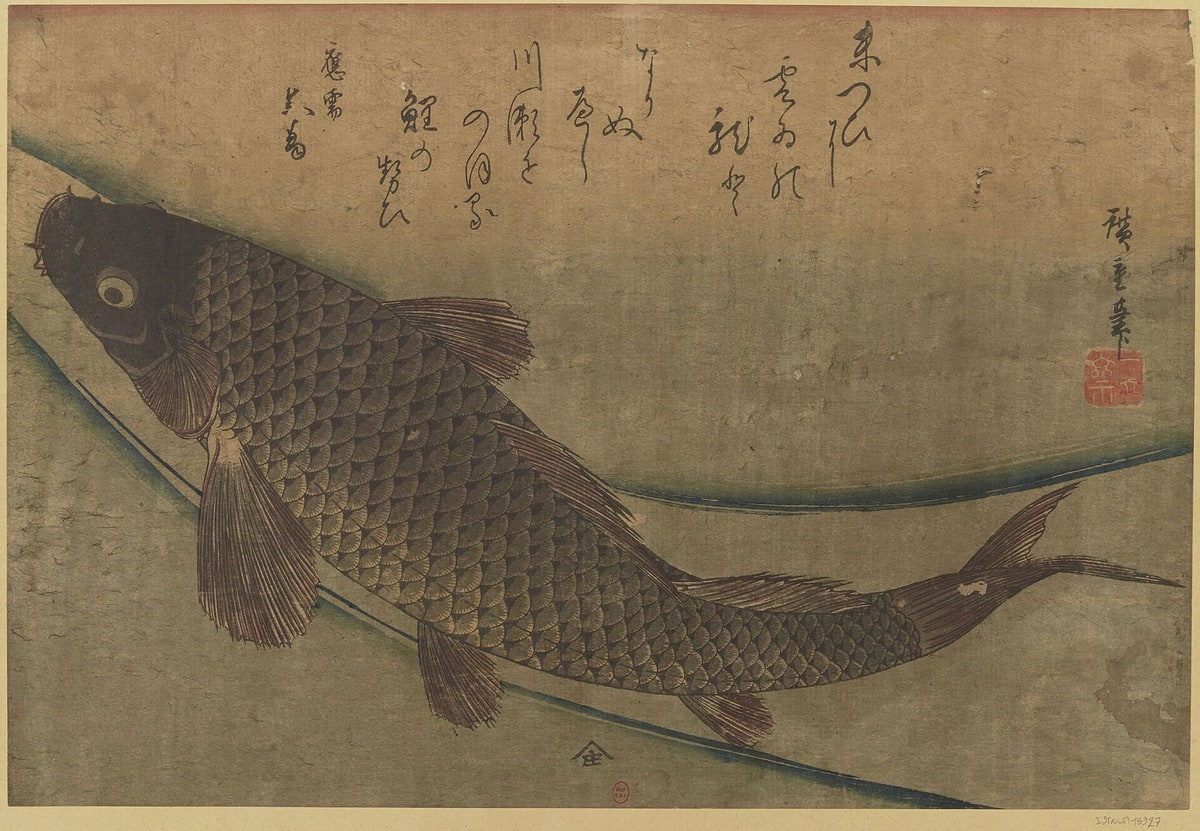
Utagawa Hiroshige (public domain)
Once a trip is settled, I find myself more careful over the arrangements for dinner on the way home than over the arrangements for the fishing. The thickness of line and the size of hook can be decided the night before; what to eat before going home cannot. Deciding after arriving is too late. The good houses fill with reservations, there are days when no market stands, and a shop of preserved fish has a closing hour. One has at least to sketch it out beforehand. That I should be worrying about food before the fishing is something I feel apologetic about, but it is my disposition.
The Shore of Kasumigaura
The shores of Kasumigaura have a deeper ground under their food than I had supposed. On the map, ringing the lake, Tsuchiura, Kasumigaura, Namegata, Aso, Miho and Itako all have old eating houses, banquet houses and long-standing shops of preserved fish scattered through them. I have the north shore of the western lake in mind for the fishing, and by tracing the lake by car one could look in at several within half a day.
The Tsukudani
Begin with the preserved fish. The tsukudani of Kasumigaura is said to have been started in 1874 by a man of the old town of Aso named Kirobei Okumura. Wakasagi and river prawns landed from the lake were cooked the same day in a large pot and reduced with soy and sugar. That has continued a hundred and fifty years and more, and several houses remain on the north shore.
There is another line to it. In the Edo period a village official of Aso named Genzo Okumura is said to have learned the method at Tsukudajima in Edo and brought it back; this is the account handed down by Suigo Hashimoto. How that relates to the Meiji-era Kirobei is unclear, but either way the roots of the work called tsukudani are deep on these shores.
Of the old houses one can still go round, my own looking turns up about three.
Dewaya has been at the lakeside eighty years and more. Candied wakasagi is its sign, and simmered river prawn and candied crucian stand beside it. There is mail order, though I privately hold that it is not the same thing as buying at the counter.
Joban Shoten is a shop of the same line, handling candied wakasagi, tsukudani of prawn, and even lightly grilled eel. The small dish of tsukudani that comes out at a fishing inn is usually work from about here.
Suigo Hashimoto, as said above, is the house with the oldest line of descent, and writes officially that it finishes the lake’s natural bounty by traditional craft.
A shop of preserved fish is a place to stop at on the way home and buy a present. Come off the water, drive straight to the shop, and have a little of several kinds packed at the counter. That is the proper form. I have not once done the proper form. Since not doing it has caused me no particular trouble, I have let it pass every year.
There are eating houses that serve the lake’s fish on the spot, several of them around Tsuchiura. They will do for lunch on a fishing day and also suit a drink after coming off in the evening.
Atariya Shokudo is an old house that serves Kasumigaura wakasagi lightly, as tempura or breaded and fried. Nothing moves me more than wakasagi close to freshly caught being fried at a house on the lakeside. A house with an air that permits you to walk in as you came off the boat is also a mercy to an angler.
Hodate Shokudo has its root in an Edo-period fish wholesaler and is now in its sixth generation. Tempura bowls, tempura sets, sashimi sets, fish-bone soup. It puts out sea fish as well as lake fish, and I suspect that if the water is far I will arrive at this house before I arrive at the fishing.
Suzuya Shokudo is another old Tsuchiura house. From photographs of its appearance, it looks like somewhere that would let you have a single measure at midday on the way back.
For sitting down properly at night, after the fishing is done, the houses go up a grade.
Miura-yanagi in Miho village is an eel and river-fish house of some sixty years, with private rooms said to look out over Kasumigaura. Grilled eel, crucian rinsed in cold water, simmered river prawns. Going with a fishing companion, this would be the first candidate.
A grade above is Kagetsuro, a banquet house in Tsuchiura founded in 1889. Kaiseki courses, and even a charter plan for the pleasure boat Kagetsu-maru. It is not a house to drop into lightly on the way back from fishing alone, but if I ever bring someone, settling in there would not be bad. Eating while looking out at the lake from a pleasure boat has something in it, I feel, of the small-fish fishing of the Edo lords.
After the houses, what to eat. That is a separate matter from what one catches, and to miss what can be eaten in a district halves the point of having gone.
Carp rinsed in cold water. By Kasumigaura tradition it is firmed in deep-well water. Sashimi of freshwater fish differs by local practice, so lake carp rinsed is properly eaten at Kasumigaura.
Wakasagi as tempura or breaded. Ideally eaten at a lakeside house the day it is caught. I wrote of the public fish in the January chapter, but there are late ones left in the lake in April as well.
River prawn, simmered or fried plain. Kasumigaura is good ground for them, and the small ones sold as kawa-ebi are the same kin as the ones I fish for in a water channel at night in July.
Grilled eel. Wild eel from Kasumigaura has long been hard to find in the market, but the houses nearby handle eel from various places. At a house that puts eel and river fish together, a skewer with the lake in view is the proper thing.
Yanagawa pot. Loach or prawn from Kasumigaura simmered with shaved burdock and egg, local cooking that comes out at a river-fish house rather than an eating house.
Candied crucian. It can be made at home from a run fish, but I have no confidence in my cooking, so buying the ready-made at a preserved-fish shop is more reliably good. Crucian that are caught go back in the water as a rule. That too is one of an angler’s manners.
Taking all that, a day built from the side of the food comes out like this.
In the morning, before going in, buy rice balls somewhere and eat them at the lakeside. Breakfast looking at the lake pays for the day on its own.
At midday, set Hodate or Suzuya near the water. Regardless of the catch, take a set meal and half a measure of beer. There is fishing to come, so no more than that.
In the evening, once the rod is up, run east along the north shore and look in at a preserved-fish shop. Dewaya or Suigo Hashimoto, whichever the day suggests. Have two or three kinds packed for home.
At night, settle in at Miura-yanagi in Tsuchiura. Carp rinsed, river prawn fried plain, grilled eel. With Kasumigaura in view, more beer and a measure of cold sake.
That is the arrangement for the food of Kasumigaura in April, as provisionally held. It will not necessarily go that way. Houses close, rain keeps one still. It is entirely possible that nothing comes at all and one goes home early with dinner out of the question. An angler's arrangements stay provisional and never become the final draft.