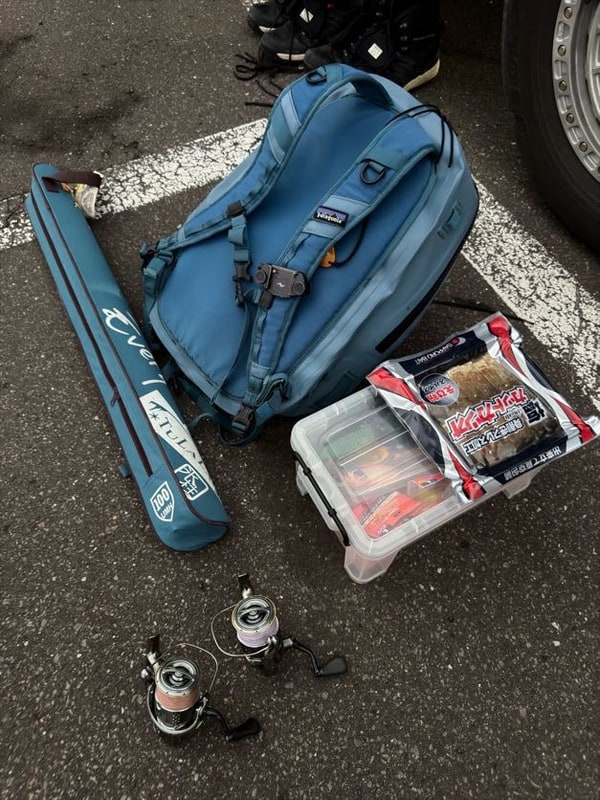
It is still dark, and the gear is being brought out in front of the lodging in Utoro. A rod bag, a tackle box and a headlamp lie in a row on the tarmac, and one by one they go back into the car. It is six minutes to five. We saw one fish in yesterday's river, and today we are already on our way to the next water. Aidomari, I am told. Where that is, so far I know only from the map.
Utoro is on the Okhotsk side, and Aidomari is on the other side of the peninsula, on the Nemuro Strait. Between the two the mountains of Shiretoko run like a spine, and to get across you go over a pass. We are only moving within one peninsula, and yet on the far side the sea comes round to the other hand. Cross in the night and you do not even notice the exchange; by the time it is light you are simply looking at a different sea.
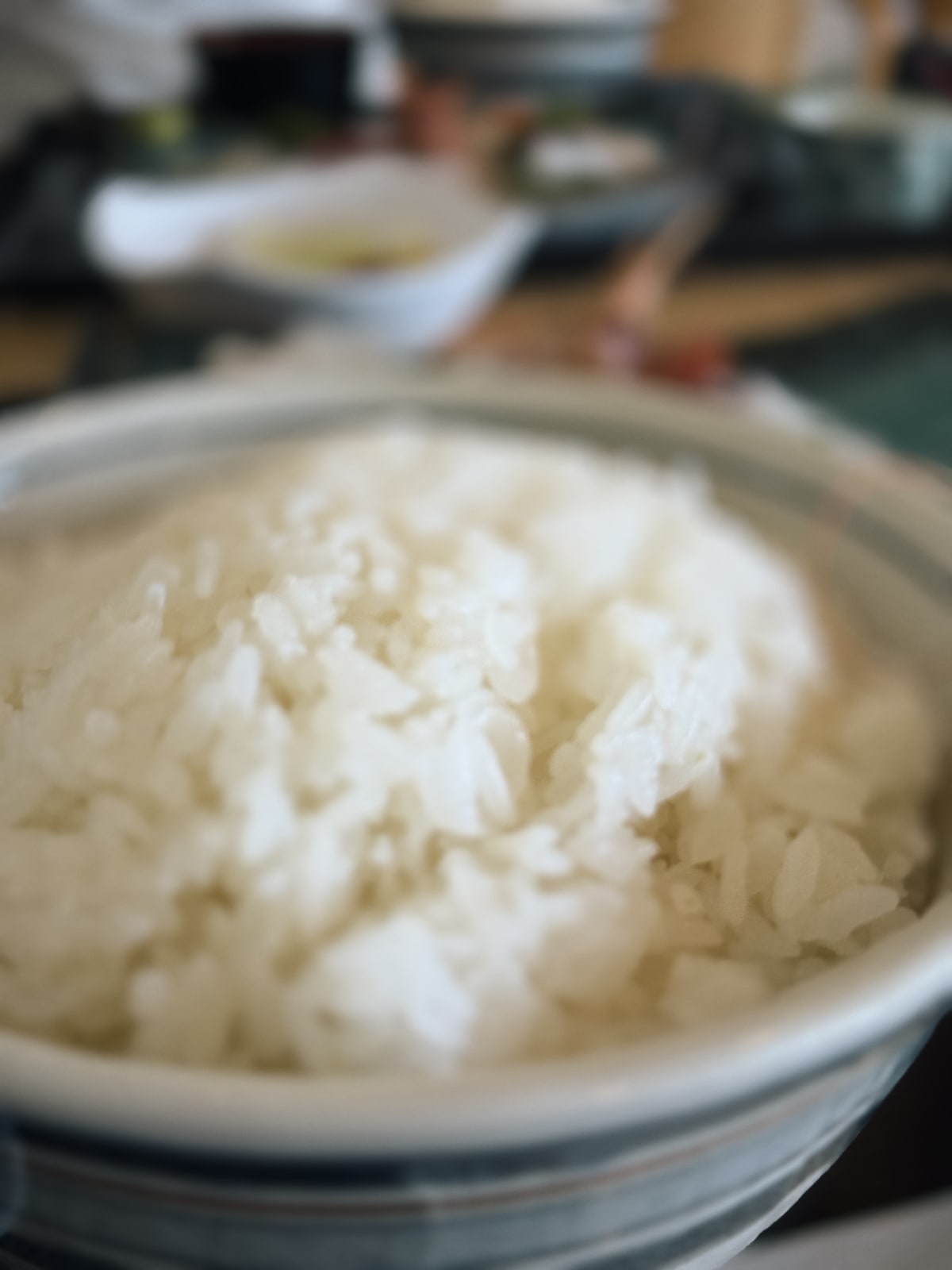
We came down into the town of Rausu, went into a place and ate breakfast. It was a little past eight. White rice was heaped in a bowl. Breakfast does not change much from one part of the country to another, and I found I was a little reassured that it did not.
From there we went north along the coast. Route 87 runs out of Rausu along the shore and ends at Aidomari. It is a dead-end road. Beyond it there is no road and no house, only cliffs and the fishermen's huts, they say. We were going to the end of a road we knew came to an end. That was the purpose of the morning.
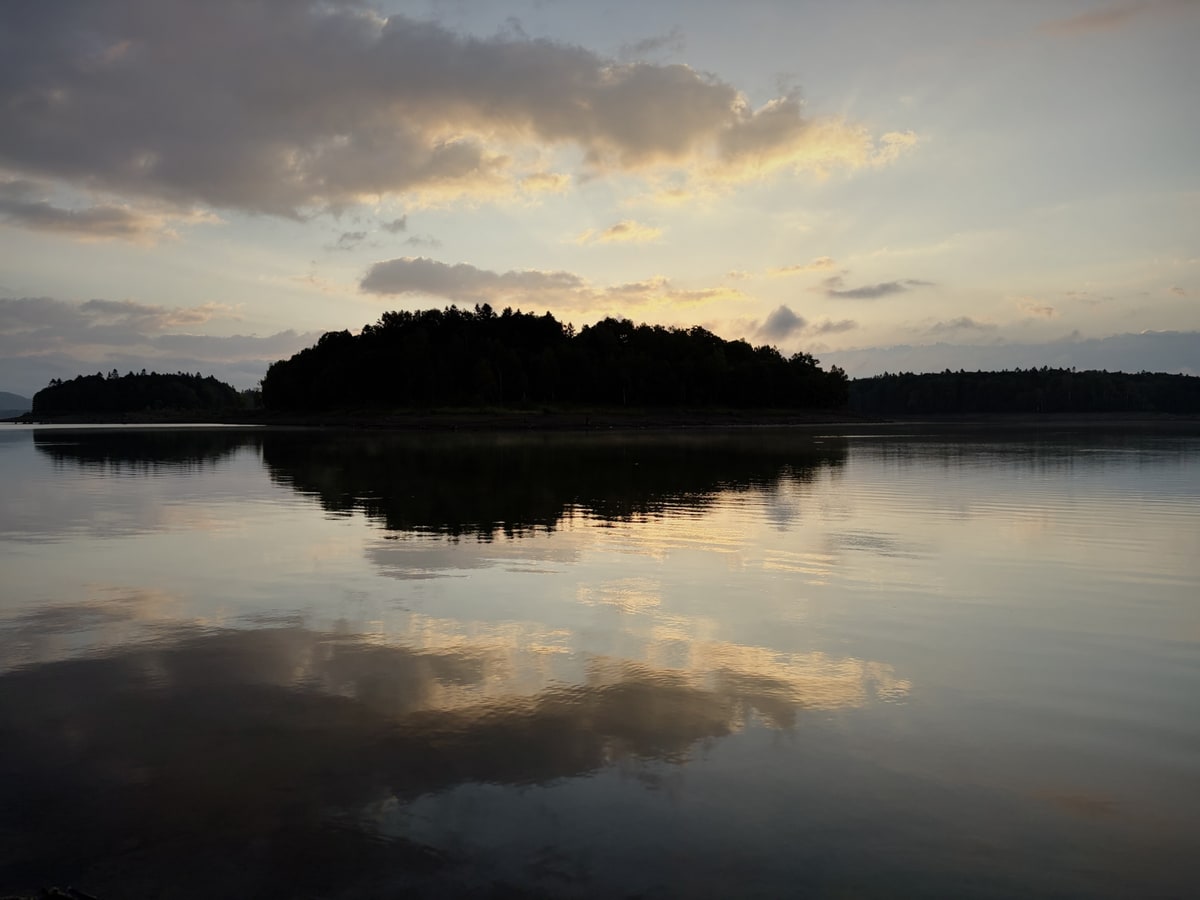
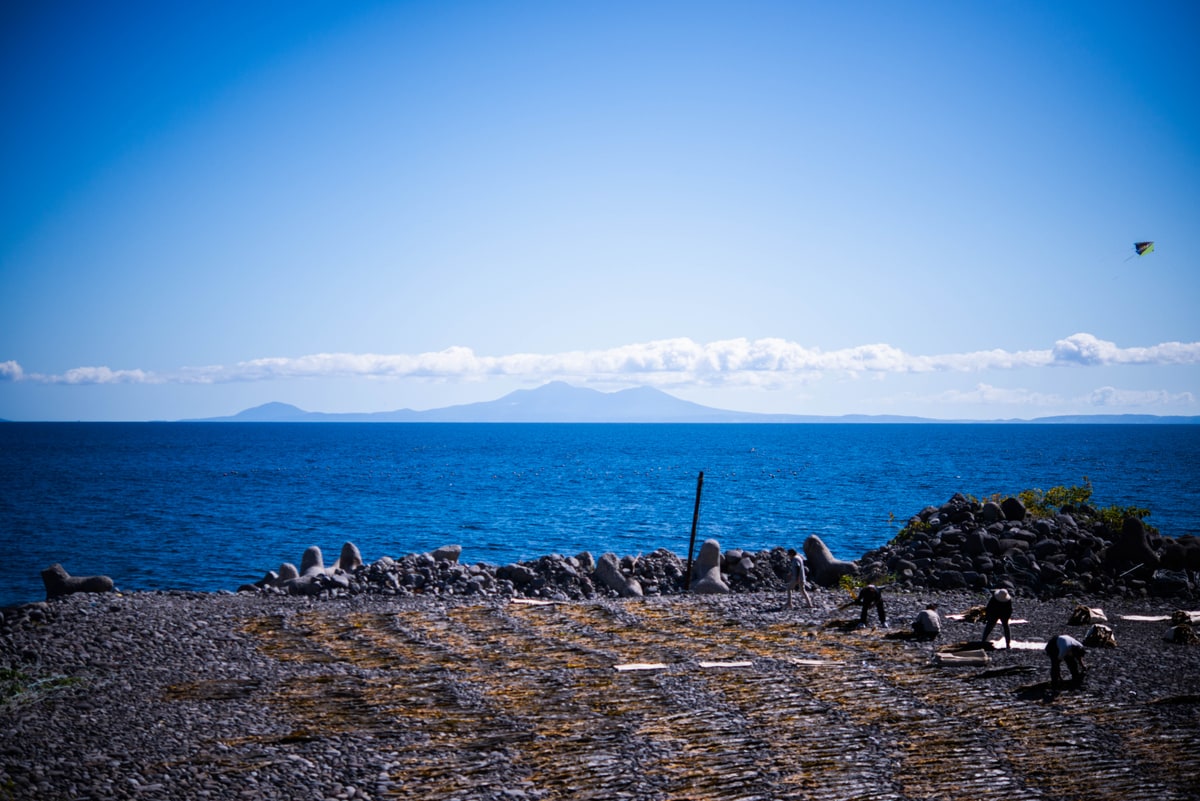
When we went down onto the stony beach, the sea was blue. Rausu had more than ten hours of sun that day and not a drop of rain. Across the strait a long island lay on the water, and the longer I looked, the less I could tell whether it was near or far. The car is parked above the beach, on a road in the trees.
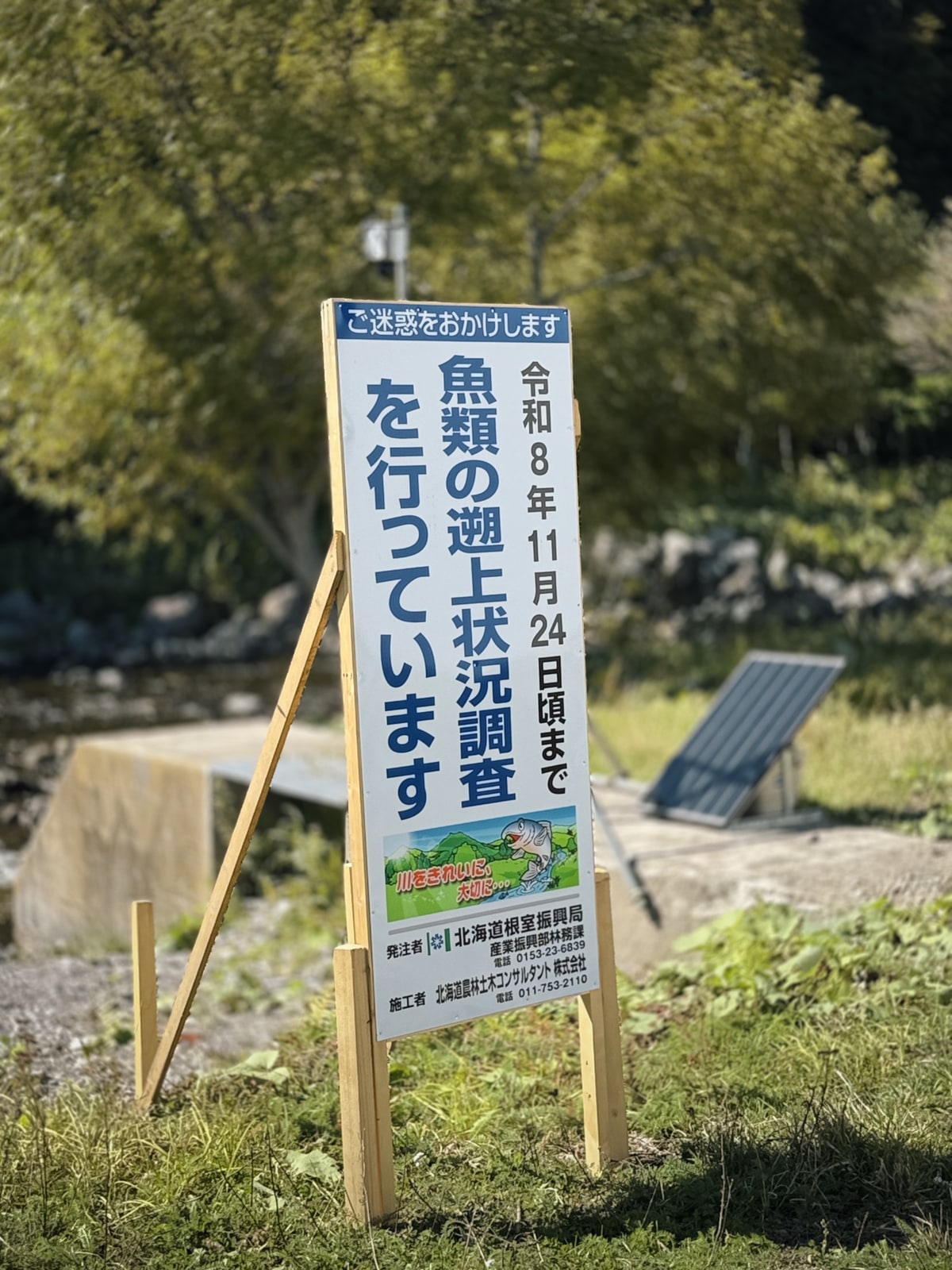
By the river stood a single signboard. We apologise for the inconvenience, it said, and then in large letters that a survey of the fish running up the river was being carried out until around the twenty-fourth of November 2026. It had been commissioned by the forestry section of the Nemuro Subprefectural Bureau of Hokkaido, and near the bottom it added: keep the river clean, look after it. Behind the board was a concrete structure, and beside it a single solar panel set at an angle. Something there, I supposed, was counting the fish that come up.
In Shiretoko, the dams set in the rivers to hold back the collapsing mountainsides had been stopping salmon and trout from going up. Thirteen of them have since been reworked, with fish passes among other things, and it is reported that the stretch above the structures where the fish spawn has widened and that more eggs have been laid. At the end of yesterday's river I wrote that where the counting had been done there were no fish. The very next day we came upon a board and a panel put there to count the fish going up. The people doing the counting have their side of it too, I thought, and standing in front of the board I took back a little of what I had said.
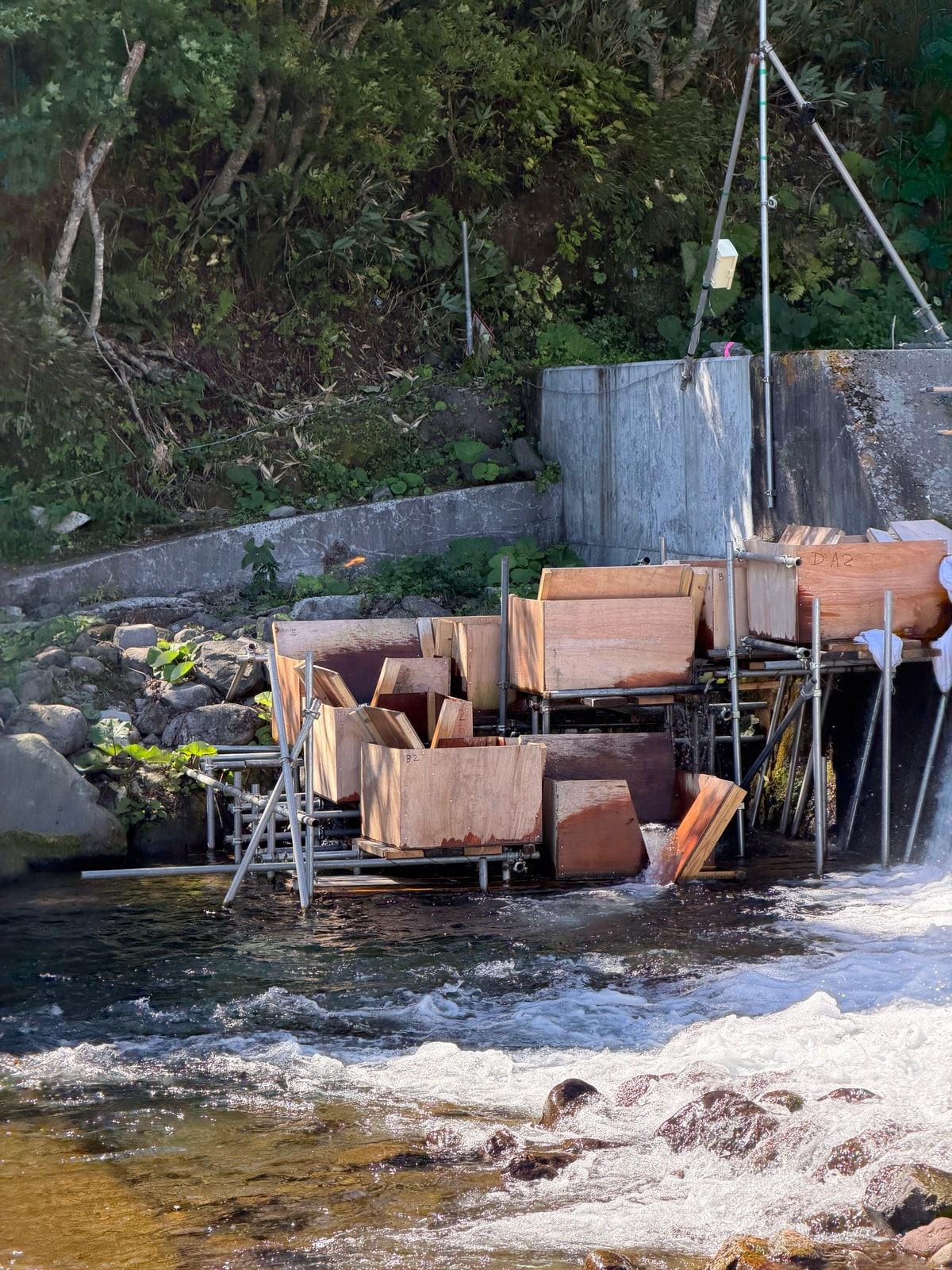
Around here the salmon that come up the rivers in autumn are called akiaji. When the time to spawn comes, salmon go up the river they were born in. The run is at its height from October into November, and for two or three months before spawning they take no food and make only for the river of their birth, it is said.
So we were setting out to catch a fish that does not eat, with a piece of metal made to look like food. By rights it has no reason to bite, and still people line the quay. If one is caught, it is not because it is hungry but because it snaps without thinking at something that crosses in front of it, and when that will happen nobody can say. Call fishing the business of waiting for what cannot be known, and there is nothing more to add.
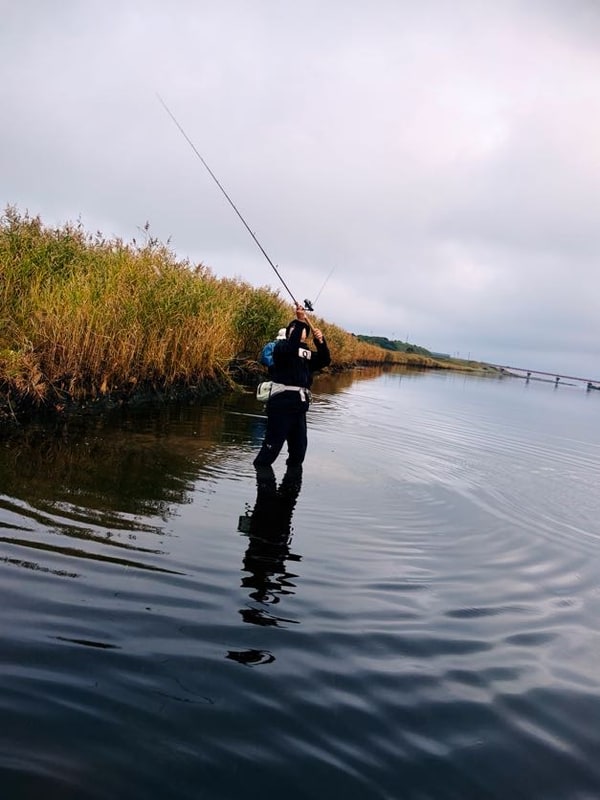
In the afternoon we put our rods out on the harbour quay. Someone who had got there before us sat on a folding chair in a red cap, rod pointed at the sea. The water was a greenish colour, and the shadow of the concrete quay lay black on it. That day, on that quay, nothing at all had come up. We cast alongside and the rods stayed still. The one in the chair was still too, watching nothing but the tip of the rod.
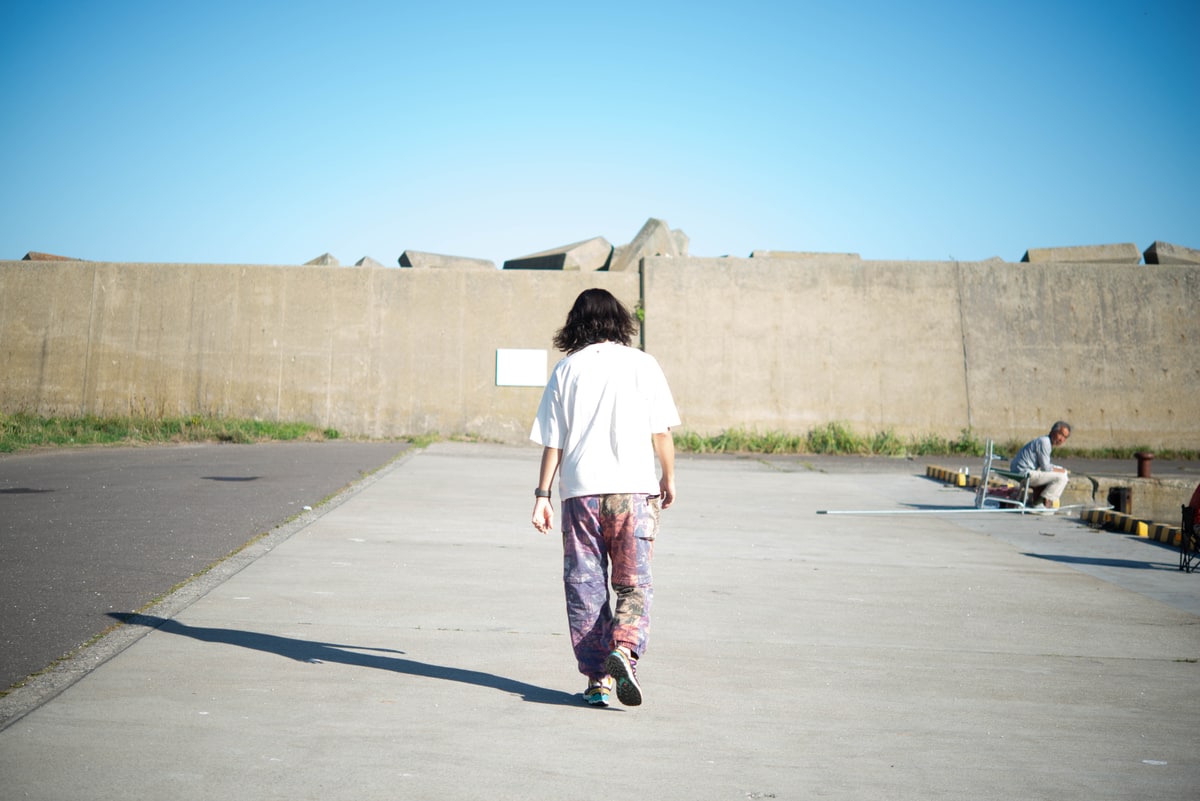
And there, one took. One fish, with nothing coming up anywhere around. One of our party leaned out over the edge of the quay and reached down toward the water. What face the one in the chair made at the sight, I did not see. Had I seen it, I think I would have felt sorry. What came up was an autumn salmon.
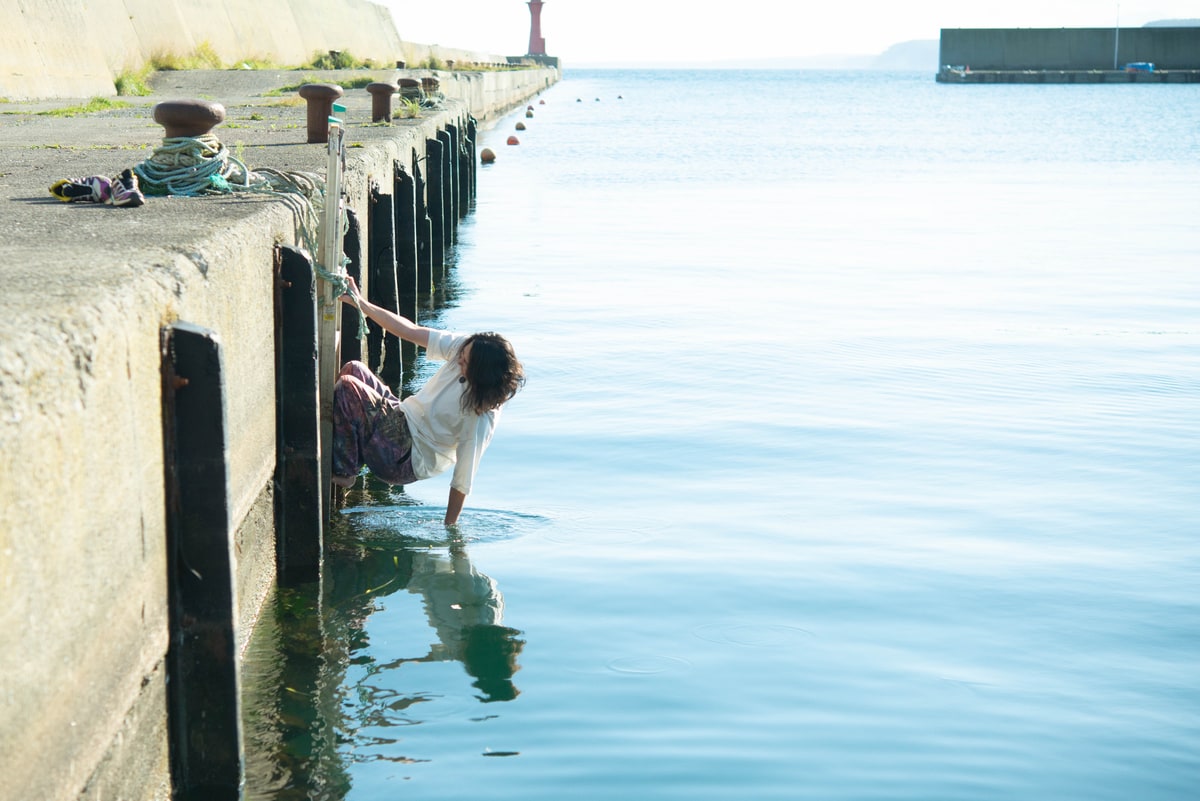
This was a trip to get a salmon to hang up for the New Year, the others had said. It is a grand way to put it. Bamboo rods loaded onto the roof in Omiya, the sea crossed by ship, the rivers of the north worked one after another, five hours of casting at a lake, and the purpose was met on a harbour quay in Shiretoko with one fish, when nobody else was catching anything. The fish set on the tray for the last meal of the year on New Year's Eve is salmon in the east and yellowtail in the west, they say, and the line between the two roughly follows a great crack in the ground that runs down the middle of Honshu. We are from the east, so a salmon will do for our New Year.
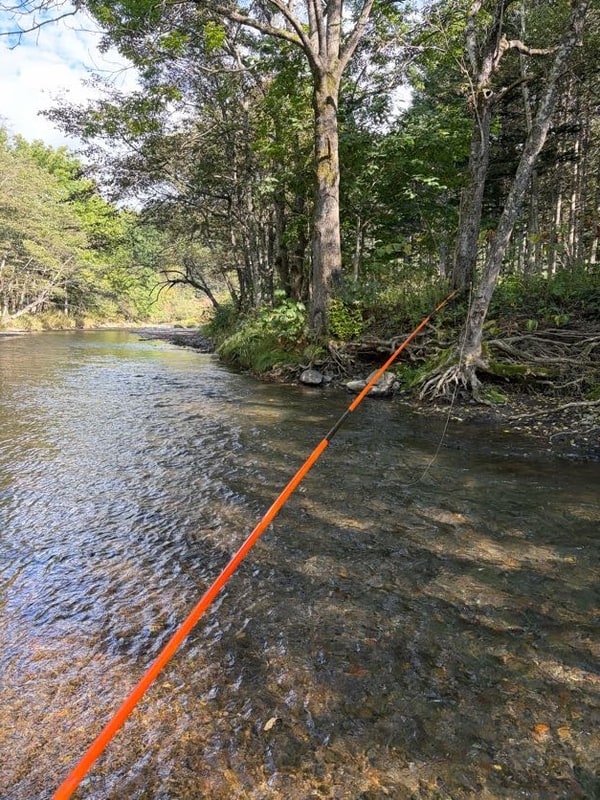
After that we went into a river up toward the mountains, and a fish small enough to lie on the palm of a hand came on. An oshorokoma. Dark oval marks ran in a line along its flank, and it lay in the palm with the spoon still in its mouth. Seen against the noise of the riffle, it was a very slight thing.
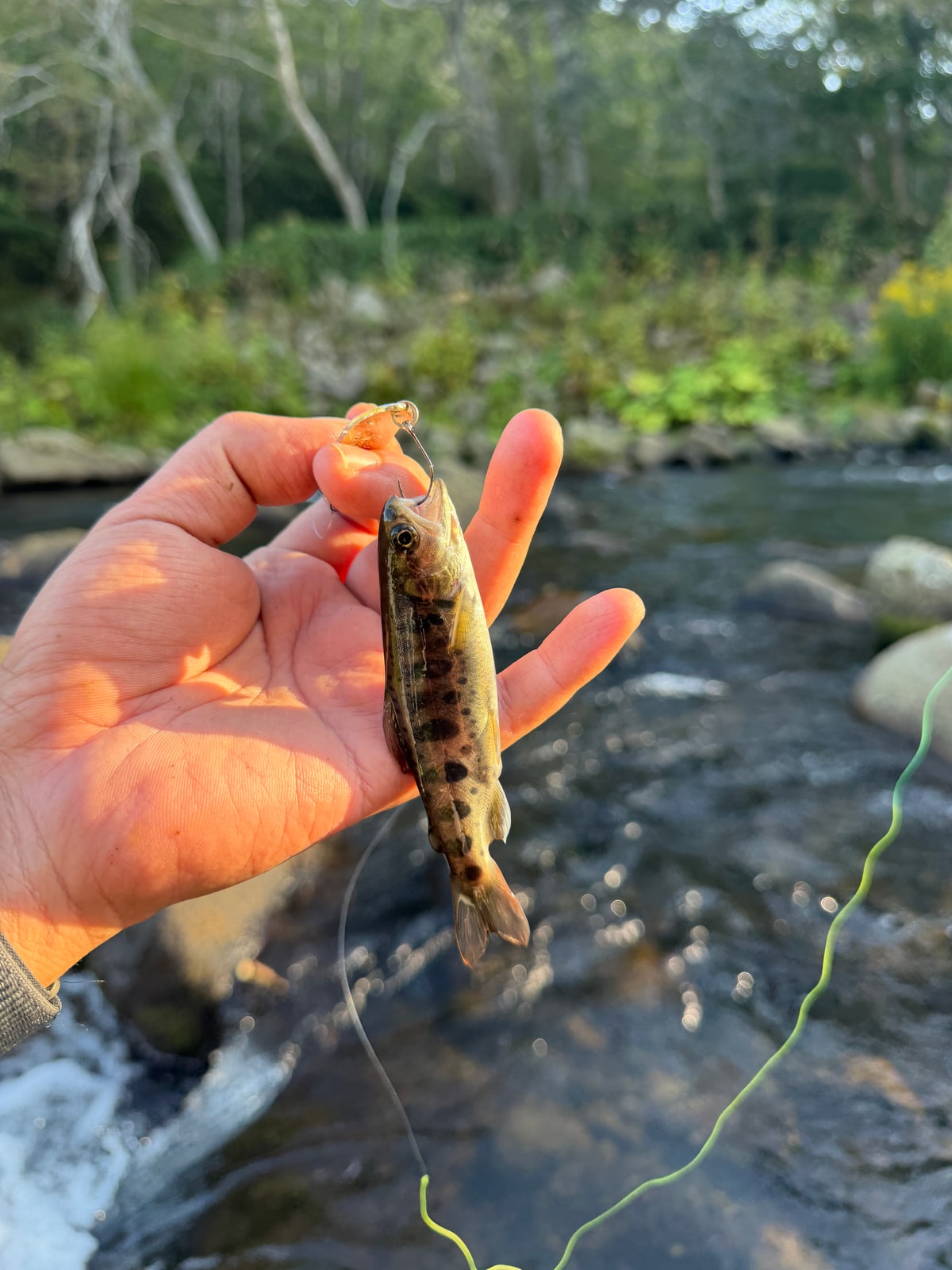
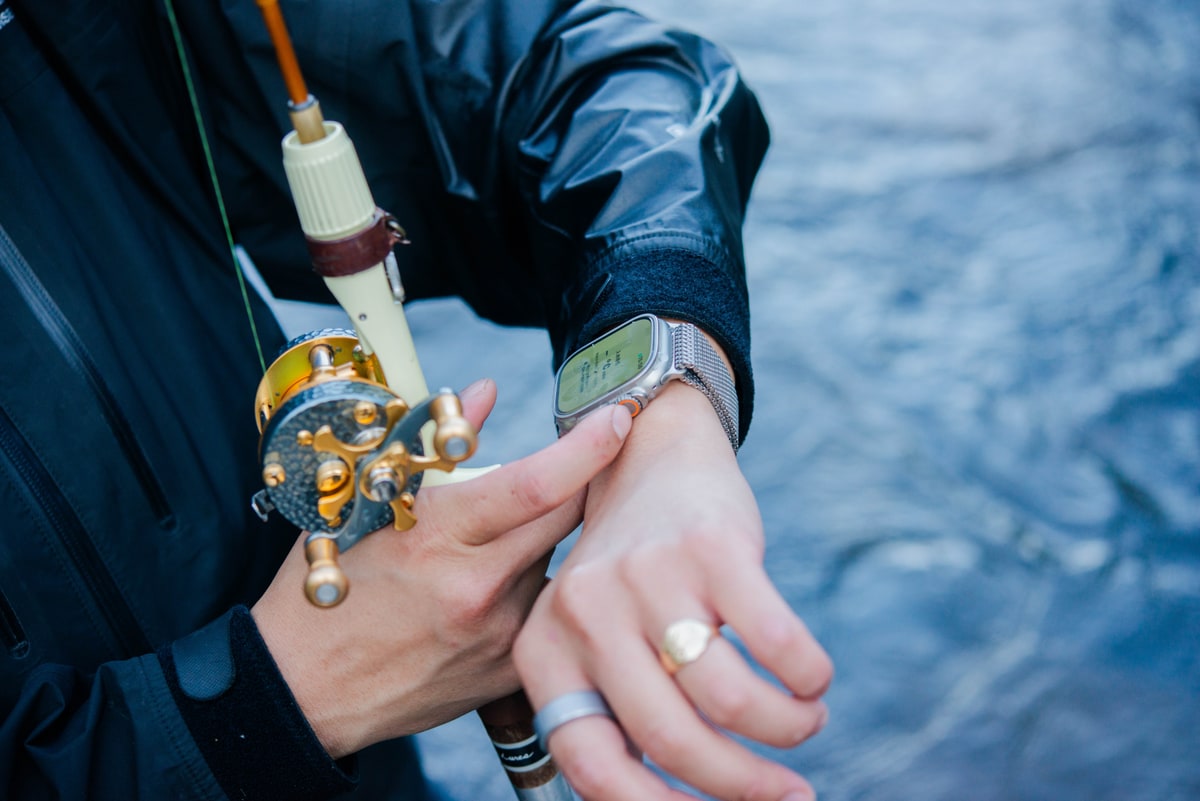
The oshorokoma lives from the Arctic Ocean down along the coasts of the North Pacific, and Hokkaido is the southern end of its range. On the Ministry of the Environment's red list it is counted among the fish whose risk of extinction is growing. In short rivers like those of Shiretoko it lives all the way from the source to the mouth, they say. In that river, one of our party was once again dipping a wristwatch in the water. It was the same game as the day before: you take the temperature of the water, and the small fish that live in it are added to a picture book. On this day one more was added, not in the picture book but on the palm of a hand.
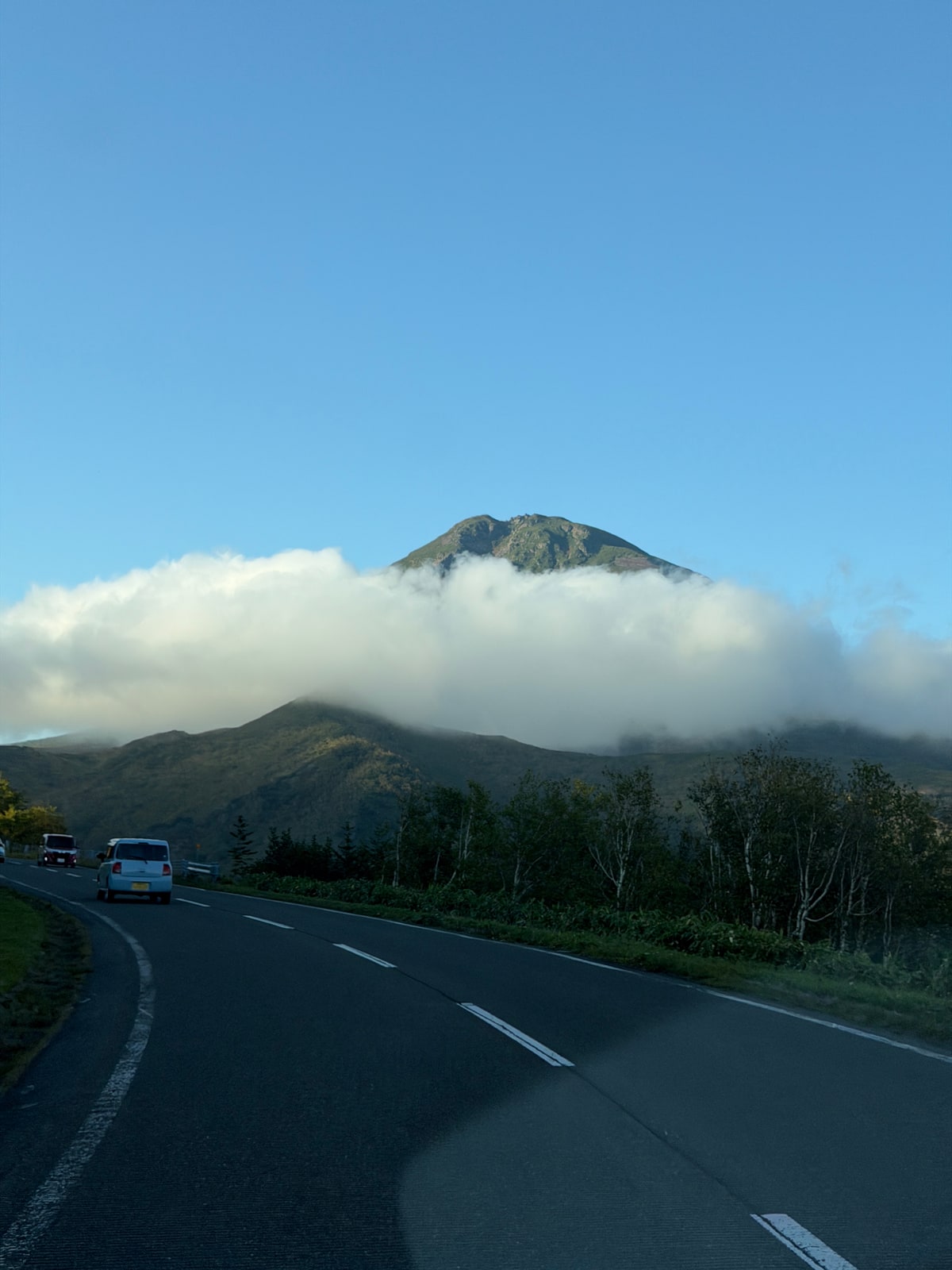
On the way back up the pass, Rausu-dake had wrapped itself in cloud. A little below the summit a white cloud hung like a sash, and only the peak stood clear above it. We were somewhere past five hundred and seventy metres. It was a mountain I had not noticed when we crossed in the morning, and on the way back I saw it face on.
The Shiretoko Pass stands at seven hundred and thirty-eight metres. The road across the mountains from Utoro to Rausu closes in late October and does not open again until late April. It spends nearly half the year under snow, and a month or so before it closed we crossed it twice in one day. Twice over, and we came back to the side of the same sea.
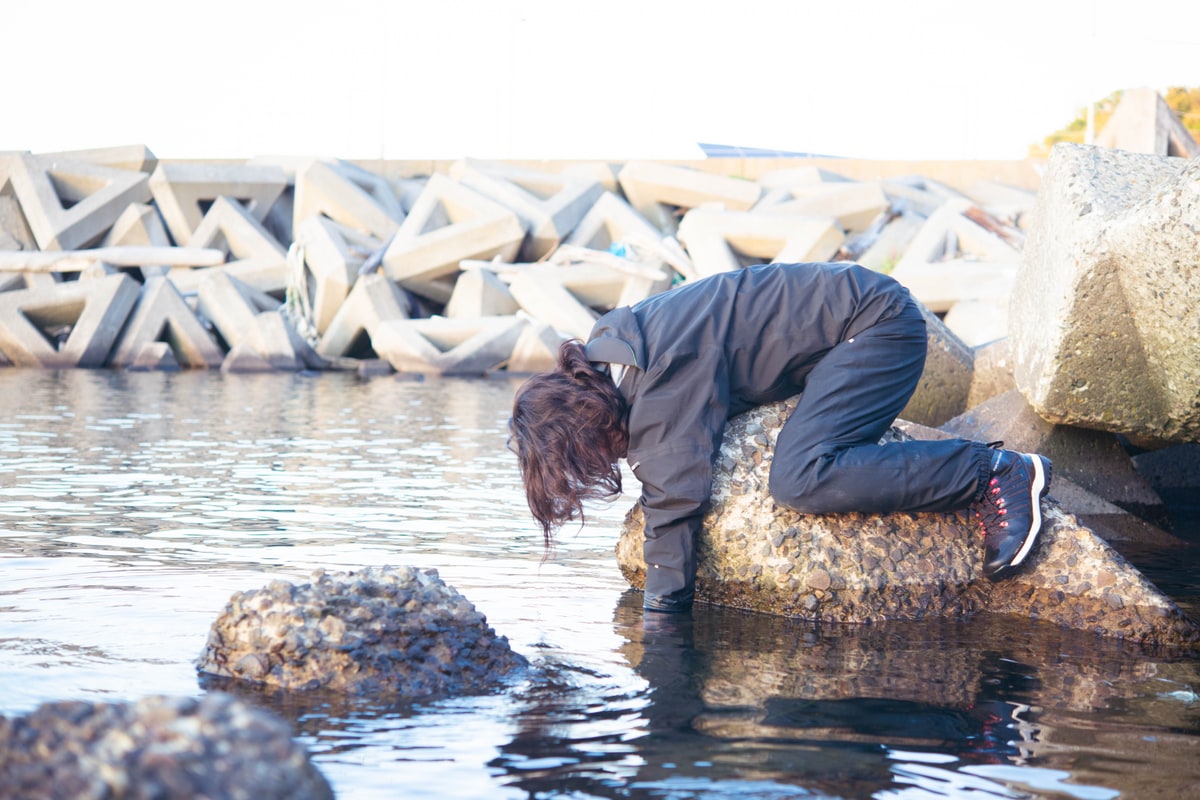
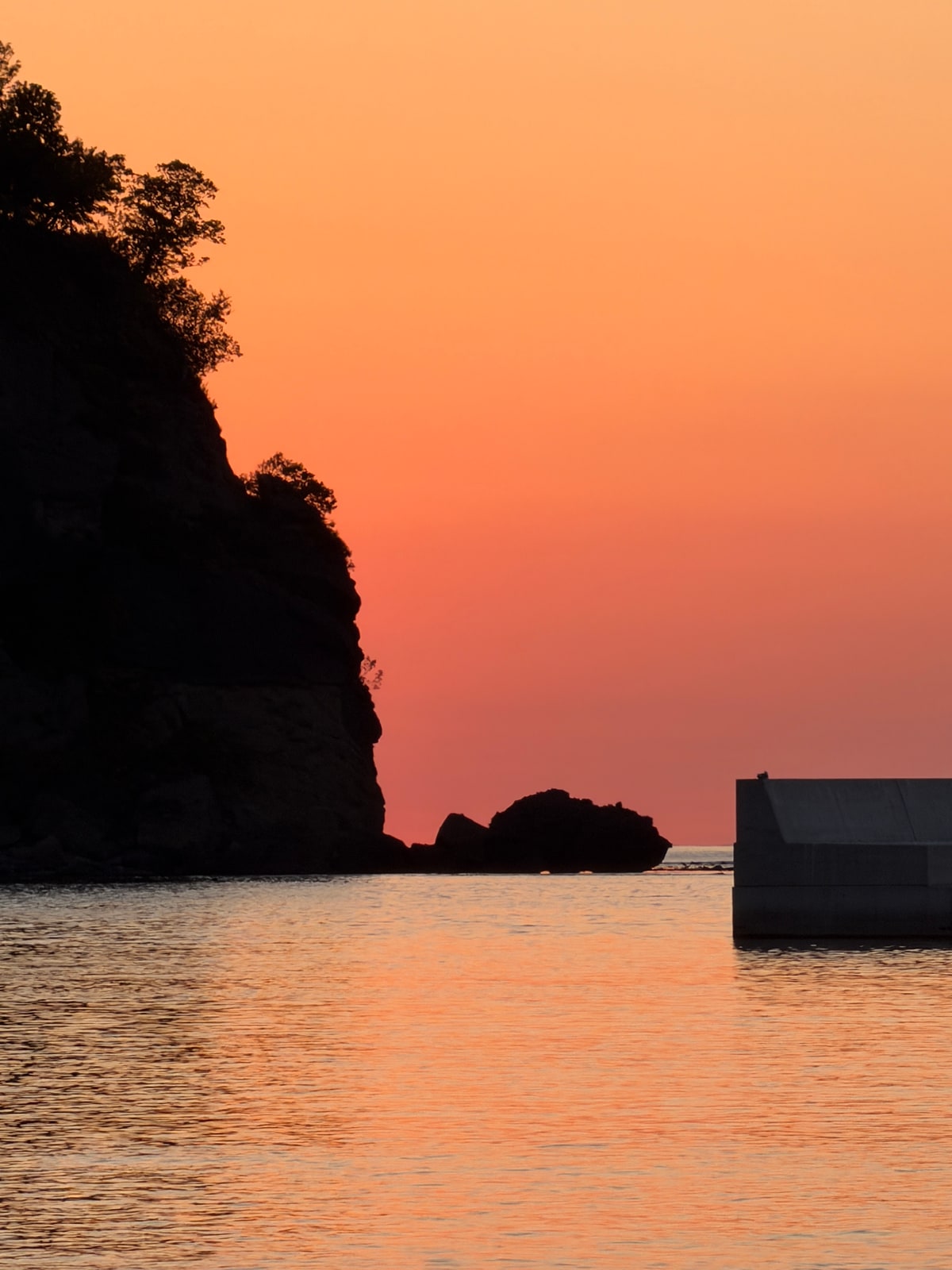
When we got back to Utoro, the sun was going down into the sea. At the water's edge among the stacked wave breakers, one of our party crouched on a rock and looked down into the water. This sea is the Okhotsk, and here the sun sets over the water. Over the sea beyond the pass we crossed in the morning, the sun does not set. On the two sides of one peninsula, the sea the sun comes up out of and the sea it goes down into lie back to back.
At night we went south and checked into a lodging in Nakashibetsu. A frame hung on the wall of the room, holding a poem written with a brush. Reading down it, the first character of each line is written in vermilion, and picked out from the top they read na, ka, shi, be, tsu. It is a verse with the name of the town folded into it.
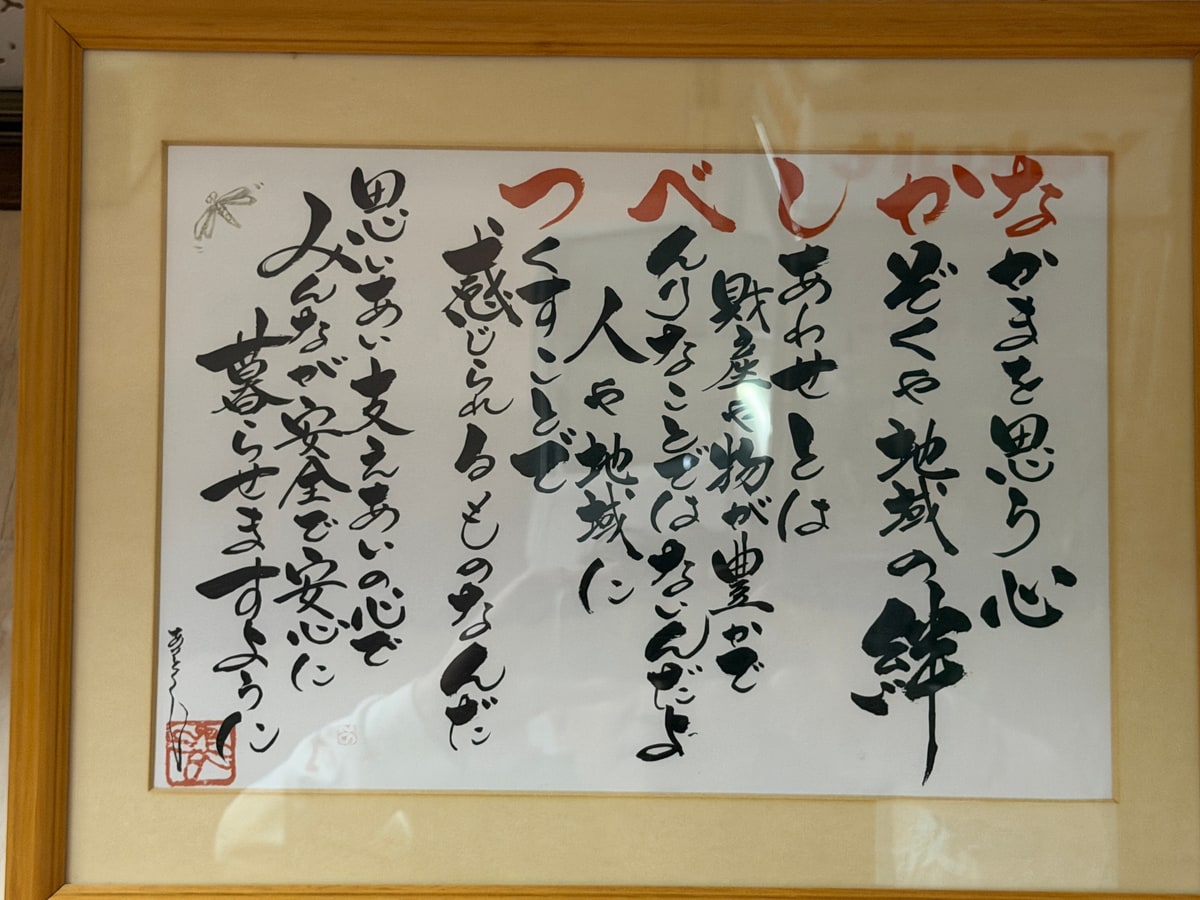
Among the lines is one saying that happiness is not a matter of property and things being plentiful and convenient. It is something you feel, it goes on, by giving yourself to people and to the place you live. On this trip neither property nor things have increased. What has increased is one fish to hang up at New Year. Whether that goes into the reckoning of happiness, the frame on the wall will not tell you, however you ask.
The purpose has been met. Even so, the car, it seems, is going somewhere again tomorrow. The akiaji that did not take on the quay are going straight up the rivers they were born in tonight as well, still not eating. We have the fish we came for, and we are not going home yet. The fish going home and the people not going home were at the same edge of the same sea on the same day.