There is a crowd that goes somewhere every year, and this year it was to be north. Hokkaido. Why Hokkaido, nobody explains, as usual. Somewhere in the talk about last year a voice says that this time it ought to be further off, and the thing gets settled on distance alone. As reasons go, it is thin. I made up my baggage with it still thin.
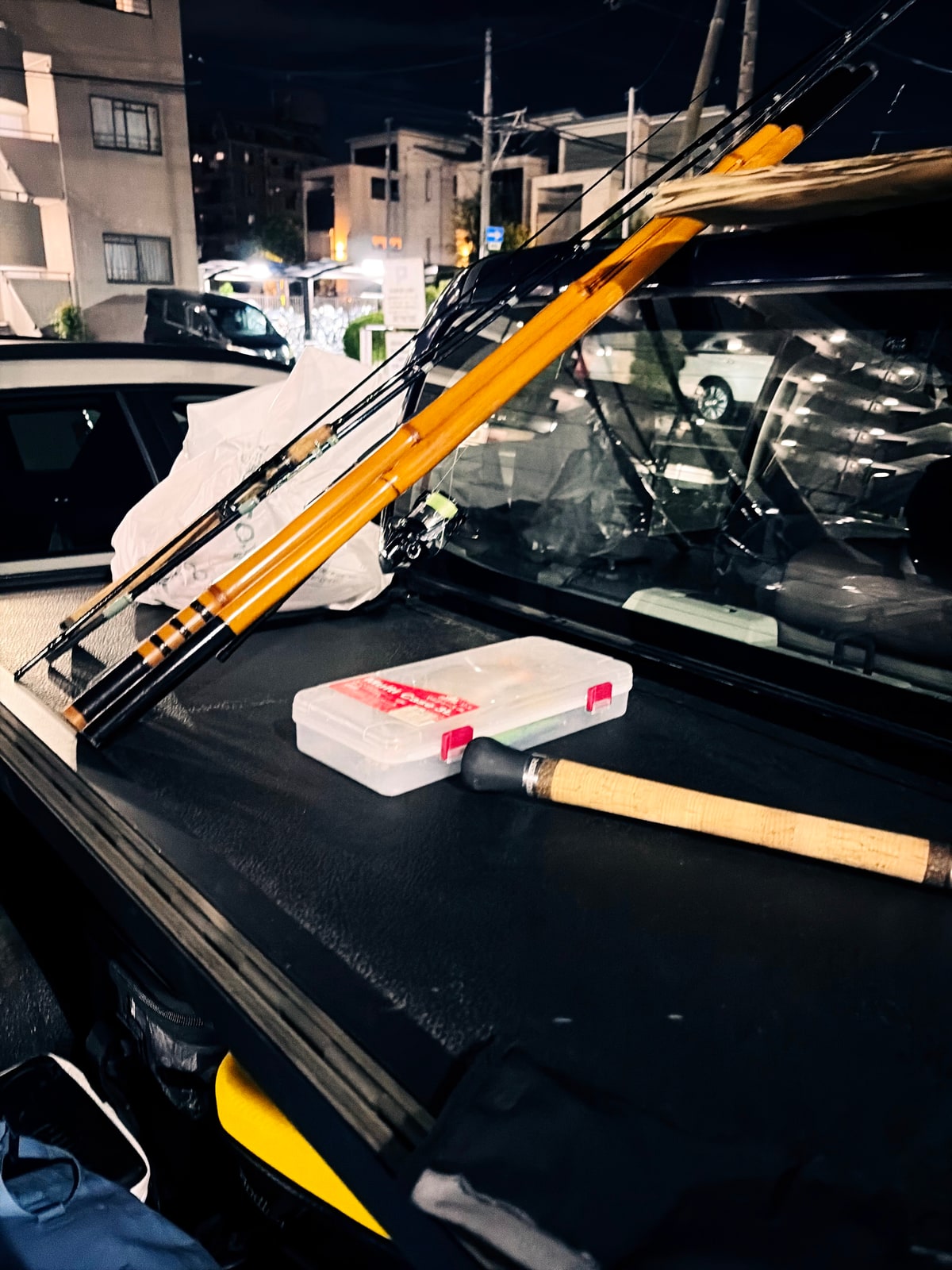
We gathered on the night of the eighteenth of September, at the edge of a residential block in Omiya. A black pickup with a hard lid over the bed in place of a canvas, and two of them leaning on their elbows on top of it, each looking down into the light in their hand. Whether they were checking the road or saying something to somebody arriving late, I could not tell from where I stood. Not knowing, I leaned on the far end of the same lid and watched the pile of gear go down. Before a departure, as a rule, nobody talks.
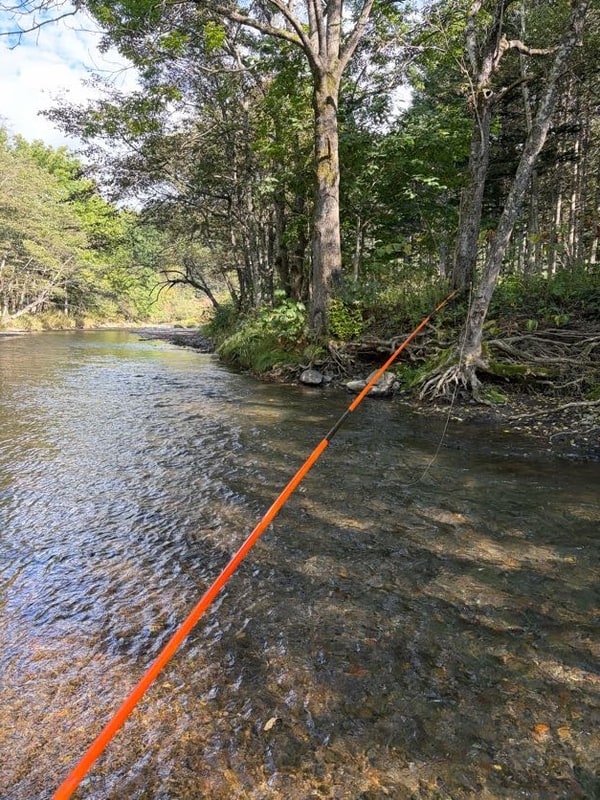
The rods go up onto the roof. Two long black bags, and when the mouth of one is opened, amber bamboo shows inside. Jointed rods. Black thread is wound between node and node, and under a streetlight it is the sheen of the thread that reaches the eye first. The skin of the bamboo drinks the light, so in the dark it is the thread that stands out while the rod itself goes soft at the edges. The stoppers are milky white with a thin green cord tied to them. The end of the cord has been left outside the bag, not drawn tight, just hanging.
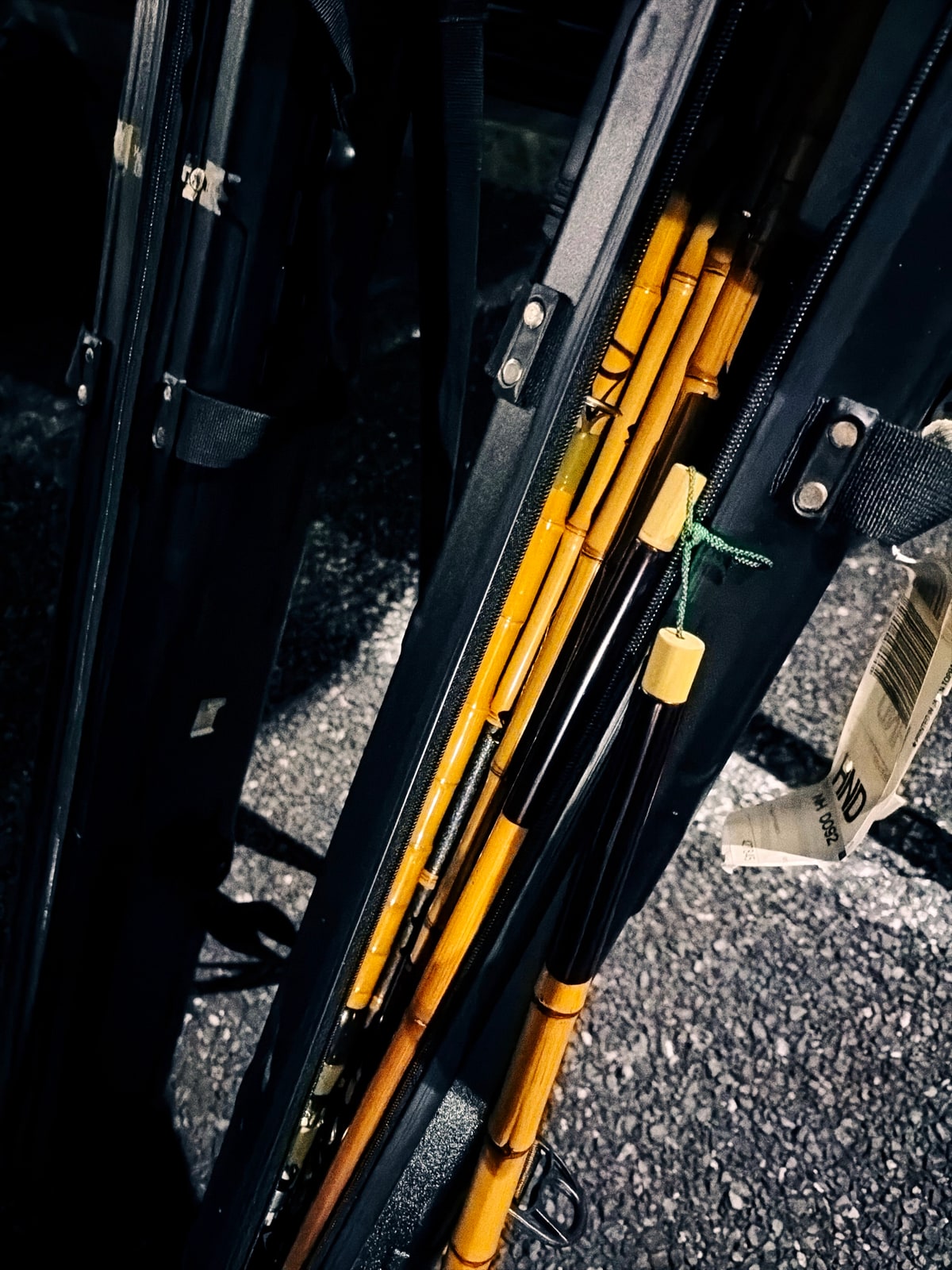
At the handle of one bag an airline baggage tag was still on, from who knows when. Not worth peeling off, presumably, and so left alone. I have a piece or two of tackle myself with a tag still on it. A tag is not a record of who owns a thing. It is a record of where the thing has been taken. Where this rod has been, I still do not know.
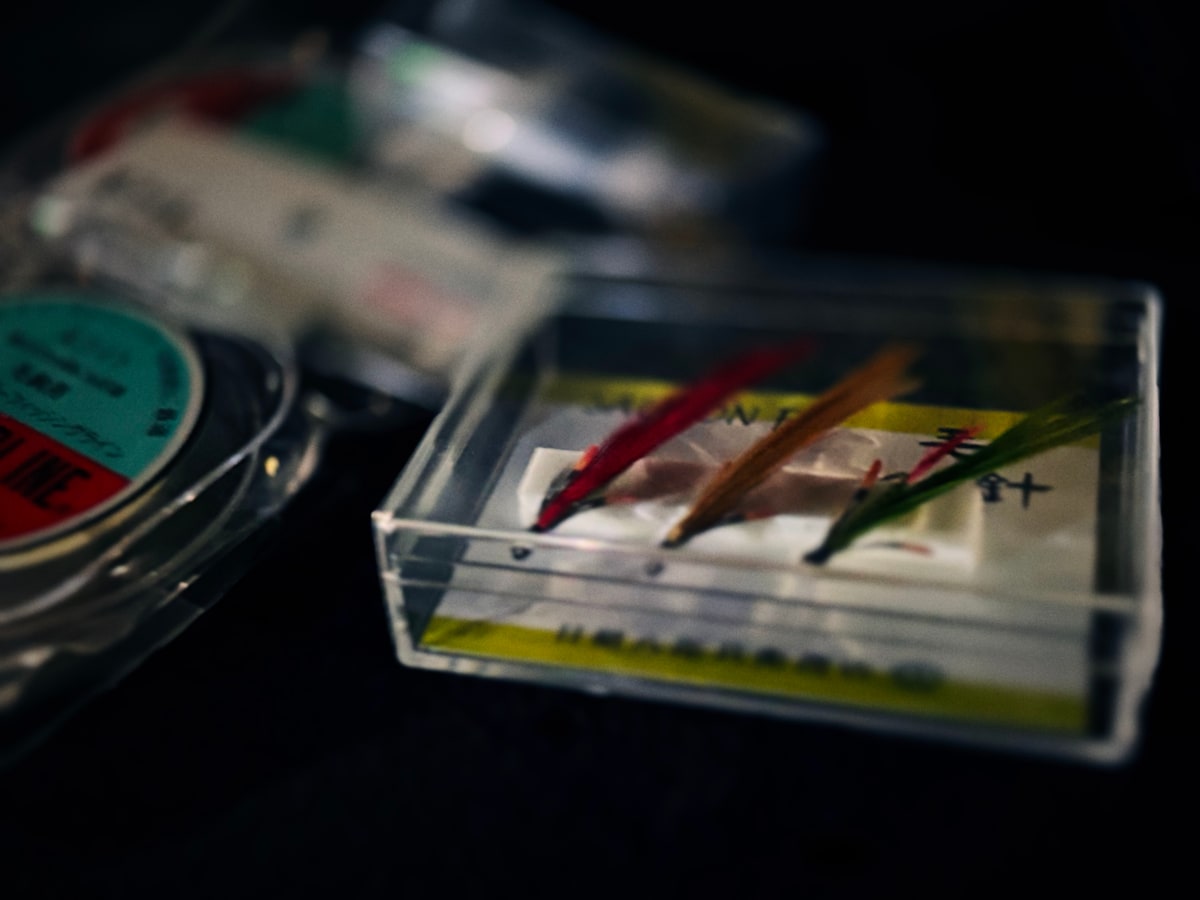
A fly box came out as well. Under a clear lid, one red, one amber, one green, laid out side by side. A strip of yellow tape along the rim of the box, and on the tape the single word for flies. That the plot ran something like tying a fly to a bamboo rod and going to a river in the north, I gathered as soon as those two boxes were sitting next to each other. I gathered it, but I had been told nothing. They would tell me if I asked, no doubt, but asking the name of the river in the middle of the packing felt crass, and I kept quiet. There is something to be said, too, for not knowing what is in a journey before it begins. The road feels shorter that way.
The rest of the packing was done a little further north, in the second block of Miyamachi, beside the approach to the Hikawa shrine. That approach runs about two kilometres from the first gate to the hall and is said to be the longest in the country. It used to be the Nakasendo. In 1628, the fifth year of Kanei, the district governor Ina Tadaharu moved the highway to where it runs now and resettled the households from either side of the approach along it as a post town, so that the road lost its office and only the approach was left. The second gate is wood, handed over from Meiji Jingu and moved here, they say. Which is to say that we were making up the baggage for a journey beside a road that had stopped being a road for journeys. A coincidence like that is mildly funny once you notice it afterwards.
The town was left off the road once more after that. In 1883, the sixteenth year of Meiji, when the first private railway in Japan ran from Ueno to Kumagaya, the line went straight through this district and no station was put at Omiya. After Urawa comes Ageo. The station came two years later, and it was another decade before railway works were built here and the place became a railway town at last. Left off the Nakasendo, left off the railway as well, and brought back by a road even so: it was at the edge of that town that we were loading for the north. The name Omiya is said to come from calling the Hikawa shrine a great dwelling, and the place seems to have begun as a town at the shrine gate. The shrine was there first. The roads were drawn, and drawn again, afterwards.
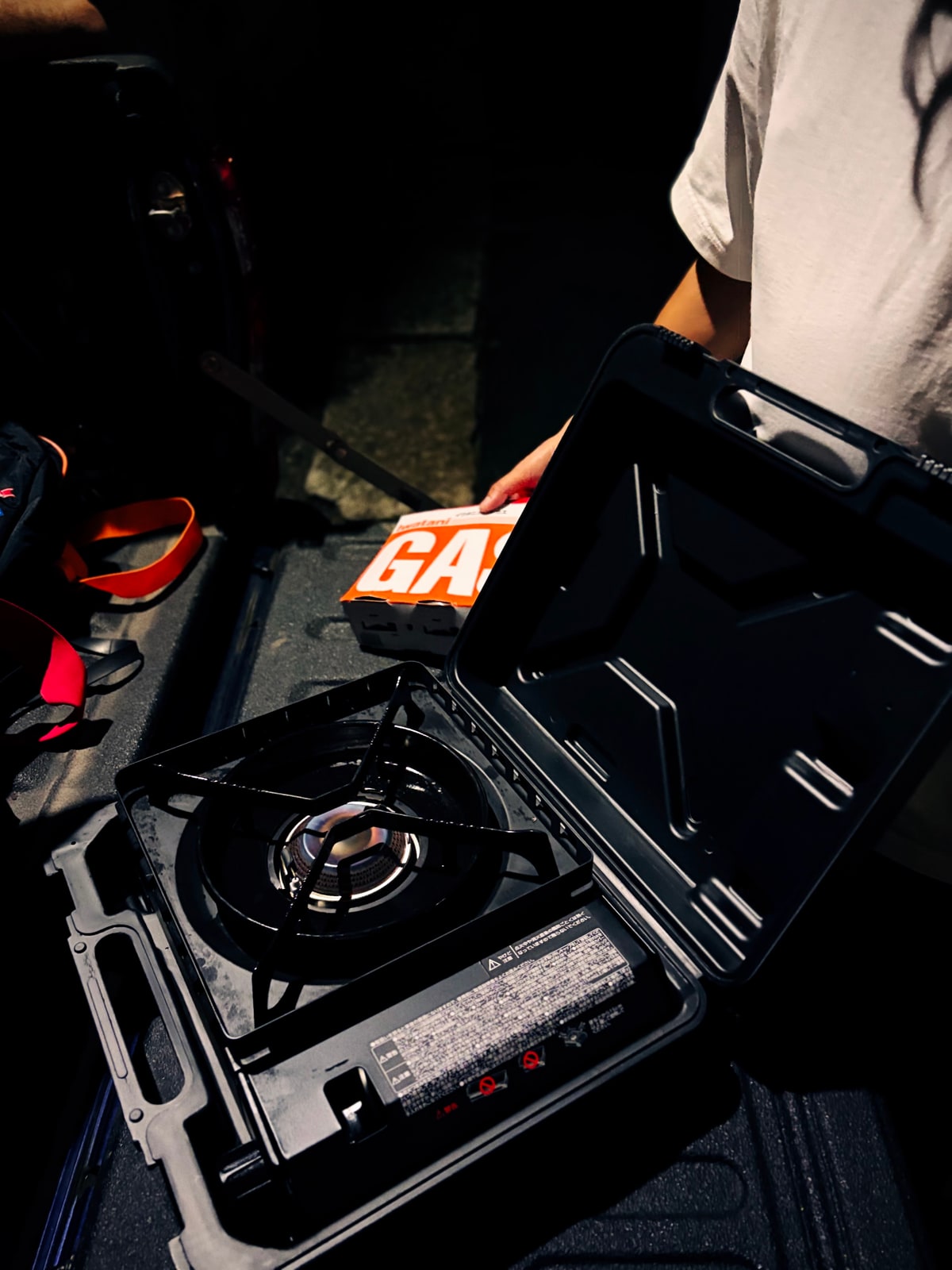
The last thing out was a portable gas stove, and when the lid of the black case was lifted the trivet was inside, still folded. A box of canisters goes in too. That somebody intends to boil water up there is clear enough. What they intend to cook in it is not. In one corner of the bed was a small sticker from a wazao shop, and that was the only thing on the vehicle making any claim to be tackle. By the time the loading was done, one of them was lying beside the gear with a white cloth pulled up to the shoulder. Not a metre driven yet, and already in position to sleep. People who go long distances sleep when sleep is available. I am bad at it, and I always pay for that after arriving.
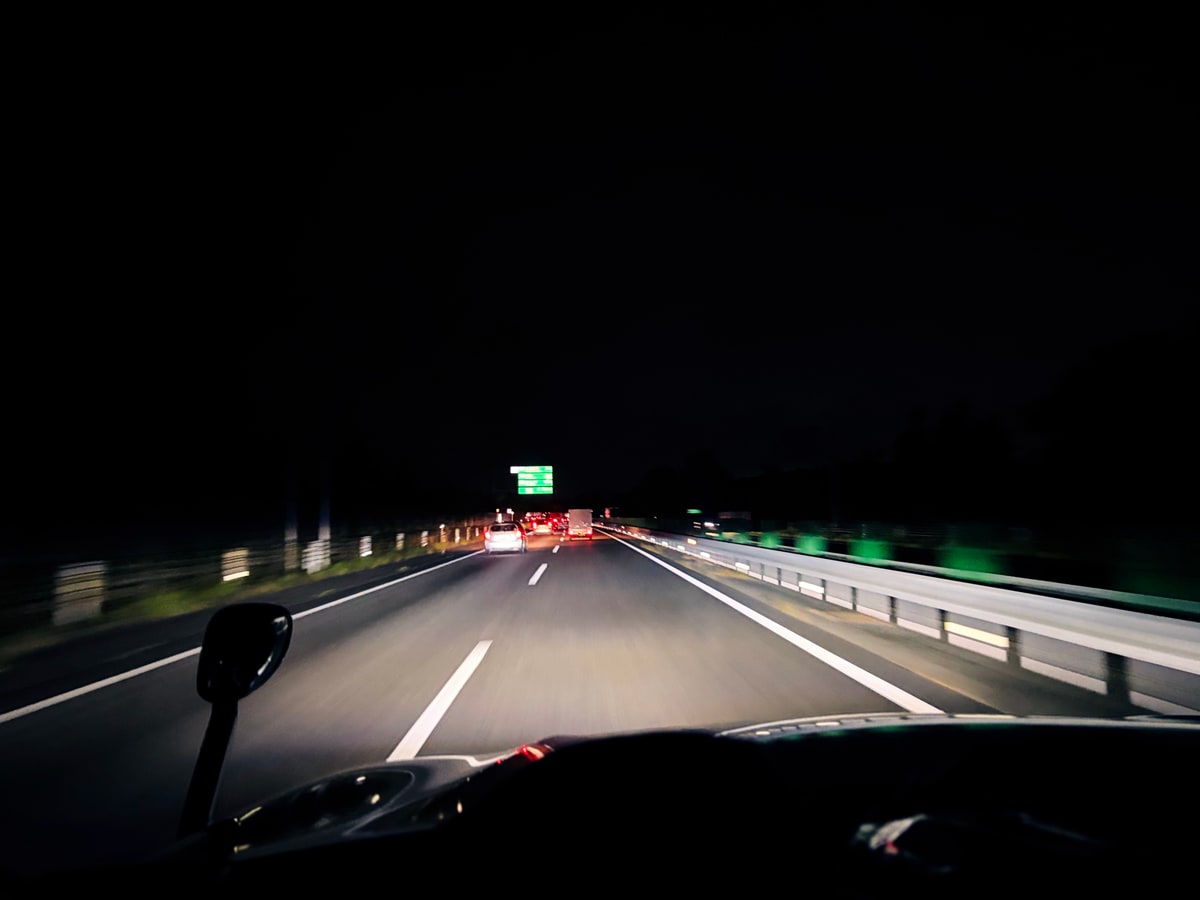
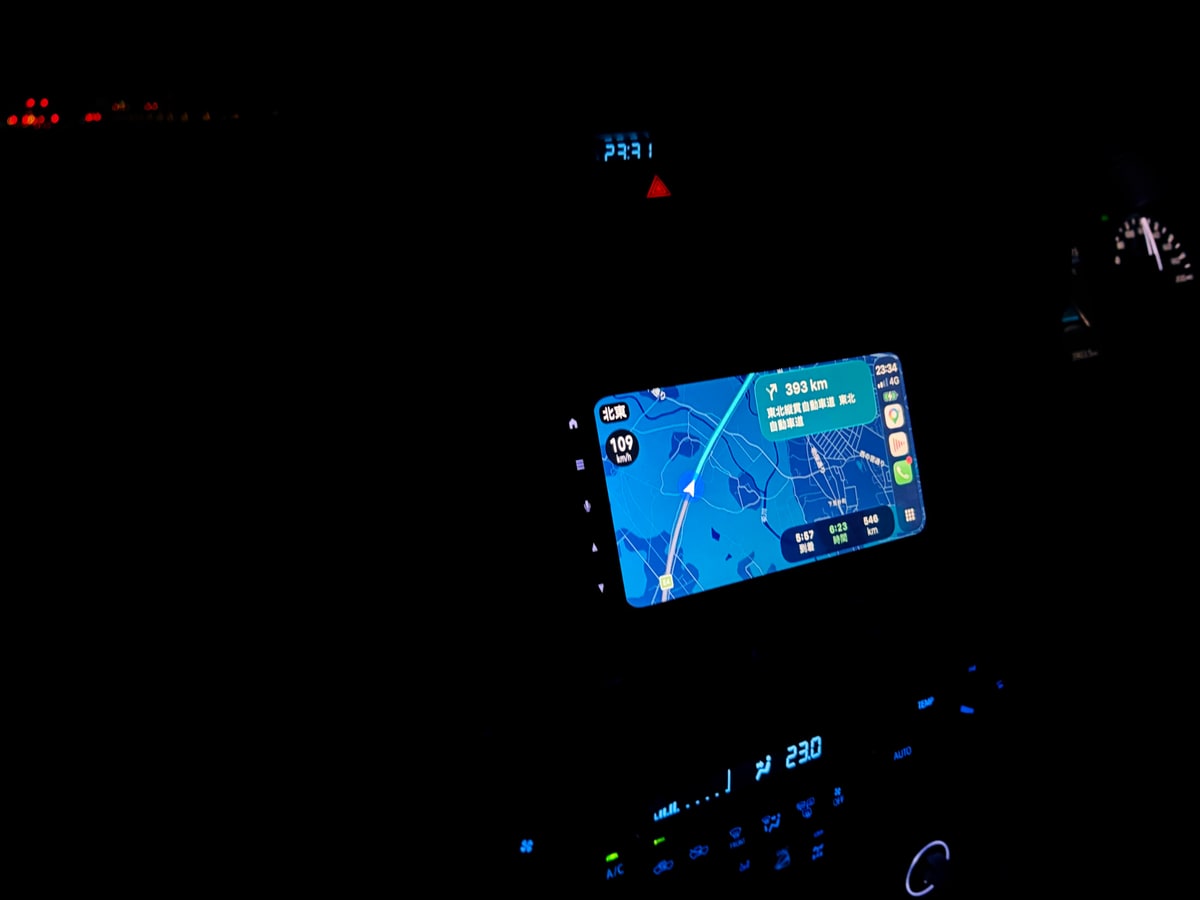
We got onto the Tohoku Expressway. Kawaguchi to Aomori is close to six hundred and eighty kilometres, and it is said to be the longest expressway in the country. Long is something you understand by driving it: however far you go, the place names on the signs do not run out. We passed Utsunomiya at about half past eleven, few lights ahead or behind, the opposite carriageway hidden beyond an embankment. The question of changing drivers came up once and was not acted on. I was in the passenger seat, looking out at a black that gave back almost nothing, and looking at it anyway.
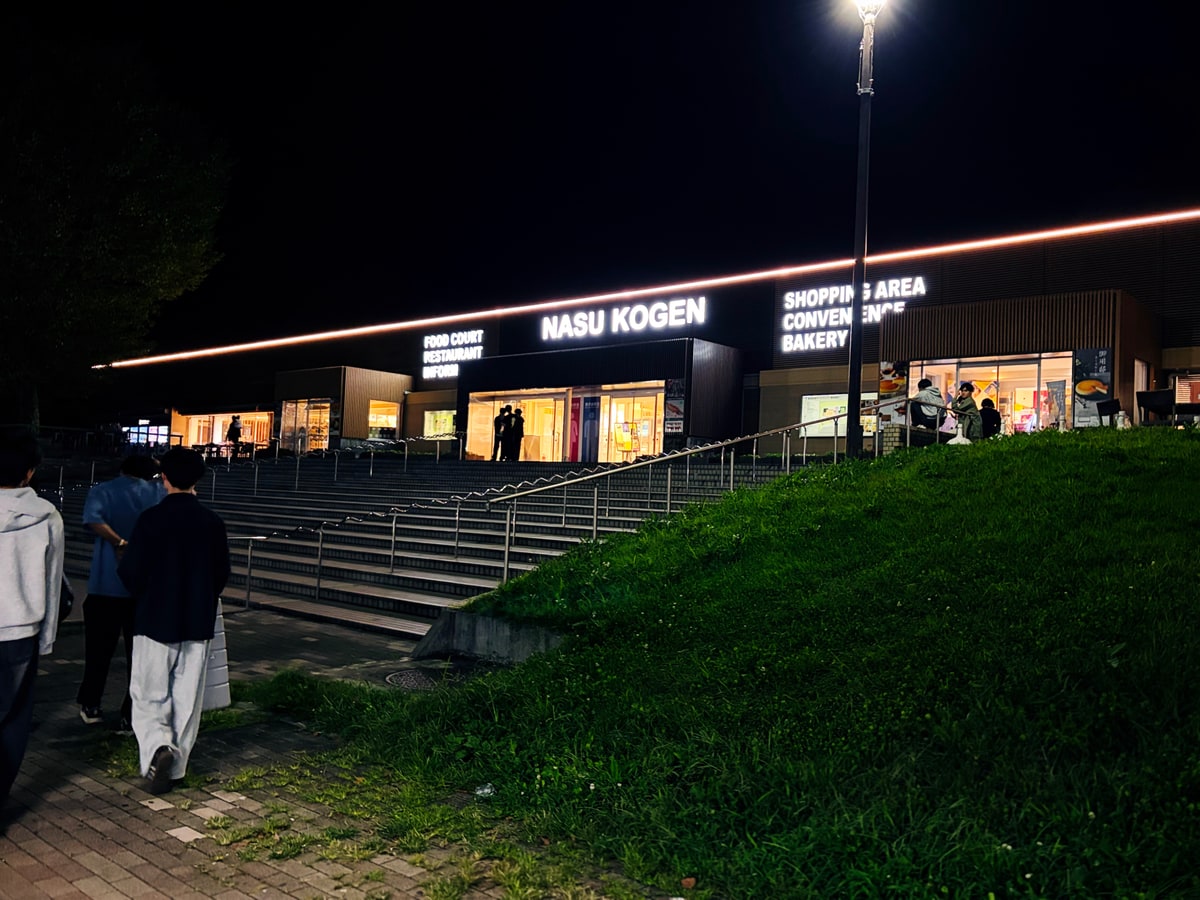
Past midnight we pulled into the service area at Nasu Kogen. The white lettering on the building can be read from a long way off. At that hour only the two noodle counters were open, one for soba and udon, the other a ramen shop carrying the name of Shirakawa in Fukushima. Shirakawa is over the prefectural line, a town we had yet to pass through, so the bowl named after it was eaten one prefecture short of it. You could say the name arrives ahead of the town.
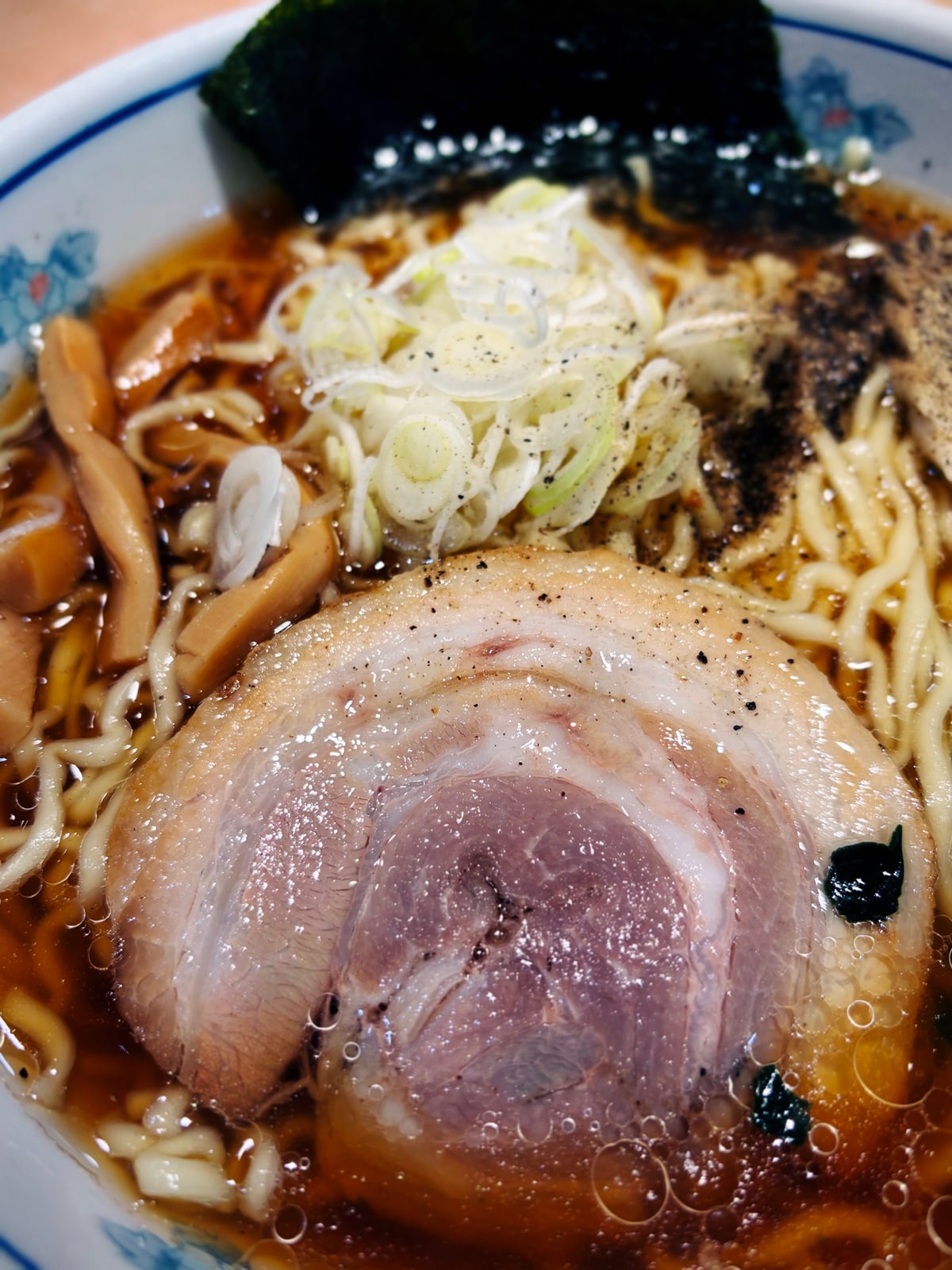
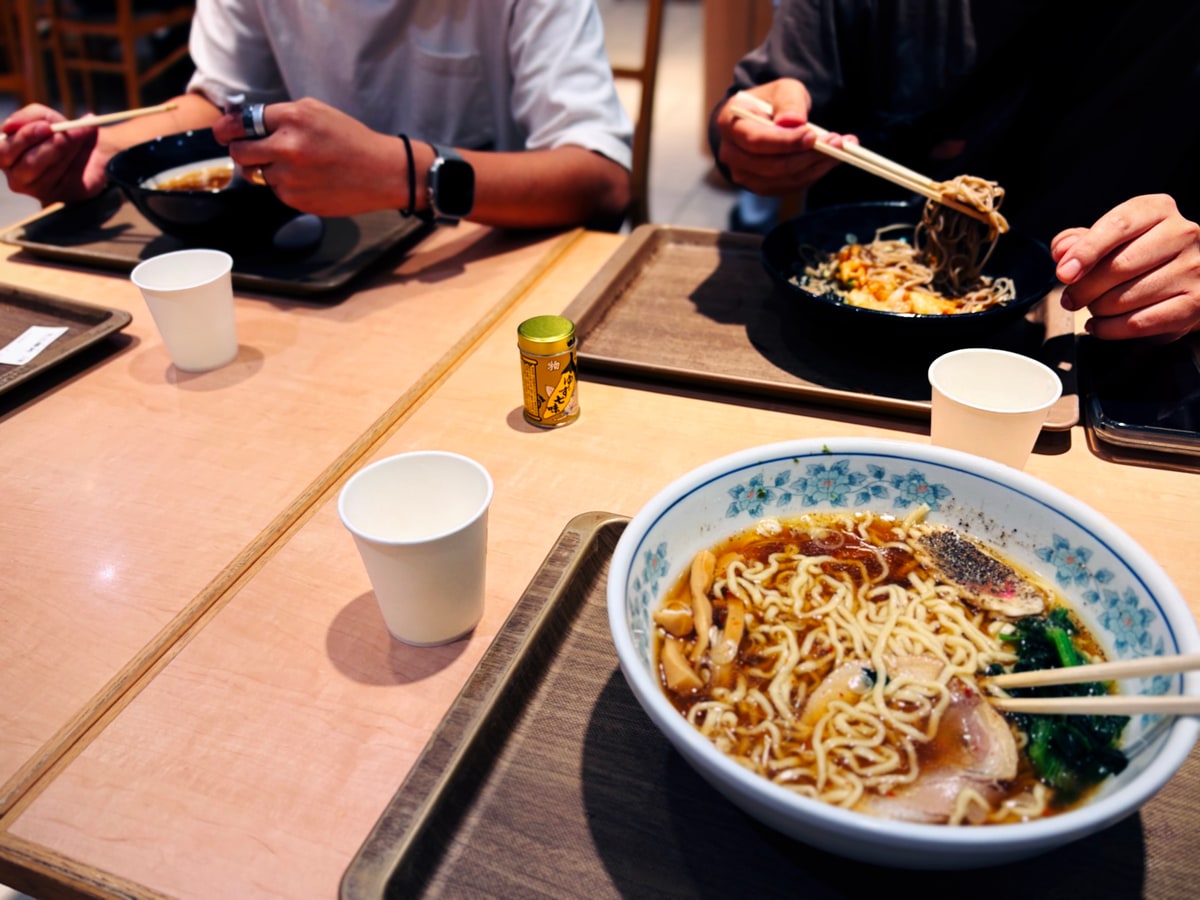
A blue bowl with a flower pattern, clear soy broth standing in it, a single rolled slice of pork, shredded white leek and black pepper on top. At the table opposite, soba with tempura on it was being taken up. People eating noodles at a service area in the middle of the night generally eat without talking. Not because they are in a hurry, but because at that hour there is nothing to say, even with someone there to say it to. Nobody talked here either.
Outside, the air had cooled. The service area sits at something like seven hundred and fifty metres, seven degrees off the Omiya where we had been loading in the early evening. No rain. There had been a lot of cloud since evening, but the day carried a couple of hours of sun and went into night dry. Not cold enough to dig out a jacket. I rubbed my arms. Going north is not a thing that happens on a map, it is this, getting cooler one step at a time, and I remember it at exactly this stage of the journey every time.
Past half one we were south of Koriyama, still partway through Fukushima. Ahead of us lay Sendai and Morioka and Aomori, and past those a sea, and only across the sea the place we were going. The bamboo rods and the fly box were riding on the roof and in the bed. Which river I would be standing in when we arrived, I had not been told. Dawn will come without my being told, and that has never once been a problem.