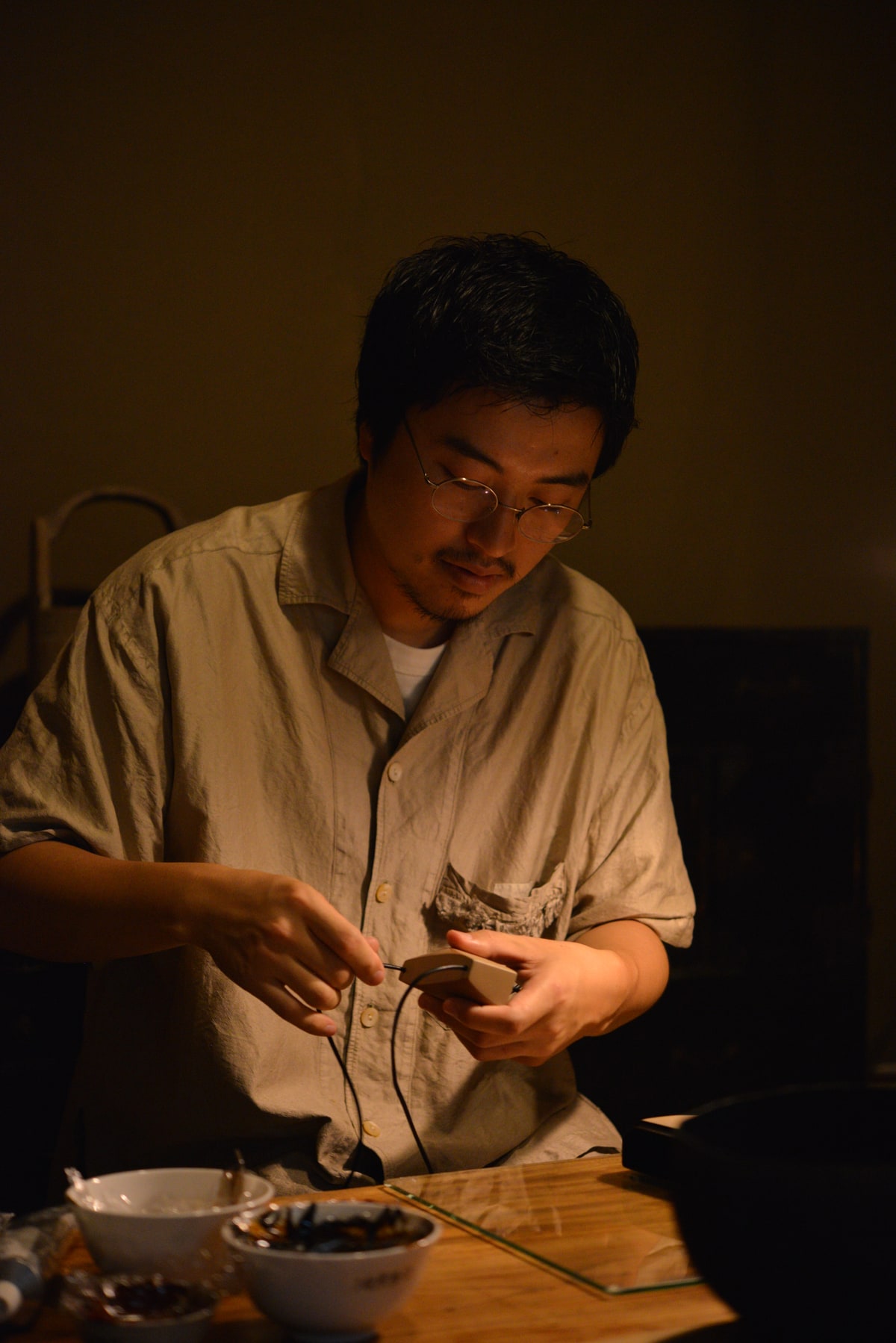
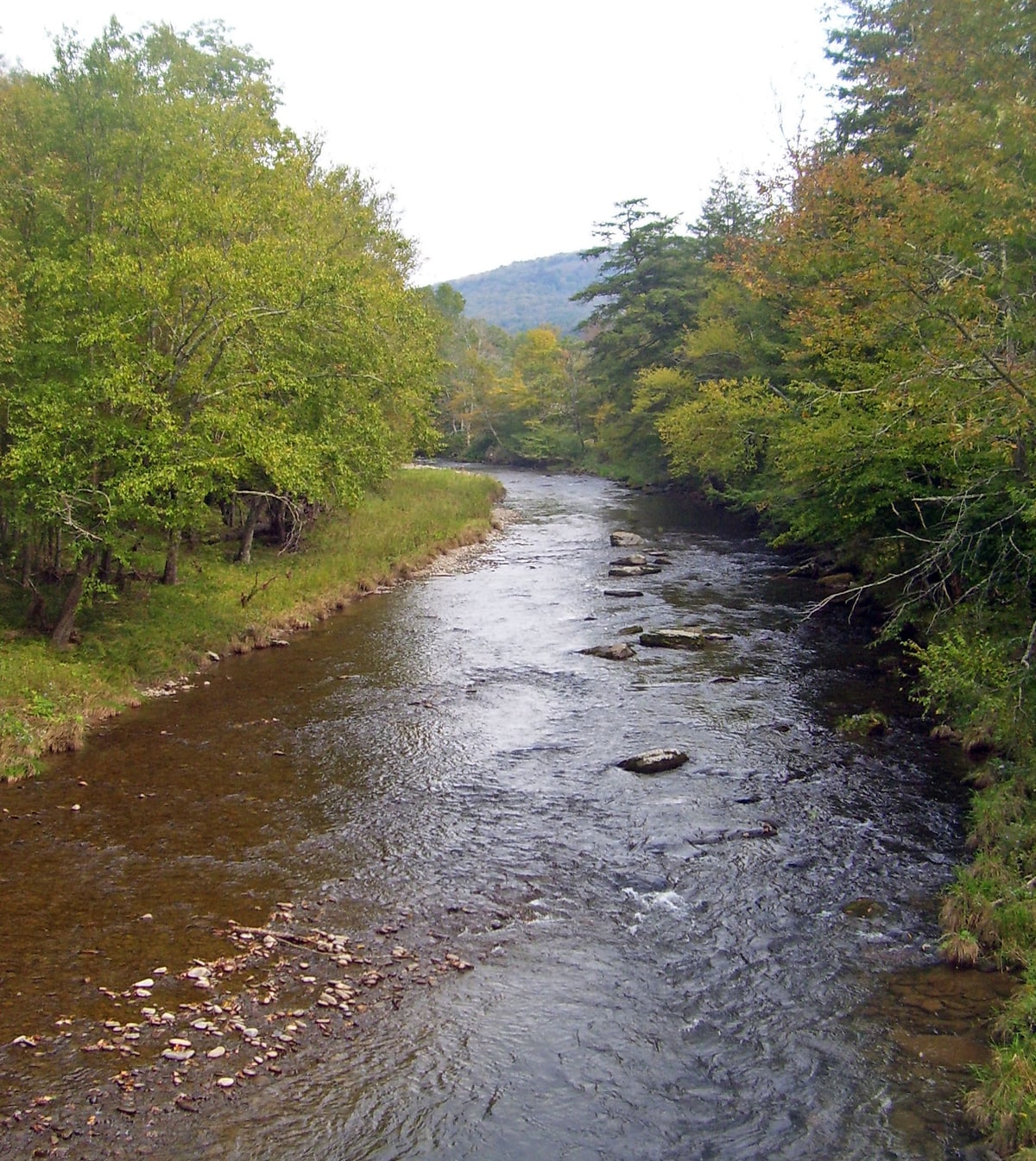
As the Kibune festival draws near, the air above the river takes on a certain tautness. The cold of the water slipping beneath the kawadoko (a summer dining floor built out over the river) and the stir of festival preparations coming down from the mountains dissolve into one and cling to the skin. Kibune, I am told, is a place that has long enshrined a deity who governs water. A single rod had been invited to a stall where rods were sold, and so I went along beside it, up into the hills of Kyoto. Folding stools were set out; when a customer wished to take a rod in hand, it was handed to him. It was no more than that, and I sat myself down at the edge of it.

For all that it was a sale, no one raised his voice to press a rod on anyone. A few rods stood leaned against the end of the stool, and a customer who picked one up would give it a light swing, as if to measure how far his own reach extended. The maker watched in silence from a little way off. The temper of each joint and the way the urushi (Japanese lacquer) had taken differed from rod to rod, so whether one suited or not could not be known without gripping it. Before buying or not buying, one first lets the hand grow accustomed to it. The length of that interval seemed to me the chief worth of the stall.
In a lull when the customers had thinned, I dropped a line in for my own idle amusement. Just below the floor the water ran far faster than it looked. My tackle was fine, and for bait no more than a pinch of paste kneaded from the powder I happened to have. Into all that unpreparedness a small bite came, light and sudden. A haya (a dace). When I lifted it, the fish gave a single leap in the light of the mountains gone toward dusk. Set in the palm, it seemed to pass the coldness of the current straight into my hand.
The haya is called a trash fish, and it scarcely figures in an angler's boasting. And yet a fish drawn from so clear a flow is, I think, a beautiful thing after all. The larger ones shine with a faint purple along the rim of each scale. Unlike those that lurk in the mud near the bank, a haya raised in clean water has almost none of that peculiar weedy smell. Perhaps it is the heart of the man who scorns it as trash that has, somewhere along the way, grown a little muddied.
As I sat with my line out, a small child came up beside me and asked to be let to fish. I handed him the rod, and he said, with a perfectly serious face, that this was a stick for catching fish. There is a reason in a stick, too, I told him, and explained as gently as I could the bend of the tip and the length one lets the line drift. While I was teaching, the smell of the river and the weight in the hand from the first time I ever held a rod rose up in me, returning as if from far off.

While I was showing him how, the child's parent too came to want a rod, and even the mistress of the inn began, apron still on, to drop a line. In fishing there is, from the start, no boundary between old and young, guest and host. Nor does it lie in whether one owns a good rod. For as long as they face the same water, everyone returns to being a single angler and nothing more. To teach, and for the one who receives it to grow, and for the thing to be handed on further still — I sat in the corner of the floor and thought vaguely of such things.
The haya we caught ought, by rights, to have been set over coals, salted, and taken into the belly. But even the head cook, who was supposed to be tending that charcoal, would not let go of his rod, and the hour for kindling the fire had long since passed. There was nothing for it today but to give up on grilling, and everyone laughed and went back to their rods. It is a selfish way to put it, but the sight of them all, to a man, lost in their rods was rarer and dearer to me than the regret of a fish let go.
It is a curious thing: the moment greed rises and you lean in, the bites draw suddenly away. The one who caught the most that day was the child, who made no sound and only watched the surface of the water. The children whose parents, by contrast, took them by the hand — it is here, it is there — were the ones who soon tired and flung the rod aside. It is precisely because a thing happens within one's own hands that a person can go on without wearying. For the right answer held out from the side, it seems, there is no room left for any interest.

Whether one caught anything or not is, pressed to the end, a matter of no consequence, I think. To say it is all right not to catch is to say it is all right to fail, and to say it is all right to fail is to say that the breadth of one's freedom is that much the wider. And what, in the first place, would count as a failure at such a stall? Even if one raised not a single fish and only sat with knees drawn up, gazing at the face of the river, it seems wrong to me to call that a missed catch. The clear flow of Kibune, and the evening light changing it moment by moment, which I watched without tiring — I cannot, however I try, bring myself to call that time wasted.